

Sustainable investing in Dubai real estate: your practical guide
TL;DR:
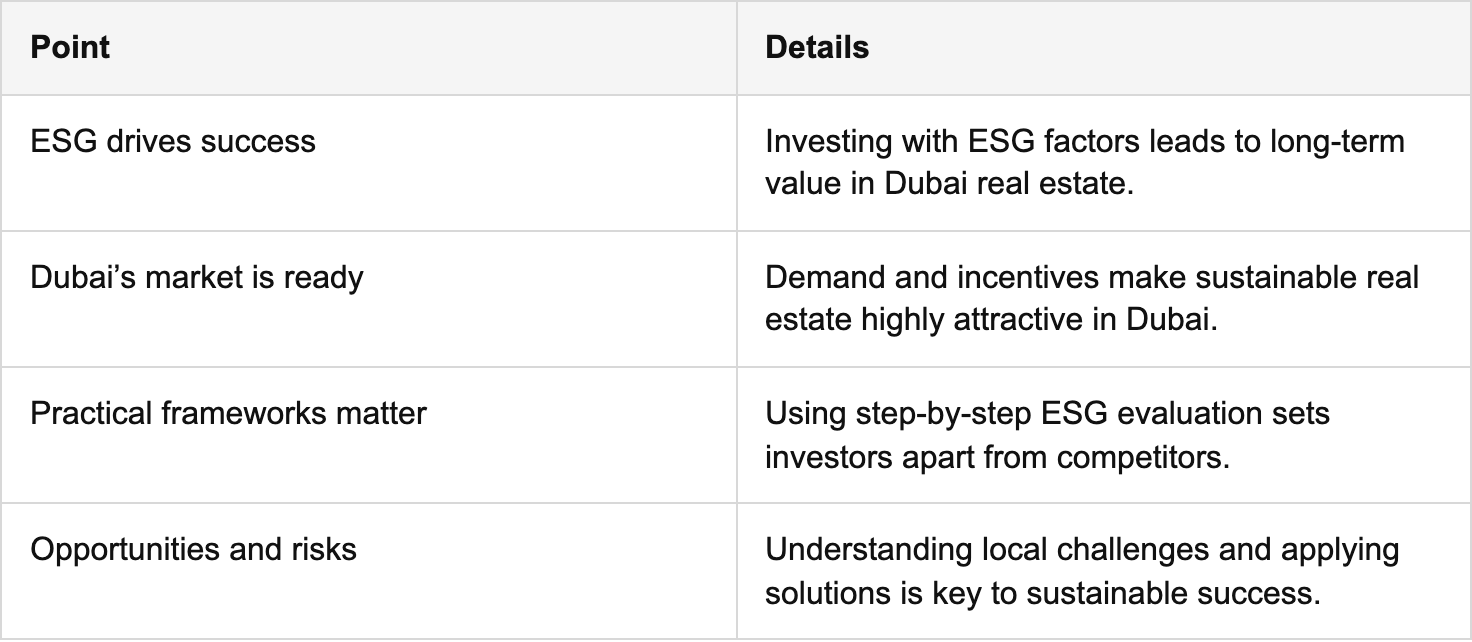
- Sustainable investing in Dubai real estate combines ESG factors with traditional financial metrics to enhance long-term returns. Dubai’s regulatory support, tenant demand, and green certification premiums make sustainable assets a strategic, lower-risk choice. A disciplined approach involves clear ESG priorities, thorough due diligence, and integrating sustainability into ROI models to capitalize on future growth.
Sustainable investing is reshaping how serious capital allocators evaluate real estate, and Dubai sits at the center of this shift. Far from being a marketing buzzword, sustainable investing balances traditional financial analysis with environmental, social, and governance (ESG) factors to improve long-term outcomes. If you are an investor or financial professional looking at Dubai real estate, understanding how ESG criteria translate into tangible asset value is no longer optional. This guide breaks down the definition, local market drivers, practical evaluation tools, and the actionable steps you need to position your portfolio for durable returns.
Table of Contents
- What is sustainable investing?
- Why sustainable investing matters for Dubai real estate
- How ESG factors drive decisions in Dubai real estate
- Challenges and opportunities in implementing sustainable investing
- Practical steps for sustainable investing in Dubai real estate
- Why sustainable investing in real estate is more than a trend
- Connect with Dubai’s sustainable real estate opportunities
- Frequently asked questions
Key Takeaways
What is sustainable investing?
Sustainable investing is an investment approach that incorporates ESG factors alongside conventional financial metrics such as rental yields, capital gains, and liquidity. It is not charity. It is a disciplined strategy that recognizes how environmental risks, social dynamics, and corporate governance affect asset performance over time.
“Sustainable investing balances traditional financial analysis with environmental, social, and governance (ESG) factors to improve long-term outcomes.” — CFA Institute
The concept has roots stretching back to the socially responsible investing movement of the 1970s, but modern ESG frameworks are far more data-driven and quantitative. Today, institutional investors from sovereign wealth funds to pension managers apply ESG screening to evaluate whether a property or developer represents a durable, lower-risk investment.
In real estate specifically, ESG factors are more concrete and measurable than in equities. You can physically inspect a building’s energy rating, assess its water recycling systems, and verify whether the developer complied with community impact assessments. That tangibility gives real estate investors a significant advantage when applying sustainable principles. Understanding the relevant Dubai real estate terms is an important foundation before layering on ESG analysis.
Key elements of ESG in real estate include:
- Environmental: Energy efficiency ratings, carbon footprint, materials sourcing, waste management, and water usage
- Social: Tenant well-being, accessibility, community integration, and fair labor practices during construction
- Governance: Developer transparency, regulatory compliance, ethical supply chain management, and anti-corruption standards
Each of these elements feeds directly into property valuation, tenant retention, regulatory compliance costs, and long-term asset resilience.
Why sustainable investing matters for Dubai real estate
Dubai is not simply adopting global sustainability standards out of obligation. The emirate is actively positioning itself as a global investment powerhouse built on future-ready infrastructure. That ambition creates a uniquely favorable environment for sustainable real estate investment.
The numbers tell a clear story. Green-certified buildings in Dubai consistently command rental premiums compared to non-certified equivalents in similar locations. Tenant demographics are shifting, with multinational corporations and high-net-worth individuals increasingly requiring ESG-compliant workplaces and residences as part of their own corporate or personal sustainability commitments. This demand-side pressure makes Dubai real estate market impact directly tied to sustainable development quality.
Here is why Dubai stands apart from other regional markets when it comes to sustainable investing:
- Regulatory momentum: The UAE’s Net Zero by 2050 Strategic Initiative sets a clear national direction, and Dubai’s Green Building Regulations and Specifications mandate sustainability standards for new developments.
- Economic incentives: Dubai offers reduced registration fees and priority approvals for green-certified developments, lowering the effective cost of sustainable construction.
- Expo 2020 legacy: The infrastructure and mindset shifts from Expo 2020 Dubai accelerated green urban planning across the city, influencing how entire districts are designed and managed.
- International capital inflows: Global institutional investors applying ESG mandates increasingly target Dubai as a market where sustainable properties are both available and legally protected.
- Future-proofing against regulation: Assets built to current green standards will not require costly retrofits as UAE environmental regulations tighten over the next decade.
Pro Tip: When evaluating a Dubai development, ask specifically about its Green Building rating under the Al Sa’fat system, which is Dubai’s own green building rating tool. This certification directly affects marketability, insurance costs, and long-term tenant quality.
Tracking Dubai real estate trends alongside ESG developments gives you a more complete picture of where demand and capital appreciation are converging.
How ESG factors drive decisions in Dubai real estate
Applying ESG to real estate investment requires translating principles into measurable criteria you can use during due diligence. Below is a practical framework for evaluating Dubai properties through an ESG lens.
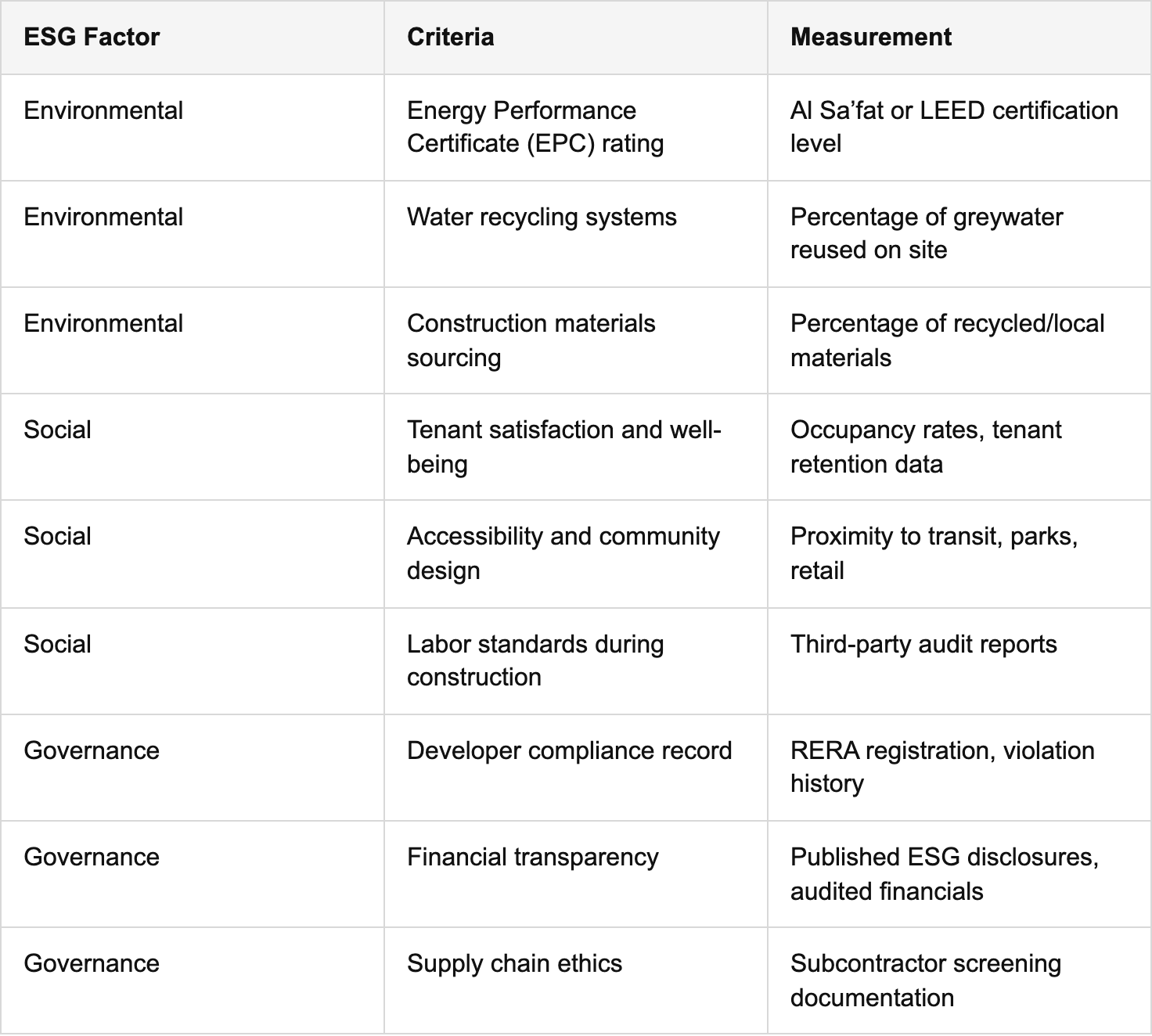
The environmental dimension in Dubai carries particular weight given the climate. Buildings that reduce cooling energy demands through smart insulation, solar integration, or passive design features directly reduce operating costs. Lower service charges make units more attractive to tenants and increase net yield for investors. Every percentage point of energy cost reduction compounds meaningfully over a 10-year hold period.
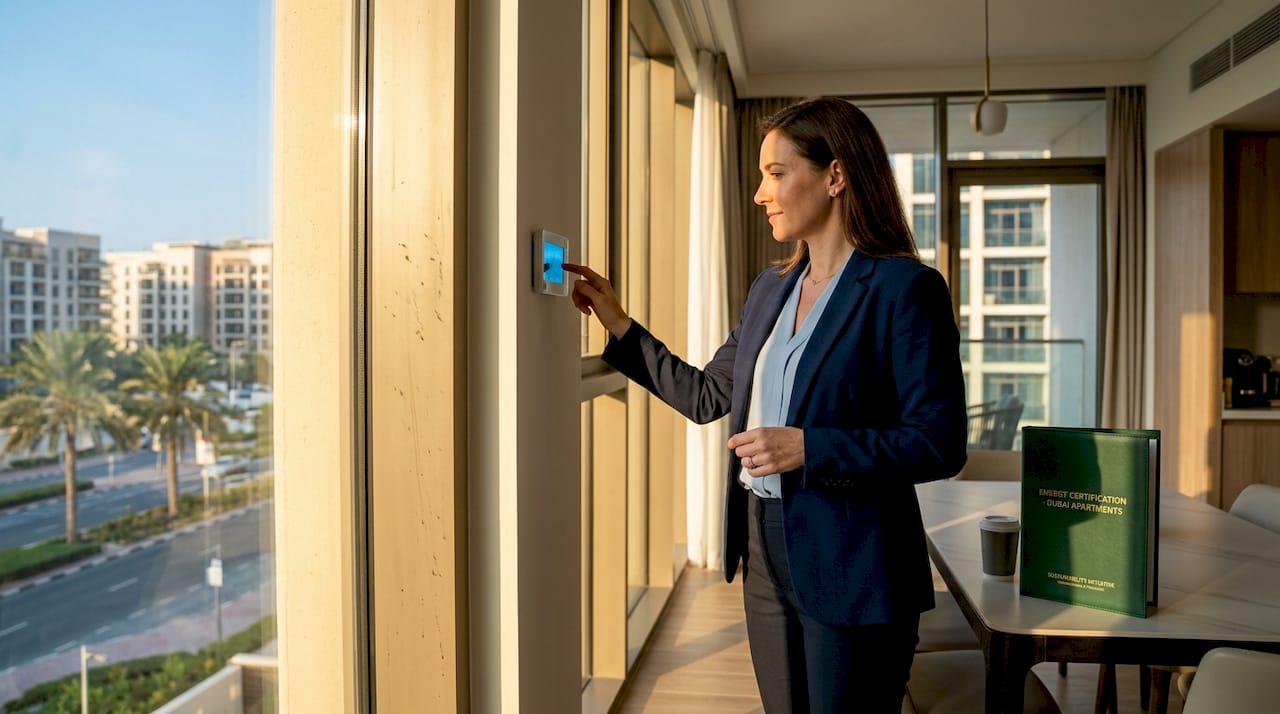
The social dimension is often underweighted by investors focused purely on yield metrics. However, essential Dubai real estate tips consistently highlight that tenant quality and retention are primary drivers of stable income. Developments that prioritize health-focused amenities, green spaces, and community integration attract longer-tenancy, higher-income residents. This directly reduces vacancy risk and turnover costs.
Governance is where many investors make costly oversights. Verifying a developer’s track record against UAE real estate regulations is not merely a compliance box to check. A developer with transparent escrow management, published timelines, and clear ESG disclosure is a fundamentally lower-risk counterparty than one offering higher headline yields without accountability.
Key due diligence actions for ESG governance evaluation:
- Verify RERA (Real Estate Regulatory Authority) registration and complaint history
- Request ESG reports or sustainability disclosures from the developer
- Review ESCROW account management practices for off-plan purchases
- Confirm subcontractor vetting processes and labor compliance certifications
Pro Tip: Cross-reference a developer’s stated sustainability commitments with their actual certification status on Dubai’s official building permit portal. Marketed claims and verified certifications are not always the same.
Challenges and opportunities in implementing sustainable investing
The business case for sustainable investing in Dubai is strong, but implementation is not without friction. Understanding the barriers helps you plan realistically and exploit the gaps where other investors hesitate.
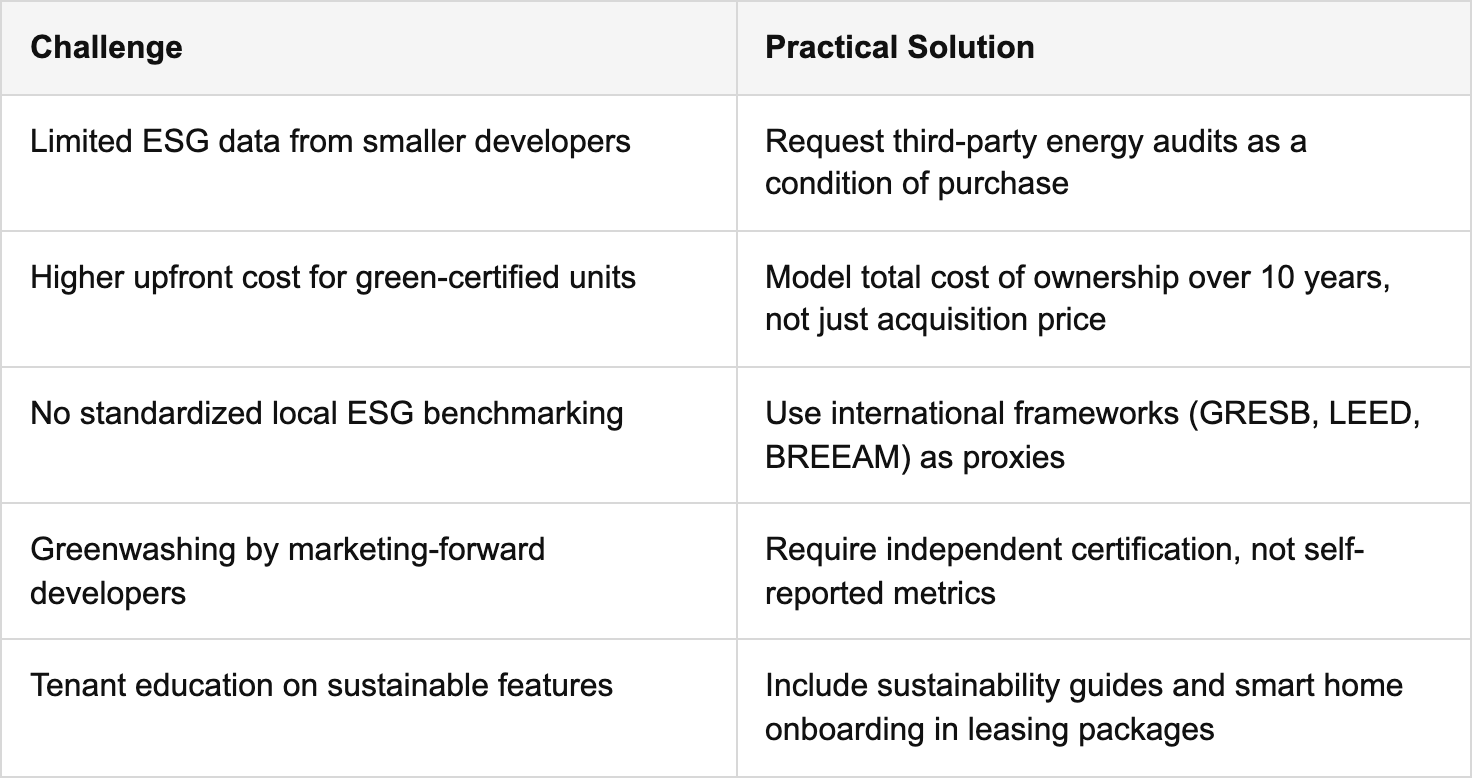
The upfront cost challenge is real but frequently misunderstood. Investors who focus exclusively on acquisition price rather than total cost of ownership systematically undervalue sustainable assets. A unit with a higher purchase price but 30% lower service charges and 10% higher rental demand can easily outperform a cheaper conventional unit over a 7 to 10 year hold period. This is where using SPVs and real estate risk structures can help isolate sustainable assets and model their specific financial performance independently.
The opportunities are significant and growing:
- Rental yield premiums: Green-certified residential and commercial properties in Dubai report higher average rents compared to non-certified comparables in the same submarkets
- Capital appreciation upside: As regulatory requirements tighten, non-compliant older stock will depreciate in relative value, widening the premium for already-compliant assets
- Institutional capital access: Sustainable assets are increasingly eligible for ESG-mandated institutional capital, expanding your potential buyer pool at exit
- Insurance cost benefits: Some Dubai insurers now offer lower premiums for certified green developments due to reduced maintenance and climate risk profiles
Avoiding top Dubai real estate mistakes in this context means not dismissing sustainability as a premium category reserved for luxury buyers. Mid-market sustainable developments are increasingly common and offer strong yield profiles for income-focused investors.
Practical steps for sustainable investing in Dubai real estate
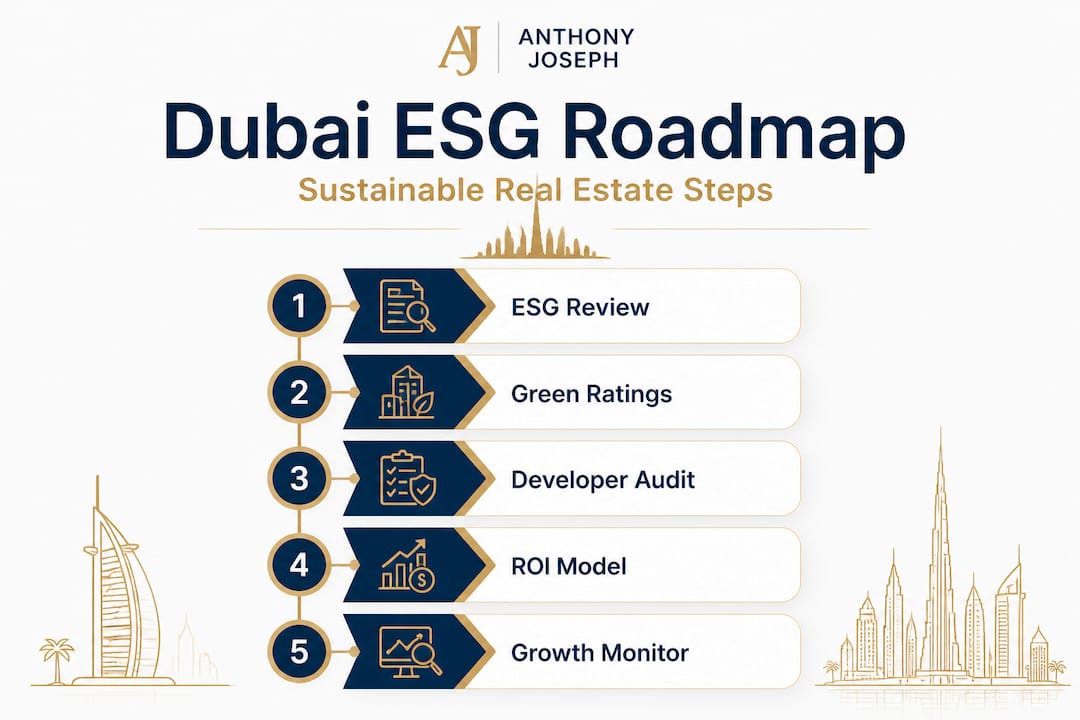
Applying sustainable investing principles to your next Dubai acquisition does not require a team of ESG analysts. It requires a structured process and the right questions. Here is a clear roadmap you can apply immediately.
-
Define your ESG priorities. Before screening properties, decide which ESG factors matter most for your investment thesis. An income investor may prioritize energy efficiency and tenant retention. A value-add investor may focus on governance quality and upgrade potential for green certification.
-
Screen developers and assets. Use green certification status (Al Sa’fat, LEED, BREEAM) as an initial filter. Developers with verified sustainable track records present lower delivery risk in the off-plan segment.
-
Conduct ESG-specific due diligence. Request energy performance certificates, water use data, labor compliance reports, and developer ESG disclosures. Treat missing documentation as a risk factor, not a minor gap.
-
Ask the right questions. Key questions for sellers and developers include: What green certification does this property hold or target? What is the annual service charge history and projected cost trajectory? How are labor practices monitored during construction? What governance mechanisms protect buyer escrow funds?
-
Model sustainability into your ROI projections. Build a 10-year total return model that includes service charge savings, projected rental premium, regulatory compliance cost avoidance, and resale value based on comparable green-certified transactions. This gives you a more accurate return picture than headline yield alone.
-
Monitor ESG performance post-acquisition. Sustainable investing does not end at closing. Track energy consumption data annually, review service charge statements against efficiency benchmarks, and evaluate tenant satisfaction through retention rates and direct feedback.
-
Stay current with regulatory changes. Dubai’s sustainability regulations are evolving rapidly. Set calendar reminders to review RERA and Dubai Municipality updates annually so your portfolio remains ahead of compliance requirements.
Pro Tip: When building your ROI model, apply a conservative 5 to 7% rental premium for green-certified assets over non-certified comparables in the same submarket. Then stress-test your returns at zero premium to verify the investment still meets your threshold. If it does, the sustainability features become pure upside. Detailed frameworks for maximizing ROI in Dubai will help you structure these projections with precision.
Why sustainable investing in real estate is more than a trend
Here is the perspective most market commentary avoids: the investors who frame sustainable investing as optional are not being conservative. They are taking on hidden risk they have not priced correctly.
The most common objection we hear from experienced investors is that green buildings cost more and that the yield differential does not justify the premium. That argument holds up only if you ignore the compounding dynamics. Today’s non-compliant asset is tomorrow’s retrofit liability. As UAE regulatory requirements tighten toward the 2050 Net Zero target, properties that do not meet new energy standards will face mandatory upgrades or declining rental competitiveness. That cost lands on the owner.
The skeptical investor also underestimates demand-side momentum. Multinational tenants with their own ESG reporting requirements increasingly cannot occupy non-certified buildings without breaching their corporate sustainability commitments. That is not a niche preference. It is a structural shift in occupier demand that will accelerate over the next decade.
Early adopters in Dubai’s sustainable real estate market are already building portfolios with lower vacancy risk, stronger tenant quality, and institutional-grade exit optionality. The comprehensive Dubai investment guide makes clear that the strongest long-term positions in this market are built on assets with durable competitive advantages. Green certification is becoming one of the clearest signals of that durability.
The window to acquire well-located, green-certified assets at current pricing will narrow as institutional awareness grows and inventory tightens. The investors who act on that reality today are not paying a premium for sustainability. They are paying fair value for a superior asset class.
Connect with Dubai’s sustainable real estate opportunities
Identifying truly sustainable investment opportunities in Dubai requires more than a checklist. It requires local market intelligence, developer relationships, and the ability to distinguish genuine ESG credentials from marketing.

Working with an advisor who understands both the financial mechanics and the regulatory landscape of Dubai real estate gives you a material advantage. Anthony Joseph and the team at anthonyjosephaj.com specialize in guiding investors through precisely this kind of strategic decision. From identifying green-certified off-plan opportunities to structuring acquisitions with full ESG due diligence, the advisory approach is built around your long-term investment outcomes. If you are ready to align your Dubai real estate portfolio with both financial performance and sustainable value, this is the conversation to start.
Frequently asked questions
How does sustainable investing differ from traditional investing?
Sustainable investing uses both financial analysis and ESG factors to guide decisions, improving long-term risk-adjusted outcomes rather than focusing on yield or price alone.
What ESG factors are most important in Dubai real estate?
Energy efficiency, green construction certifications, developer transparency, and tenant well-being top the priority list for sustainable Dubai property investing, given the climate and regulatory context.
Is sustainable investing more profitable in the long-term?
Research consistently shows that integrating ESG factors leads to improved returns and resilience over time, particularly in growth markets where regulation and demand increasingly reward compliant assets.
What practical steps can investors take to start sustainable real estate investing?
Begin with ESG due diligence by requiring green certification evidence, reviewing developer governance records, and modeling total cost of ownership rather than acquisition price alone.
Are Dubai’s real estate regulations supportive of sustainable investing?
Dubai continues to introduce new green building standards, certification incentives, and sustainability mandates as part of the UAE’s Net Zero by 2050 commitment, creating a regulatory environment that actively rewards sustainable development.


