

UAE Real Estate Regulations: Investor Rights and Risks
Choosing the right property in Dubai means understanding more than just location or price. For high-net-worth investors, the complexity of local regulations can be the deciding factor between security and unexpected risk. With each emirate creating its own rules, Dubai Land Department regulations provide the foundation for fair, transparent transactions and robust investor protections. This overview highlights what sets Dubai’s real estate environment apart, giving you the insight needed to make informed investment and residency choices.
Table of Contents
Defining UAE Real Estate Regulations and Scope
The United Arab Emirates (UAE) real estate regulatory landscape is uniquely structured, with each emirate maintaining distinct governance frameworks. Real estate sector regulations are primarily managed at the emirate level, creating nuanced legal environments across Dubai, Abu Dhabi, and other regions.
Understanding the regulatory scope requires recognizing the comprehensive approach taken by UAE authorities. The regulations extend far beyond simple transaction oversight, encompassing:
Comprehensive Market Management: Addressing overall sector performance and stability
Professional Standards: Establishing guidelines for real estate professionals
Investor Protection: Creating robust frameworks to safeguard international and local investors
Transparency Mechanisms: Implementing strict reporting and disclosure requirements
Dubai’s Regulatory Framework plays a particularly significant role in shaping national real estate practices. Dubai Land Department regulations provide detailed guidelines covering critical areas like:
Anti-money laundering protocols
Property valuation standards
Joint ownership legislation
Transactional transparency rules
The regulatory approach demonstrates a sophisticated understanding of modern real estate dynamics, balancing investor interests with market stability. Each emirate maintains jurisdiction over its specific market, allowing tailored regulatory responses that address local economic conditions and investment patterns.
Pro tip: Always consult local emirate-specific regulations before making any real estate investment, as legal requirements can vary significantly between Dubai, Abu Dhabi, and other UAE regions.
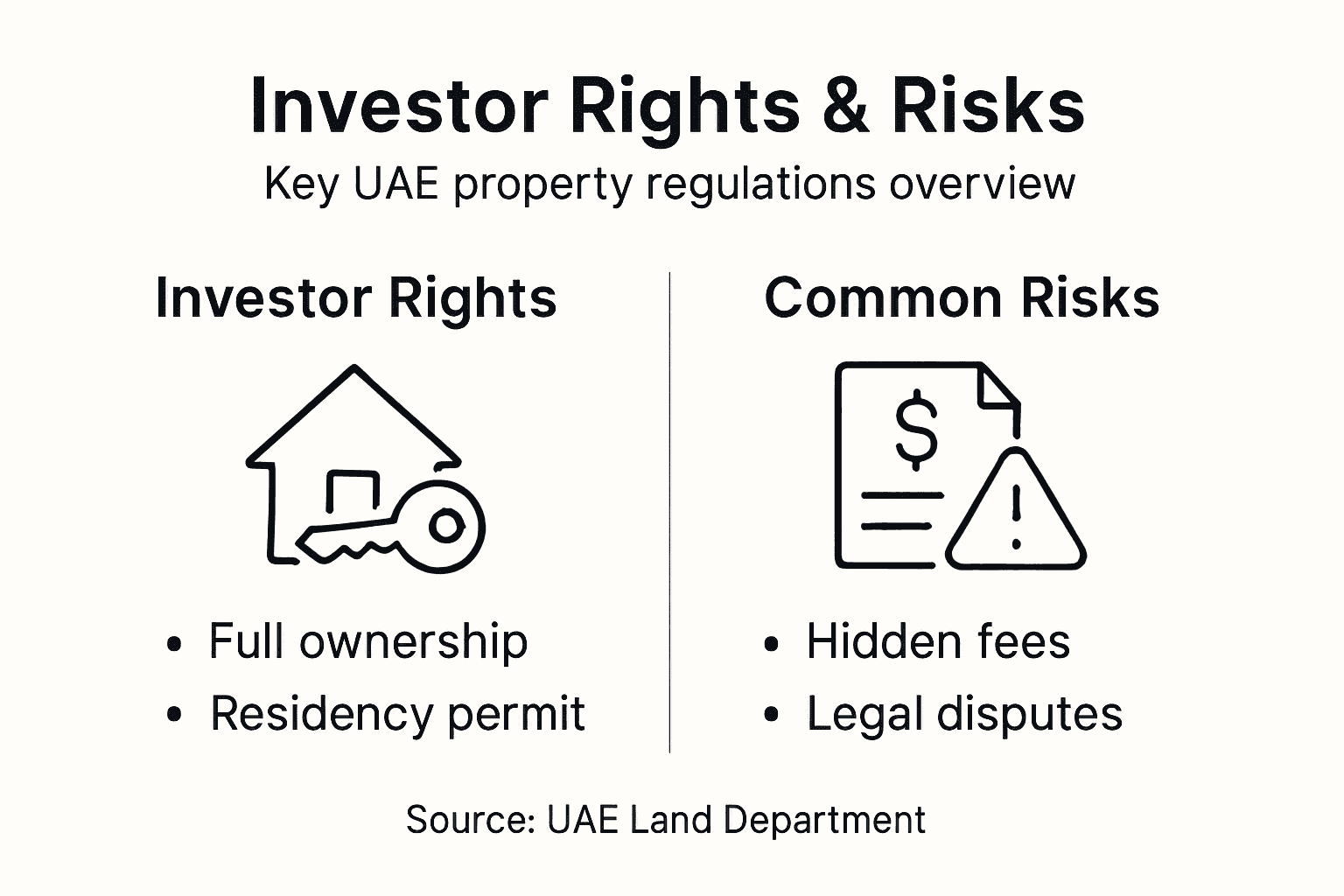
Types of Property Ownership and Designated Zones
The United Arab Emirates offers a complex and nuanced approach to property ownership, with multiple ownership categories designed to accommodate both local and international investors. These ownership types provide varying levels of rights, restrictions, and legal protections depending on the specific emirate and designated zone.
The primary types of property ownership in the UAE include:
Freehold Ownership: Full property rights allowing complete ownership, buying, selling, and inheritance
Leasehold: Temporary property rights typically spanning 99 years
Usufruct: Limited usage rights for a specified duration
Musataha: Rights to develop and use land for a defined period
Granted Land Interests: Special governmental land allocations
Designated Foreign Ownership Zones play a critical role in the UAE’s real estate strategy. Ownership regulations in specific zones are carefully structured to attract international investment while maintaining national economic interests. These zones are primarily located in key emirates like Dubai and Abu Dhabi, offering expatriates and Gulf Cooperation Council (GCC) nationals opportunities to acquire property under specific conditions.

Each emirate maintains unique regulations governing these ownership types. Dubai, for instance, has been particularly progressive in establishing comprehensive frameworks that allow non-nationals to purchase properties in predefined areas. The regulations ensure that foreign investors can participate in the real estate market while adhering to specific legal guidelines that protect both investor and national interests.
The following table provides a side-by-side comparison of major UAE property ownership types to help investors quickly assess key characteristics:

Foreign investors should carefully review zone-specific regulations, as ownership rights can significantly vary between different emirates and even within specific geographical areas.
Pro tip: Conduct thorough due diligence and consult with local real estate legal experts to understand the precise ownership restrictions and opportunities in your target emirate.
Key Regulatory Authorities and Legal Framework
The UAE real estate regulatory landscape is complex, with multiple regulatory agencies overseeing different aspects of property transactions and market operations. This intricate system ensures comprehensive oversight, protecting both local and international investors through a multi-layered governance approach.
Key regulatory bodies in the UAE real estate sector include:
Dubai Land Department (DLD): Primary regulatory authority for Dubai’s real estate market
Real Estate Regulatory Agency (RERA): Responsible for establishing and enforcing real estate regulations
Abu Dhabi Urban Planning Council: Manages property development and urban planning
Federal Financial Compliance Authorities: Oversee anti-money laundering and financial regulations
The legal framework is designed to provide robust protection and transparency. Dubai’s regulatory system encompasses comprehensive regulations covering critical areas such as:
Escrow account management
Brokerage licensing
Marketing standards
Dispute resolution mechanisms
Investor protection protocols
Each emirate maintains a degree of autonomy in implementing real estate regulations, allowing for tailored approaches that address local market conditions. This flexible yet structured system enables responsive governance while maintaining consistent standards across the UAE. The regulatory framework balances investor interests with national economic objectives, creating a transparent and secure environment for property transactions.
To support due diligence, here is a summary of key regulatory authorities and the main focus of their oversight in the UAE real estate market:

Investors should recognize that regulatory compliance is dynamic, with authorities continuously updating rules to reflect market developments and global best practices.
Pro tip: Engage with a local legal expert who specializes in UAE real estate regulations to navigate the nuanced regulatory landscape effectively.
Registration, Escrow, and Transaction Compliance
The UAE real estate market maintains rigorous transaction registration protocols designed to protect investors and ensure market transparency. These comprehensive mechanisms serve as critical safeguards against potential fraud and financial irregularities in property transactions.
Key compliance requirements for real estate transactions include:
Mandatory Land Department Registration: Every property transaction must be officially documented
Escrow Account Regulations: Developers required to use protected financial accounts
Broker Licensing: Strict professional credentials and background checks
Anti-Money Laundering Verification: Comprehensive financial due diligence
Electronic Transaction Systems: Transparent digital documentation processes
Transaction Documentation involves multiple critical steps. Legal transaction frameworks in the UAE mandate extensive documentation to ensure investor protection, including:
Detailed property ownership certificates
Comprehensive sales agreement documentation
Proof of funds and financial clearances
Independent property valuation reports
Verification of all parties’ legal identities
The escrow account system represents a cornerstone of investor protection in UAE real estate transactions. These regulated accounts ensure that developer funds are segregated and can only be accessed upon meeting specific project milestones, thereby minimizing financial risks for property buyers.
Investors must understand that compliance is not optional - it is a fundamental requirement for participating in the UAE real estate market.
Pro tip: Always request and verify the official registration number and escrow account details before making any property investment.
Investor Rights, Obligations, and Residency Options
The UAE real estate market offers international investors a comprehensive suite of rights and legal protections that extend beyond traditional property ownership. These provisions create a robust framework designed to attract and safeguard foreign investment across multiple emirates.
Investors in the UAE enjoy fundamental rights including:
Property Ownership: Full legal rights in designated freehold zones
Transaction Freedom: Ability to buy, sell, lease, and inherit property
Transparent Processes: Access to clear transaction documentation
Dispute Resolution: Structured legal mechanisms for conflict management
Financial Protection: Regulated escrow and investment safeguards
Residency Opportunities represent a significant incentive for real estate investors. Investment-linked visa programs provide pathways to residency through strategic property investments, with options ranging from short-term to long-term visas based on investment value and property type.
Investors must also understand their core obligations, which include:
Complying with local real estate regulations
Paying applicable property taxes and fees
Maintaining proper documentation
Adhering to visa and residency requirements
Ensuring ongoing property maintenance and legal compliance
Foreign investors should view their UAE real estate investment as a comprehensive commitment involving both financial investment and legal responsibilities.
Pro tip: Consult with a specialized UAE real estate legal advisor to fully understand the nuanced rights and obligations associated with your specific investment strategy.
Risks, Fees, Taxes, and Common Mistakes
Navigating the UAE real estate market requires a comprehensive understanding of potential investment risks that can significantly impact financial outcomes. Investors must approach their property investments with meticulous due diligence and a strategic risk management perspective.
Key risks and financial considerations include:
Regulatory Risks: Potential changes in real estate laws and investment regulations
Market Volatility: Fluctuations in property values and rental yields
Compliance Challenges: Complex documentation and registration requirements
Financial Exposures: Transfer fees, service charges, and unexpected administrative costs
Legal Complexities: Potential disputes and contract interpretation challenges
Financial Obligations for real estate investors encompass multiple layers of fees and taxes:
Property transfer fees (typically 4% of property value)
Value Added Tax (VAT) at 5%
Annual service charges
Maintenance and administrative costs
Potential municipality and utility connection fees
Common mistakes that investors frequently encounter include:
Inadequate legal contract reviews
Overlooking hidden costs and fees
Failing to understand local ownership restrictions
Neglecting comprehensive due diligence
Misinterpreting visa and residency investment requirements
Successful UAE real estate investment demands a holistic approach that balances financial planning, legal understanding, and strategic risk management.
Pro tip: Engage a specialized local real estate lawyer to conduct a comprehensive review of all investment documents and potential regulatory implications before finalizing any property transaction.
Navigate UAE Real Estate Regulations with Confidence
Understanding the complexities of UAE real estate regulations, investor rights, and associated risks is essential for making sound investment decisions. This article highlights critical challenges such as navigating freehold ownership rights, managing escrow accounts, and complying with varying emirate-specific rules. If you are concerned about regulatory changes, hidden fees, or residency options linked to property investment, you need expert guidance tailored to your unique goals.
Anthony Joseph offers personalized solutions across property sales, off-plan investments, and legal compliance that reduce risks and maximize returns. His extensive experience ensures you understand every step of the process from registration to securing your investor rights. Don’t let confusing regulations or market fluctuations hold you back from Dubai’s lucrative real estate market.

Take control of your UAE real estate journey today by partnering with a proven expert. Visit Anthony Joseph’s website to access comprehensive services and strategic insights. Explore how his property management and sales expertise can support your investment goals while ensuring full regulatory compliance. Start your path to secure, profitable real estate ownership now by contacting Anthony Joseph and making informed investment decisions based on deep sector knowledge.
Frequently Asked Questions
What are the main types of property ownership available in the UAE?
The UAE offers several types of property ownership, including freehold ownership, leasehold, usufruct, musataha, and granted land interests. Each type has distinct rights and restrictions based on local regulations.
What regulations govern real estate transactions in the UAE?
Real estate transactions are governed by various regulations, including mandatory land department registration, escrow account management, broker licensing, and anti-money laundering verification to protect investors and ensure market transparency.
What rights do investors have when purchasing property in the UAE?
Investors enjoy rights such as full property ownership in designated zones, the freedom to buy, sell, lease, and inherit property, access to transparent processes, and structured dispute resolution mechanisms.
What risks should investors be aware of in the UAE real estate market?
Key risks include regulatory changes, market volatility, compliance challenges, financial exposures such as transfer fees and unexpected costs, and potential legal complexities, such as disputes over contract interpretations.


