

How to invest in Dubai: a strategic guide for global investors
TL;DR:
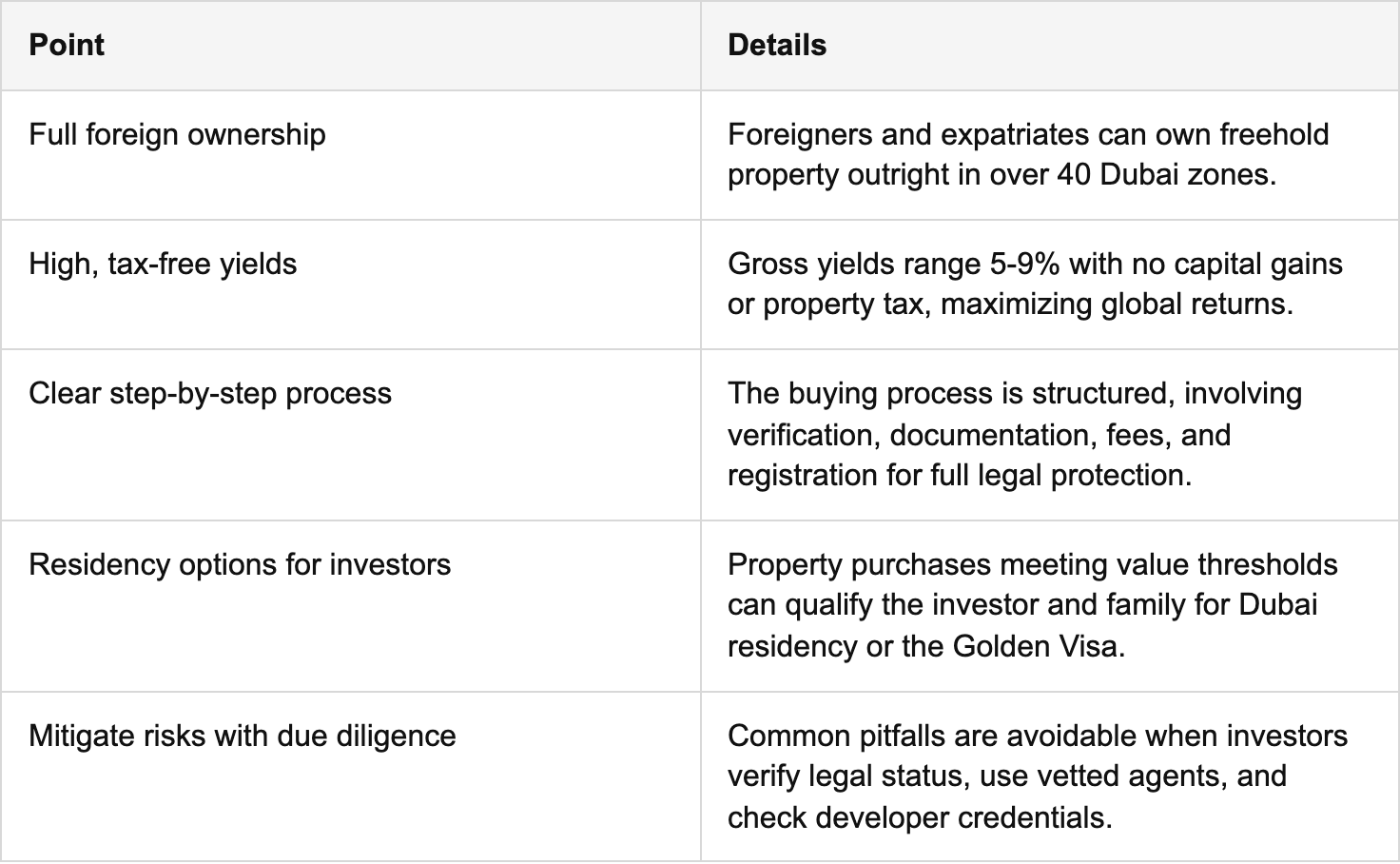
- Dubai offers lucrative rental yields of 3% to 9% with no property taxes.
- The purchase process involves verification, signing an MOU, and completing transfer regulations.
- Due diligence and verifying developer credentials are essential to mitigate risks.
Dubai’s real estate market has become one of the most sought-after destinations for high-net-worth investors worldwide, delivering rental yields that consistently outperform many mature markets. For international buyers, the opportunity is real and well-structured: freehold property in over 40 designated areas is fully accessible to foreigners, with no residency visa required to purchase. Yet many investors still enter without a clear process, leaving returns on the table or exposing themselves to avoidable risks. This guide walks you through the market landscape, the exact acquisition process, yield optimization strategies, residency pathways, and the due diligence practices that separate disciplined investors from those who learn the hard way.
Table of Contents
- Understanding Dubai’s real estate landscape
- Step-by-step process to invest in Dubai property
- Residency, yields, and key investment strategies
- Risks, due diligence, and how to protect your investment
- Expert perspective: What global investors overlook in Dubai
- Ready to invest in Dubai with expert guidance?
- Frequently asked questions
Key Takeaways
Understanding Dubai’s real estate landscape
With Dubai’s allure established, let’s break down exactly what makes its property market accessible and lucrative for international investors.
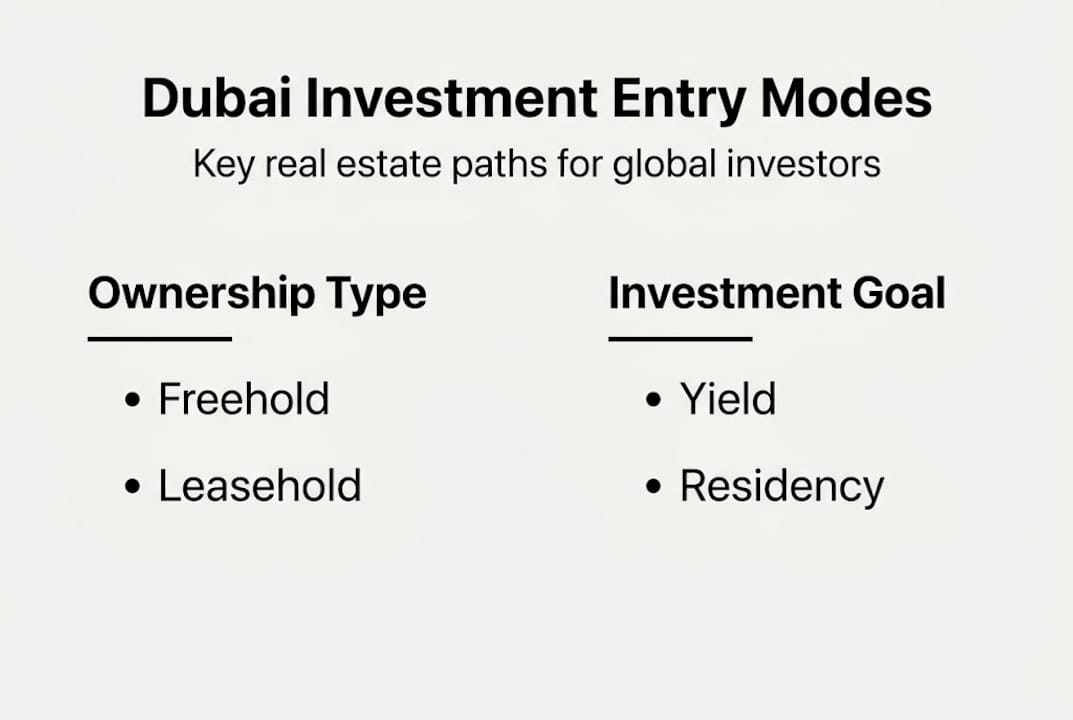
Dubai operates a dual ownership system: freehold and leasehold. Freehold means you own the property and land outright, with no time restriction. Leasehold typically grants rights for up to 99 years without land ownership. As a foreign investor, you can purchase freehold property in over 40 designated areas, including Dubai Marina, Downtown Dubai, Palm Jumeirah, Jumeirah Village Circle (JVC), and Business Bay. These zones were specifically opened to international ownership and offer the full spectrum of residential and commercial assets.
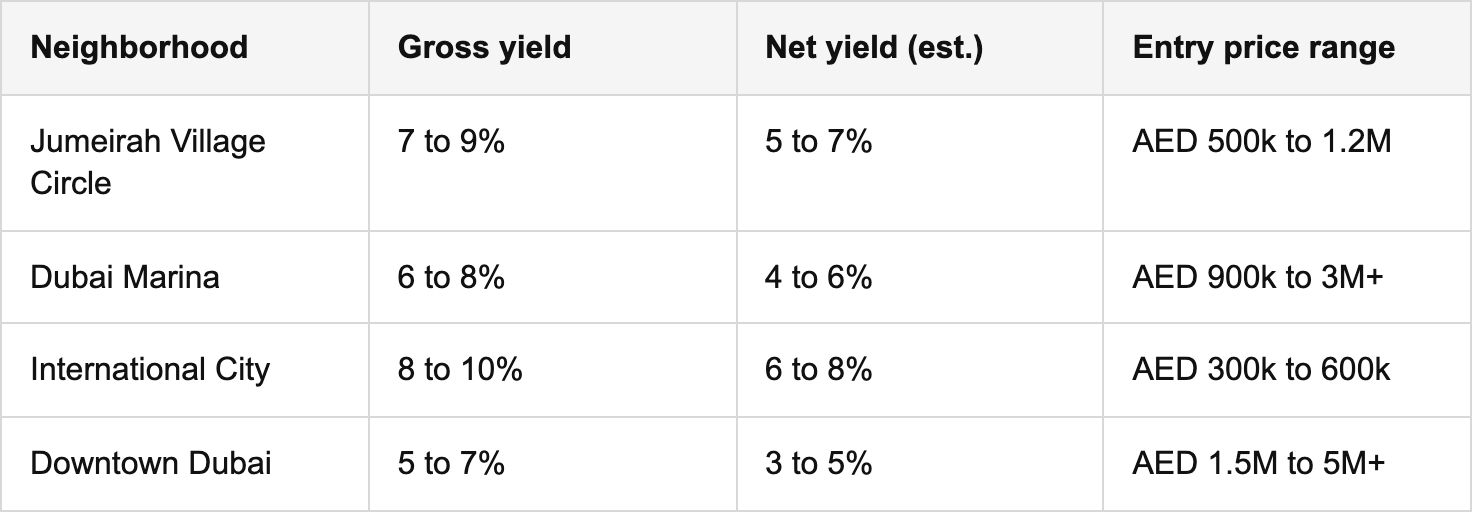
The yield potential across these areas is compelling. Gross yields of 5 to 9% are achievable depending on location, with net returns typically landing between 3% and 8% after service charges and management costs. JVC and International City tend to produce higher gross yields due to lower entry prices, while Dubai Marina and Downtown command premium rents but also higher service fees.
Beyond yields, Dubai’s tax structure is a significant advantage. There is no capital gains tax, no annual property tax, and no income tax on rental earnings. This means your gross return is far closer to your actual take-home than in markets like the UK, Australia, or Canada. You can read more about the advantages of Dubai property for global investors, including how the regulatory environment supports foreign ownership.
“Dubai’s zero-tax environment on property income and capital gains positions it as one of the most favorable jurisdictions globally for real estate investors.”
Transaction volume has grown steadily, with 2025 recording over 180,000 real estate transactions, reflecting sustained demand from both end-users and investors. For a full breakdown of transfer fees and associated costs, the Dubai property taxes guide covers every line item you should budget for before signing.
Step-by-step process to invest in Dubai property
Understanding the market sets the stage. Now let’s move step by step through the process of acquiring investment property in Dubai.
The buying process in Dubai follows a structured sequence: select your property, verify its legal status, sign the Memorandum of Understanding (MOU), pay the deposit, obtain the developer No Objection Certificate (NOC), arrange financing if needed, complete the Dubai Land Department (DLD) transfer, and receive your title deed. Each step has specific requirements and timelines you need to respect.
- Property selection and verification. Use the DLD REST app to confirm the property’s registration status, developer credentials, and any existing mortgages or liens. Never skip this step.
- Sign the MOU and pay the deposit. The MOU (Form F) outlines all agreed terms. A deposit of 10% is standard and held in a trust or by the agent until transfer.
- Obtain the developer NOC. The developer confirms there are no outstanding service charges or liabilities on the unit before transfer can proceed.
- Arrange mortgage financing if applicable. Non-residents can access mortgages from UAE banks, typically at 50% loan-to-value (LTV) for non-residents, compared to 80% for UAE residents. You will need a valid passport, proof of income, and bank statements.
- Transfer at the DLD Trustee office. Both buyer and seller (or their legal representatives) attend. The 4% DLD transfer fee is paid here, along with trustee fees.
- Receive your title deed. This is your legal proof of ownership, issued by the DLD.
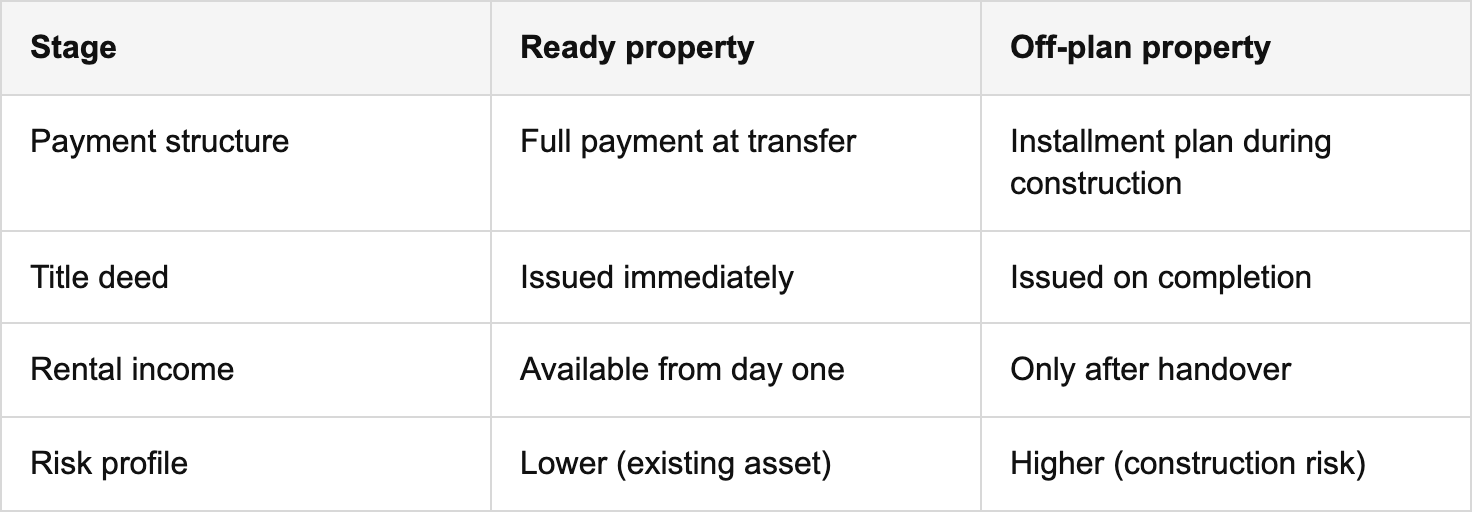
Pro Tip: For off-plan purchases, always verify that the developer’s escrow account is registered with RERA (Real Estate Regulatory Agency). This ensures your payments are legally protected and can only be used for construction of the specific project.
For a detailed walkthrough, the steps to buying Dubai property guide and resources on how to evaluate Dubai real estate will help you assess any deal with confidence.
Residency, yields, and key investment strategies
With the transaction process outlined, it’s crucial to understand how investment connects with residency, yield, and long-term strategy.
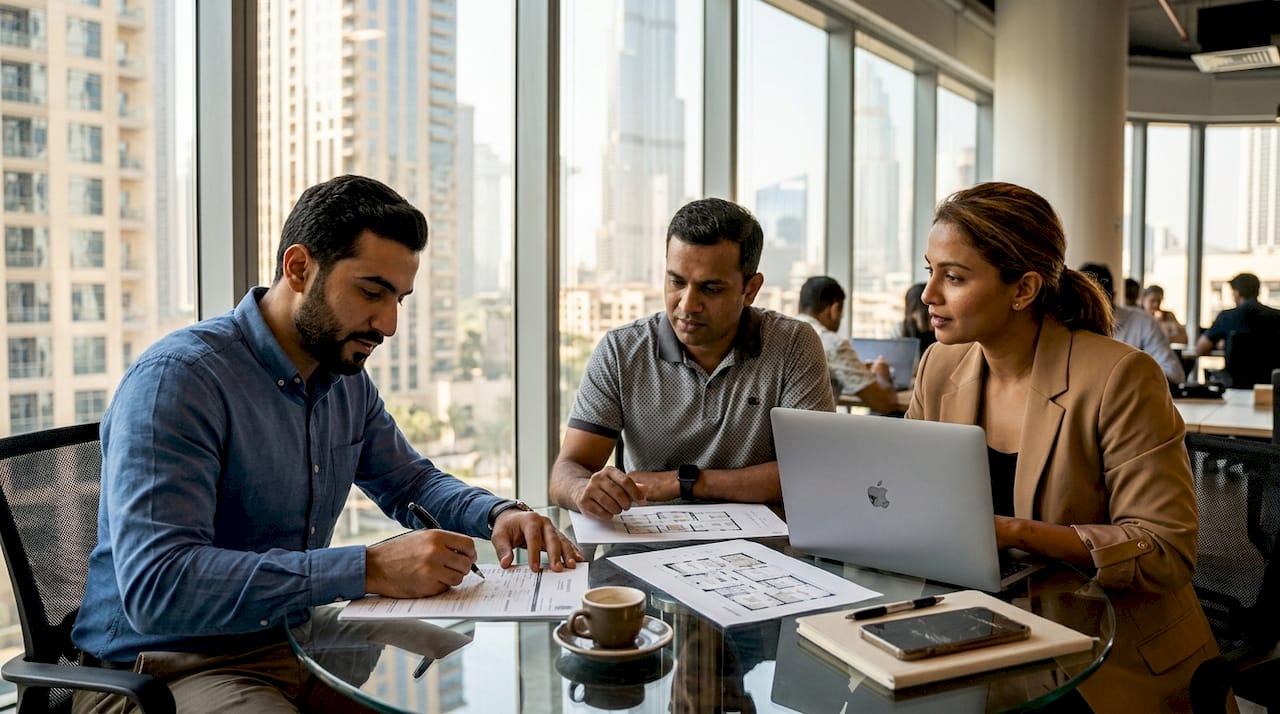
Dubai’s investor visa program directly ties property ownership to residency rights. A 3-year visa from AED 750,000 or a 10-year Golden Visa from AED 2 million are both available, and you can combine the value of multiple units to meet the threshold. This is a significant benefit for investors who want to establish a physical presence in the UAE without committing to a single high-value asset.
For yield optimization, the numbers matter more than the headline figure. Always model your net yield, not just the gross. Here is what to factor in:
- Annual service charges (typically AED 10 to 25 per square foot depending on the building)
- Property management fees (6 to 10% of annual rent)
- Vacancy periods (budget for 4 to 6 weeks per year in most markets)
- Maintenance and minor repairs
- Mortgage interest if leveraged
Statistic: Investors who account for all operational costs before purchase consistently report net yields 1.5 to 2% higher than those who rely on gross yield figures alone, simply because they negotiate better entry prices and select lower-fee buildings.
Strategically, Dubai investment for HNWI advisors recommend prioritizing emerging areas for high yields while holding established districts for liquidity and capital preservation. JVC and Dubai South suit yield-focused investors. Palm Jumeirah and Downtown suit those prioritizing asset quality and resale value.
For portfolio construction, acquiring multiple AED 750,000 units across different neighborhoods diversifies both yield risk and geographic exposure while keeping each unit eligible for residency visa qualification. This approach also reduces your dependency on any single tenant or building’s service charge structure.
Pro Tip: If your goal is the 10-year Golden Visa, consider whether a single AED 2 million property or two AED 1 million properties better serves your income diversification and risk profile. Two properties in different areas often provide more stable combined occupancy rates.
For a full breakdown of your pathway options, the guide on Dubai residency through investment and Dubai residency strategies cover every visa category in detail.
Risks, due diligence, and how to protect your investment
Having explored the benefits and strategies, it’s equally important to map out the major risks and how you can overcome them through smart due diligence.
Dubai’s market is not without its vulnerabilities. Key risks include construction delays, scams, vacancy, high service charges, and regulatory changes. Each of these can erode returns significantly if not anticipated.
Here are the most common risks and how to address them:
- Construction delays. Off-plan projects can be delayed by 12 to 36 months. Verify the developer’s track record on previous projects through RERA’s developer registration portal.
- Scams and misrepresentation. Always confirm the agent holds a valid RERA broker card. Verify property listings on the DLD’s official platform before paying any deposit.
- Oversupply and vacancy. Some submarkets, particularly mid-tier apartment clusters, face periodic oversupply. Research current occupancy rates in the specific building or community before buying.
- High service charges. Some buildings carry service charges that consume 2 to 3% of property value annually. Always request the last two years of service charge statements before committing.
- Regulatory changes. UAE real estate law evolves. Stay current with RERA guidelines and ensure your purchase contract complies with the latest regulations.
“The most protected investors are not those who buy in the ‘best’ areas, but those who complete the most rigorous verification before signing anything.”
Pro Tip: Before signing any MOU, run a title search through the DLD to confirm ownership history, existing mortgages, and any court orders or disputes attached to the property. This takes less than 24 hours and costs very little relative to the protection it provides.
For structured guidance, the due diligence for Dubai property guide and the due diligence checklist give you a complete verification framework. You should also review the common mistakes to avoid and stay informed on UAE investor regulations to keep your investment legally sound.
Expert perspective: What global investors overlook in Dubai
With the how-to covered in detail, here is what seasoned Dubai investors really wish they had known before taking the plunge.
Most investors arrive focused on one number: the gross yield. That figure is real, but it is not the number that determines whether your investment succeeds. The operational layer beneath it, service charges, management fees, vacancy cycles, and currency conversion costs, is where returns either hold up or quietly erode.
I have seen high-net-worth buyers purchase in premium towers based on projected yields, only to discover that annual service charges alone consumed 30% of their rental income. The fix is straightforward: model your net return before you commit, not after. Request actual service charge data, not estimates.
There is also a tendency to equate ‘prime location’ with ‘safe investment.’ That assumption is flawed. Safety comes from structured due diligence in Dubai real estate, not from a prestigious address. A well-verified property in JVC with clean title and a reputable developer carries far less risk than an unverified off-plan unit in Downtown Dubai.
Finally, the most successful investors align their property strategy with their residency goals from the outset. Buying reactively, then trying to retrofit a visa strategy, leads to suboptimal portfolio construction. Plan both simultaneously.
Ready to invest in Dubai with expert guidance?
Armed with the right knowledge, you can approach your Dubai investment journey confidently. Ready to make a safe, strategic move?
At anthonyjosephaj.com, we work directly with international investors and expatriates to source, verify, and secure high-yield Dubai properties that align with both financial goals and residency objectives. Our approach is tailored, not transactional. Every client receives a personalized strategy session that maps their budget, risk tolerance, and visa goals to the right assets.

Whether you are acquiring your first Dubai investment property or expanding an existing portfolio, we guide you through every step, from initial market analysis to title deed in hand. Explore the full property buying steps process on our platform, or connect with us directly to schedule your consultation today.
Frequently asked questions
Can foreigners fully own property in Dubai?
Yes, foreigners can purchase and fully own freehold property in over 40 designated areas in Dubai, with no need for a UAE residency visa to complete the purchase.
What is the minimum investment for Dubai property residency?
The minimum is AED 750,000 for a 3-year investor visa, or AED 2 million for a 10-year Golden Visa, with the 3-year visa from AED 750k applicable even to mortgaged or off-plan property meeting the threshold.
What are typical transaction costs for buying property in Dubai?
Expect total costs of 7 to 9% of the purchase price, covering the 4% DLD transfer fee, 2% agent commission, and minor trustee and NOC fees.
What risks should Dubai real estate investors watch out for?
Construction delays, scams, and high service charges are the most common risks, all of which are significantly reduced through RERA and DLD verification and working with a licensed broker.
Are there any property taxes or capital gains tax in Dubai?
Dubai charges no capital gains or property tax, making it one of the most tax-efficient real estate markets available to global investors.


