

Top Mistakes to Avoid in Dubai Real Estate for Investors
Dubai’s real estate market offers exceptional returns, with some areas delivering rental yields exceeding 7% annually. Yet international investors routinely lose substantial capital by overlooking critical local regulations, developer credentials, and hidden costs. Even experienced high-net-worth individuals stumble when they underestimate Dubai’s unique legal framework and market dynamics. This guide reveals the five most costly mistakes newcomers make and provides expert-backed strategies to protect your investment from day one.
Table of Contents
- Understanding Dubai’s real estate landscape: Unique market dynamics
- Mistake 1: Ignoring local property laws and regulations
- Mistake 2: Overlooking due diligence on developers and projects
- Mistake 3: Underestimating costs and hidden fees
- Mistake 4: Failing to account for rental laws and tenant protections
- Mistake 5: Misjudging market timing and ignoring expert advice
- Summary: Common mistakes side-by-side
- Work with a trusted Dubai real estate advisor
- Frequently asked questions
Key Takeaways
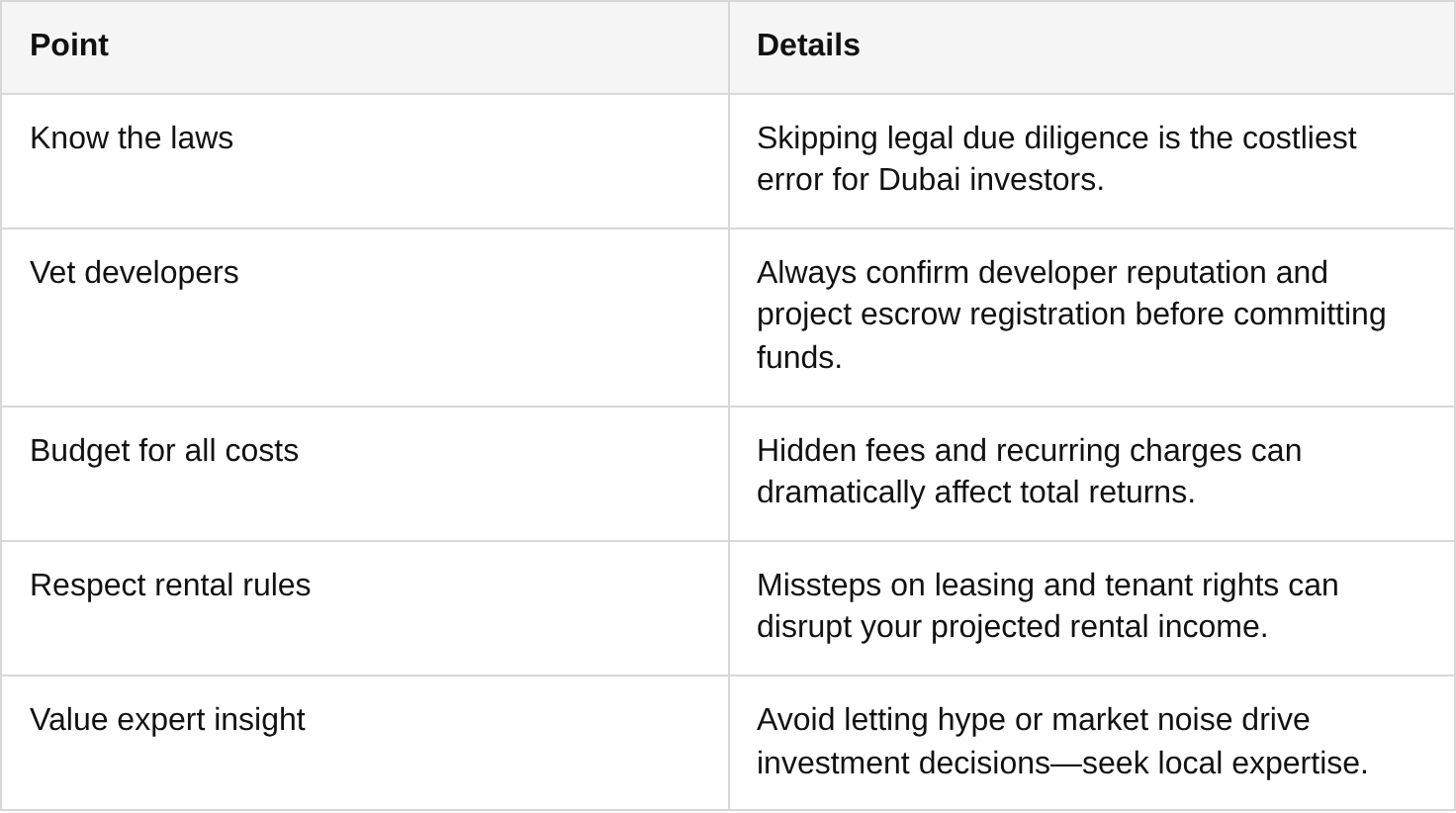
Understanding Dubai’s real estate landscape: Unique market dynamics
Dubai attracts global capital for compelling reasons. Its strategic position as a Middle Eastern business hub, zero income tax environment, and world-class infrastructure create an investment climate few cities can match. The emirate processed over AED 500 billion in property transactions in recent years, signaling sustained international confidence.
Yet this opportunity comes with complexity. Dubai’s property market is subject to evolving laws, foreign ownership restrictions, and fluctuating demand cycles that catch unprepared buyers off guard. Policy updates from the Dubai Land Department can reshape transaction requirements within months, while supply surges in certain districts create price volatility that demands careful timing.
Key market features you must understand:
- Freehold versus leasehold zones: Only designated areas permit full foreign ownership, while others restrict purchases to UAE nationals or offer long-term leases
- Off-plan dominance: Approximately 60% of transactions involve properties still under construction, introducing completion risk
- Developer reliability spectrum: Track records vary dramatically, from established firms with decades of delivery to newcomers with limited portfolios
- Regulatory oversight: UAE real estate regulations require escrow accounts, RERA registration, and standardized contracts, but enforcement depends on buyer vigilance
Market cycles in Dubai move faster than in mature Western markets. A district experiencing 15% annual appreciation can shift to oversupply within 18 months if multiple large projects complete simultaneously. Understanding these dynamics separates profitable investments from capital traps.
Mistake 1: Ignoring local property laws and regulations
The most expensive errors stem from legal oversights. International buyers accustomed to straightforward property systems often assume Dubai operates similarly, only to discover unfamiliarity with ownership restrictions and compliance requirements has led to significant investor losses.
Critical legal traps include:
- Foreign ownership zones: Purchasing outside designated freehold areas means you cannot hold title, regardless of what a seller claims
- DLD registration requirements: All transactions must be registered with the Dubai Land Department within specific timeframes or face penalties
- Escrow account mandates: Off-plan purchases require developers to maintain approved escrow accounts, but buyers must verify this independently
- NOC documentation: Obtaining a No Objection Certificate from your developer is mandatory for resale, yet some projects have restrictive transfer policies buried in fine print
Many investors skip verifying developer registration with RERA, assuming all marketed projects carry official approval. This assumption has cost buyers millions when unregistered developments faced legal challenges or failed to secure necessary permits.
Pro Tip: Before transferring any funds, request proof of RERA developer registration, confirmed escrow account details, and a complete copy of the Sales Purchase Agreement. Review these documents with a Dubai-licensed legal advisor who specializes in real estate transactions.
One investor shared: “I nearly purchased a luxury apartment advertised as freehold, only to discover the building sat just outside the designated zone. My legal review caught this before I committed, saving me from owning a property I could never legally hold.”
The common mistakes buyers make often trace back to skipping this fundamental legal verification step.
Mistake 2: Overlooking due diligence on developers and projects
Dubai’s construction boom means dozens of developers compete for investor capital. While established firms maintain strong delivery records, newer entrants sometimes lack the financial depth or project management expertise to complete ambitious developments on schedule.
Investors have lost money with unregistered or unproven developers who delayed projects by years or, in worst cases, abandoned them entirely. Your due diligence checklist must include:
- RERA registration verification: Confirm both developer and specific project registration through official channels
- Track record analysis: Review the developer’s completed projects, delivery timelines, and any history of disputes
- Financial stability assessment: Larger, established developers with diverse portfolios present lower completion risk
- Escrow account confirmation: Verify that your payments flow into a registered escrow account, not directly to the developer
- Project status inspection: Visit the site, review construction progress, and confirm permits are current
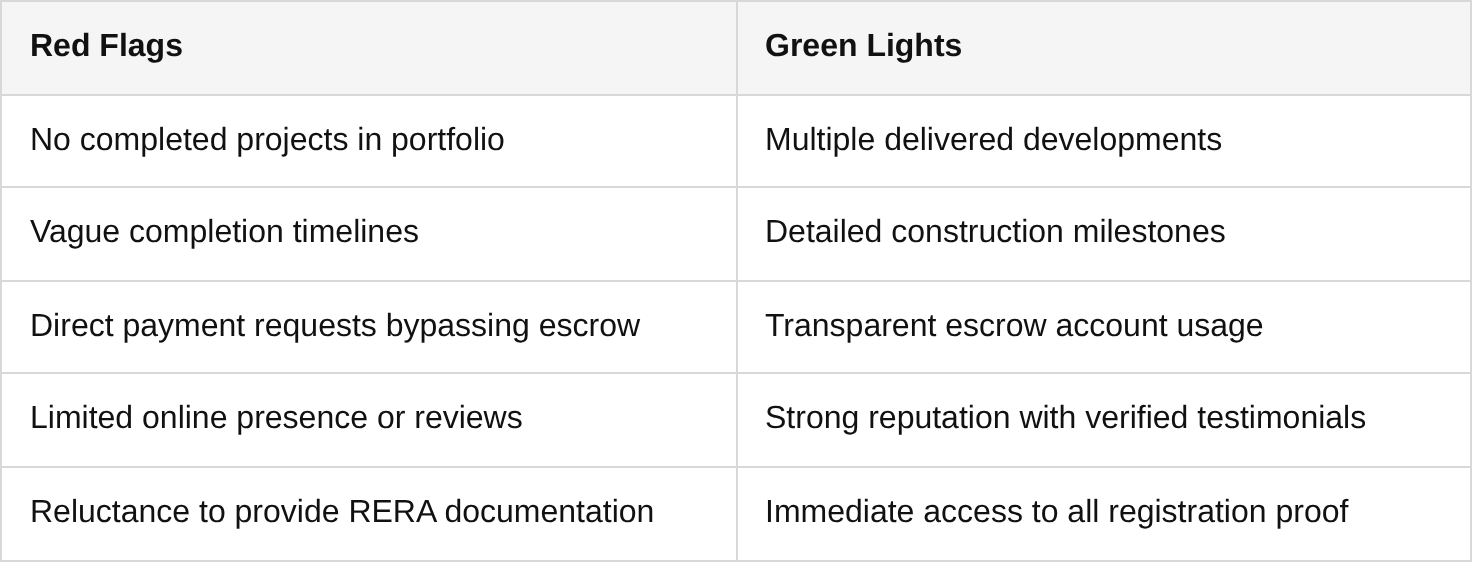
Off-plan purchases amplify these risks. Dubai’s off-plan rules provide some buyer protections, but your primary defense remains thorough developer vetting before commitment.
Pro Tip: Request a list of previous buyers from completed projects and contact them directly. Their firsthand experience with the developer’s communication, quality standards, and post-handover support reveals more than marketing materials ever will.
Mistake 3: Underestimating costs and hidden fees
Sticker price represents only part of your total investment. Buyers who budget solely for the purchase price face unpleasant surprises when transaction fees and recurring costs consume their projected returns.
Upfront costs you must account for:
- DLD transfer fees: 4% of property value, split between buyer and seller unless negotiated otherwise
- Agency commission: Typically 2% of purchase price, paid by the buyer
- Mortgage registration: 0.25% of loan amount if financing
- Legal fees: AED 5,000 to AED 15,000 for transaction review and representation
- Property valuation: AED 2,500 to AED 3,500 for mortgage purposes
Ongoing costs that impact your net yield:
- Service charges: AED 10 to AED 25 per square foot annually for maintenance and common areas
- Chiller fees: Centralized cooling can add AED 5,000 to AED 15,000 yearly in some buildings
- Property management: 5% to 8% of annual rent if you hire professional management
- Maintenance reserve: Budget 1% to 2% of property value annually for repairs and upgrades
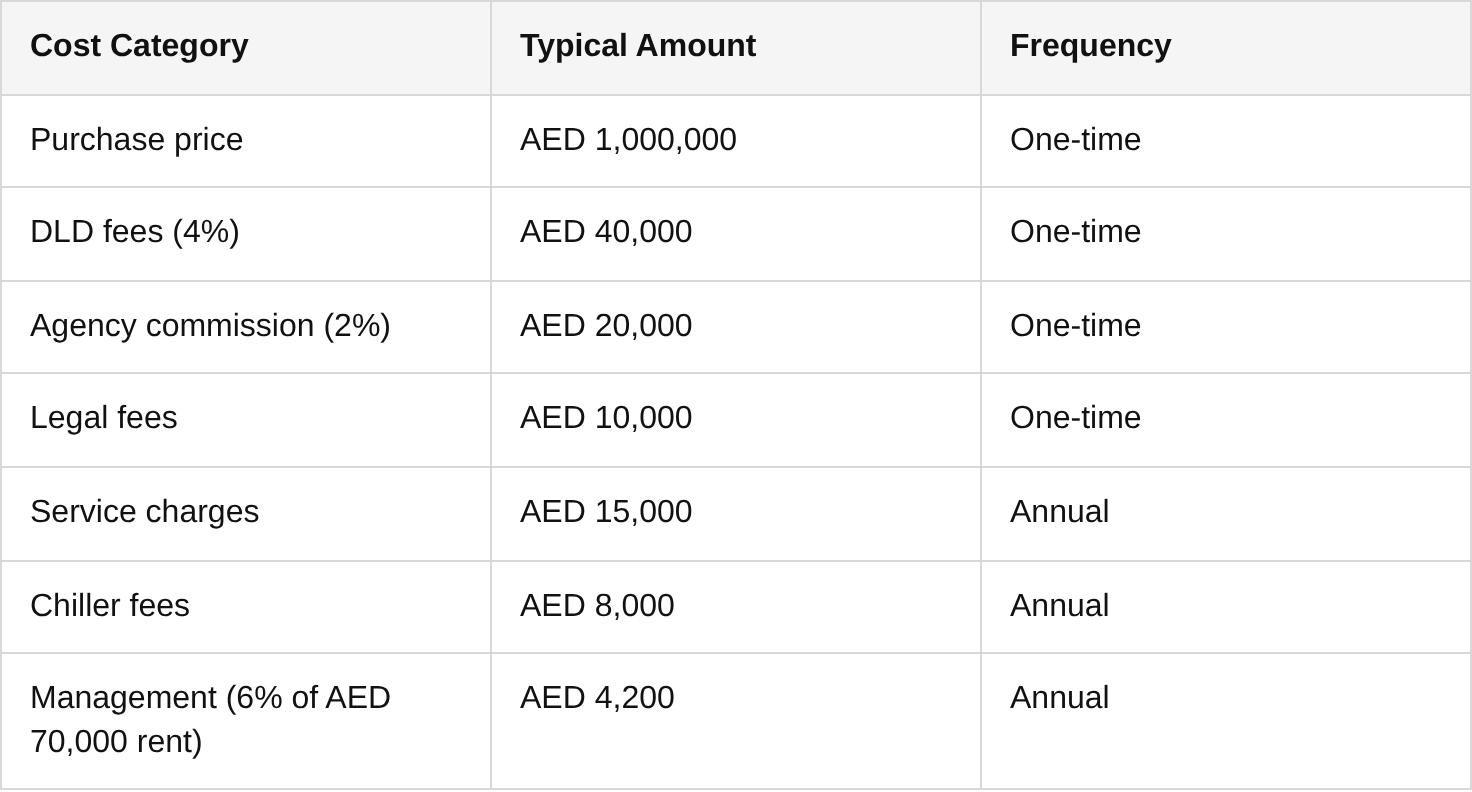
These figures show that a AED 1 million property actually requires approximately AED 1.07 million upfront, plus AED 27,200 in annual costs. If your projected rental income is AED 70,000 yearly, your net yield drops from 7% to approximately 4.3% after expenses.

Understanding all Dubai property fees before you commit ensures your investment model reflects reality, not optimistic projections that ignore these substantial costs.
Mistake 4: Failing to account for rental laws and tenant protections
Dubai’s rental market operates under tenant-friendly regulations that protect occupants while imposing specific obligations on landlords. Investors face delayed income and legal disputes when they misunderstand these frameworks.
Key rental regulations:
- Ejari registration: All tenancy contracts must be registered with Ejari within 30 days of signing, creating an official record
- Rent increase limits: Annual increases cannot exceed guidelines published by the Dubai Land Department’s rent index
- Notice periods: Landlords must provide 90 days’ notice for non-renewal, while tenants need only 60 days
- Security deposits: Limited to one month’s rent for unfurnished units, two months for furnished properties
- Eviction restrictions: You can only evict tenants for specific reasons outlined in Law No. 26 of 2007, with proper notice and documentation
Dispute resolution flows through the Rental Dispute Settlement Centre, which tends to favor tenants when landlords fail to follow proper procedures. Missing Ejari registration or attempting to increase rent beyond permitted limits can result in your case being dismissed and legal costs awarded against you.
Pro Tip: Always provide Ejari-registered contracts and maintain detailed records of all property condition documentation, payment receipts, and communication with tenants. These records become essential if disputes arise.
Understanding Dubai’s rental laws protects your income stream and ensures you can enforce your rights when necessary, while respecting the strong tenant protections that make Dubai attractive to long-term renters.
Mistake 5: Misjudging market timing and ignoring expert advice
Even when you navigate legal requirements and choose solid developers, poor timing or dismissing professional guidance can transform a sound investment into a mediocre one. Data-driven insights help investors avoid overpaying during hype cycles or missing optimal entry points.
Common timing mistakes:
- FOMO-driven purchases: Buying at peak prices during launch events because units are “selling fast” often means overpaying by 10% to 15%
- Ignoring supply pipelines: Purchasing in districts with massive upcoming completions sets you up for rental yield compression
- Chasing past performance: Areas that delivered strong returns last year may be entering oversupply as developers flood the zone with new projects
- Dismissing market corrections: Viewing temporary price dips as disasters rather than potential buying opportunities
Qualified local advisors bring market intelligence you cannot access independently. They track upcoming project launches, understand which developers face financial pressure, and recognize early signals of shifting demand patterns.
One seasoned investor noted: “I initially dismissed my advisor’s caution about a trendy district, convinced the hype was justified. Six months later, three major projects announced completion dates within the same quarter. Rental rates dropped 12% as supply flooded the market. I should have listened.”
Professional guidance helps you separate genuine opportunity from marketing noise. Before committing capital, consider these factors that experienced investors weigh carefully.
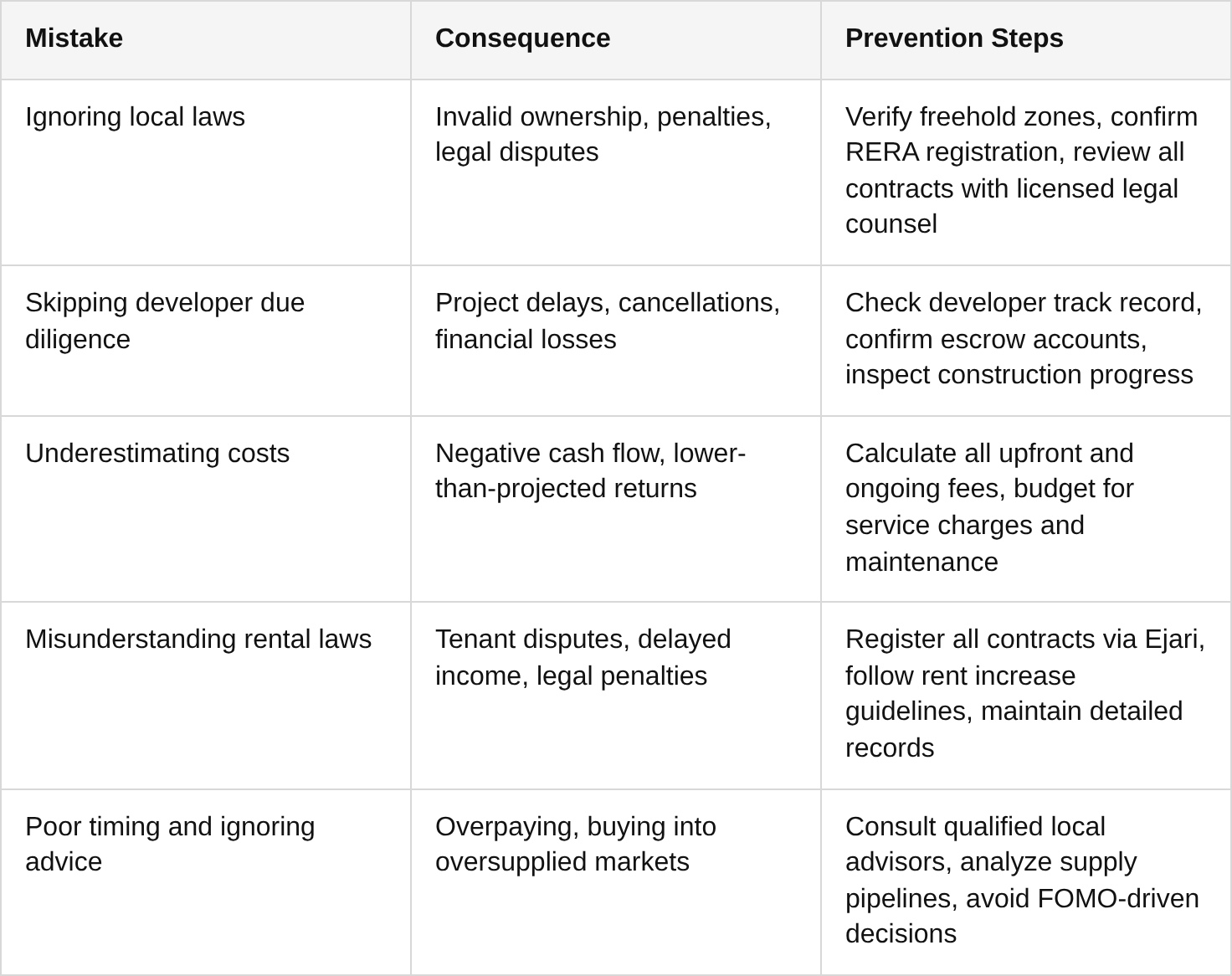
Summary: Common mistakes side-by-side
This comparison table consolidates the five critical errors and your prevention strategies:
Work with a trusted Dubai real estate advisor
Navigating Dubai’s property market successfully requires more than research. You need on-the-ground expertise that understands current regulations, recognizes which developers deliver on promises, and identifies genuine value before it becomes obvious to the broader market.

Local guidance transforms your investment approach from reactive to strategic. A qualified advisor handles compliance verification, negotiates favorable terms, and connects you with legal and financial professionals who specialize in international investor needs. This support proves especially valuable when managing properties remotely or coordinating multiple acquisitions across different districts.
Whether you’re making your first Dubai purchase or expanding an existing portfolio, working with experienced local professionals ensures you avoid the costly mistakes that derail less-prepared investors. Your success depends on combining market knowledge with practical execution support that only seasoned Dubai specialists can provide.
Frequently asked questions
Can foreigners buy property in Dubai?
Yes, foreigners can buy in designated freehold zones with proper documentation, but must verify zone eligibility and developer registration before committing funds.
What are the main fees when purchasing a property in Dubai?
Expect to pay DLD transfer fees, agency commission, registration charges, legal fees, and ongoing service charges that significantly impact your total investment cost.
How can I check if a Dubai developer is legitimate?
Always verify developer credentials via RERA and confirm project escrow account status through official channels before transferring any payments.
What are the risks with off-plan property purchases?
Off-plan properties carry higher risk due to potential project delays, specification changes, or developer financial difficulties that can extend completion timelines by years.
Are rental laws in Dubai favorable to landlords or tenants?
Dubai maintains tenant-friendly regulations with strong protections, including mandatory Ejari registration, rent increase limits, and formal dispute resolution procedures that favor proper documentation.
Recommended
- 7 Essential Dubai Real Estate Investment Tips for Success
- Dubai Real Estate Investment: Complete Guide
- 7 Essential Real Estate Negotiation Tips for Dubai Investors
- How to Evaluate Dubai Real Estate for Smart Investments
- How to Safeguard Rental Investment: A Step-by-Step Guide - Rental Income Insurance


