
Dubai holding company: asset protection & tax benefits
Many entrepreneurs assume that setting up a holding company in Dubai is reserved for global conglomerates with armies of lawyers. That assumption is costing them real money. Dubai’s legal and tax framework is designed to serve international investors of all scales, offering genuine asset protection, significant tax advantages, and succession planning tools that most jurisdictions simply cannot match. Whether you hold real estate across multiple markets, own intellectual property, or manage a portfolio of operating businesses, a Dubai holding structure can be one of the most powerful financial decisions you make in 2026.
Table of Contents
- Understanding holding companies in Dubai
- Key benefits: Asset protection, tax optimization, and succession
- Choosing the right structure and setup process
- Risks, challenges, and evolving policies
- A seasoned perspective: What most guides miss about Dubai holding companies
- Get expert support for your Dubai holding company setup
- Frequently asked questions
Key Takeaways
Understanding holding companies in Dubai
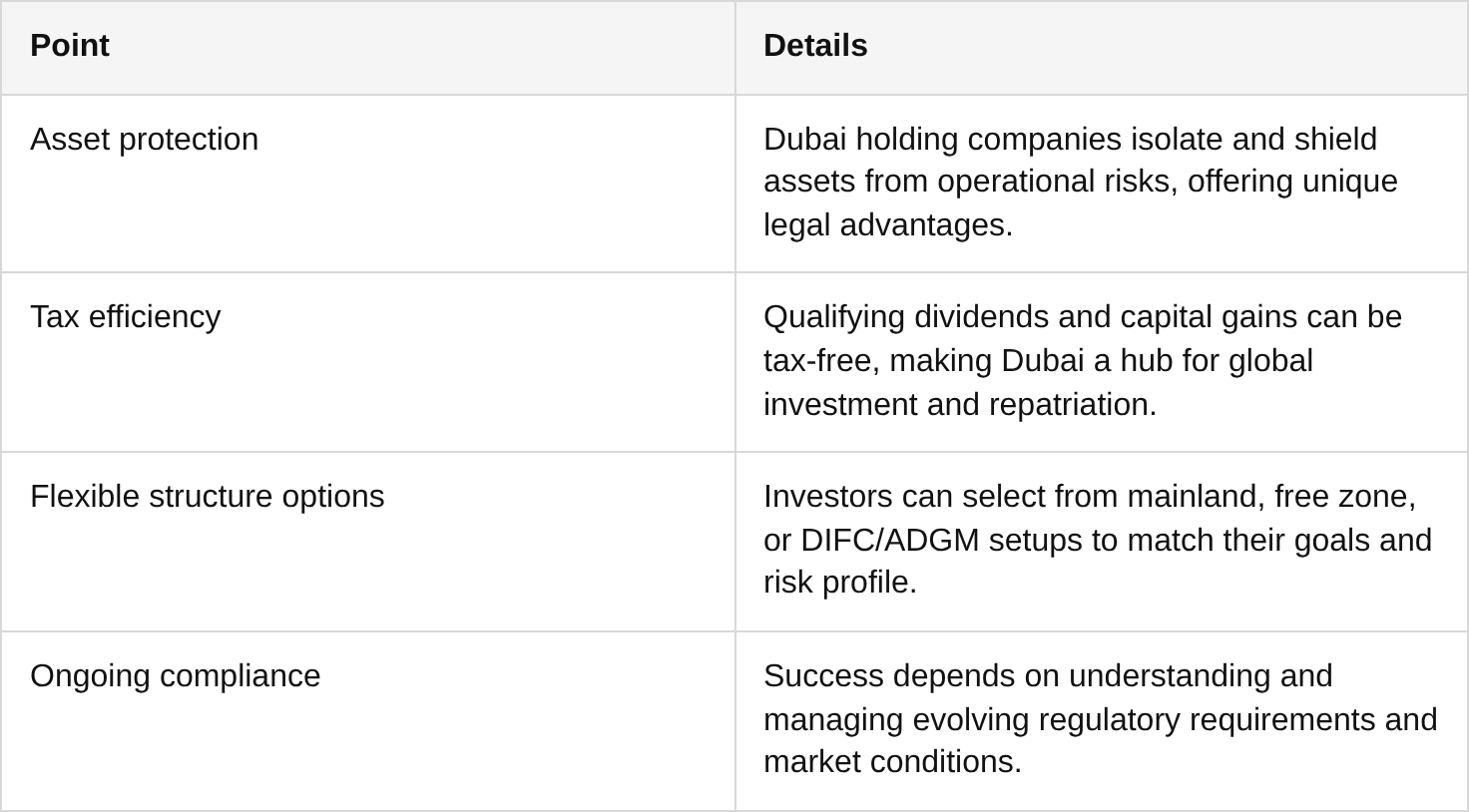
A holding company does not trade or produce goods. It exists to own and control assets, which can include real estate, shares in subsidiary companies, intellectual property, and financial instruments. The core purpose is legal separation: the holding company sits above your operating businesses, shielding core assets from the day-to-day risks those businesses carry.
Dubai’s framework is globally recognized for this purpose. Holding companies in Dubai provide strong asset protection by isolating core assets like real estate, IP, and shares from operational risks of subsidiaries. If one subsidiary faces a lawsuit or insolvency, the assets held at the parent level remain protected.
You have three primary jurisdictions to consider:
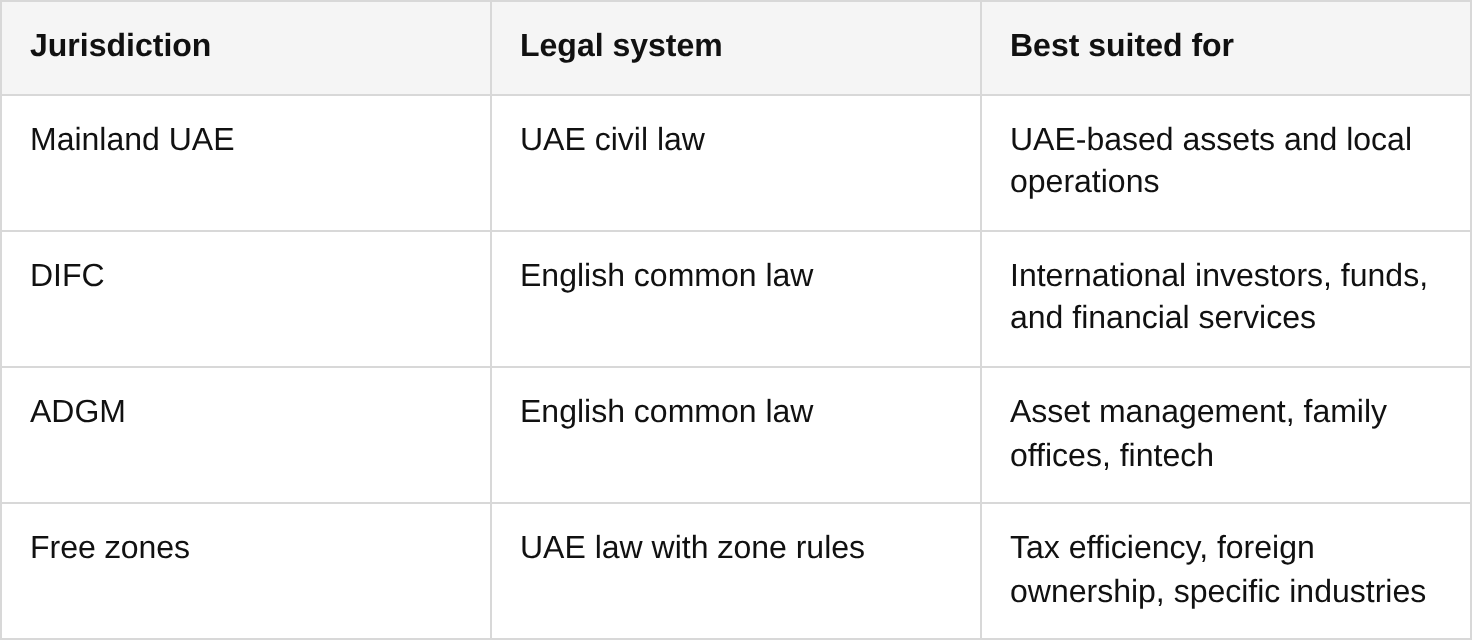
The choice of jurisdiction shapes your regulatory obligations, legal recourse, and how your structure is recognized internationally. DIFC and ADGM operate under English common law, which many international investors find familiar and reassuring. Free zones offer foreign ownership and streamlined licensing, while mainland structures are ideal when your primary assets are UAE-based.
Key assets typically held within these structures include:
- Real estate portfolios across freehold and leasehold zones
- Shares in UAE and international operating companies
- Intellectual property such as trademarks, patents, and software licenses
- Cash and financial instruments for treasury management
As you explore Dubai company formation options, understanding which jurisdiction aligns with your asset profile is the first strategic decision you will make.
“The legal separation a holding company provides is not just a corporate formality. It is the foundation of a long-term wealth preservation strategy.”
Key benefits: Asset protection, tax optimization, and succession
Now that you know how holding companies work in Dubai, it is time to explore why global investors gravitate toward these structures. The advantages are concrete and measurable.
Asset protection through ring-fencing
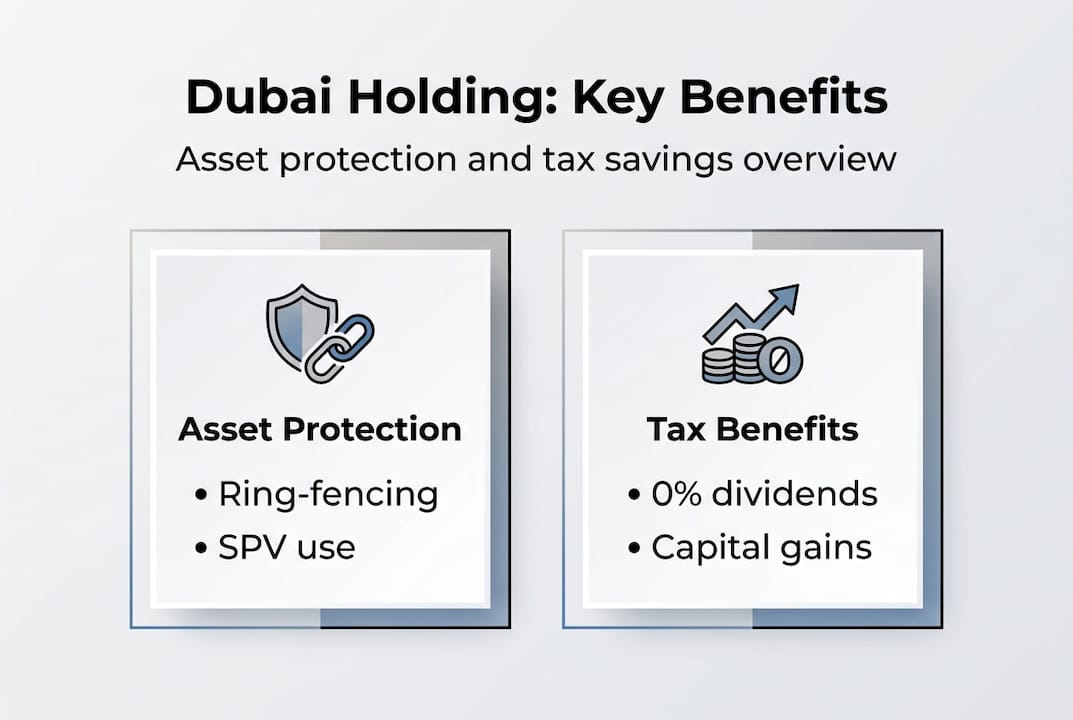
Special Purpose Vehicles, or SPVs, are commonly used within holding structures to isolate individual assets. Each property or business interest sits inside its own SPV, meaning a claim against one asset cannot automatically reach another. This legal firewall is particularly valuable for investors managing diverse portfolios across multiple markets.
Tax optimization
Tax optimization via UAE Corporate Tax: qualifying dividends and capital gains attract 0% corporate tax under the participation exemption, provided key criteria are met. This is a significant advantage for investors receiving dividend income from subsidiaries or realizing gains on asset disposals. The UAE also has over 130 Double Taxation Avoidance Agreements, reducing withholding taxes on cross-border income flows.
For a detailed breakdown of how the UAE corporate tax 2026 rules apply to holding structures, it is worth reviewing the participation exemption criteria carefully before structuring your first transfer.
Succession planning
DIFC foundations offer a legally recognized vehicle for transferring wealth across generations without the complications of UAE inheritance law applying to foreign nationals. This is one of the most underutilized advantages of Dubai holding structures.
Key benefits at a glance:
- 0% tax on qualifying dividends and capital gains
- Legal isolation of assets from subsidiary liabilities
- Access to 130+ tax treaty network
- DIFC foundations for estate and succession planning
- Foreign ownership permitted in free zones and DIFC/ADGM
Pro Tip: Before placing real estate assets into a holding structure, review the Dubai real estate tax advantages that apply specifically to property held within corporate structures versus individual ownership. The difference can be material.
Statistic: The UAE’s network of over 130 Double Taxation Avoidance Agreements covers major economies including the UK, India, China, and most of Europe, making it one of the most treaty-connected jurisdictions in the world.
Choosing the right structure and setup process
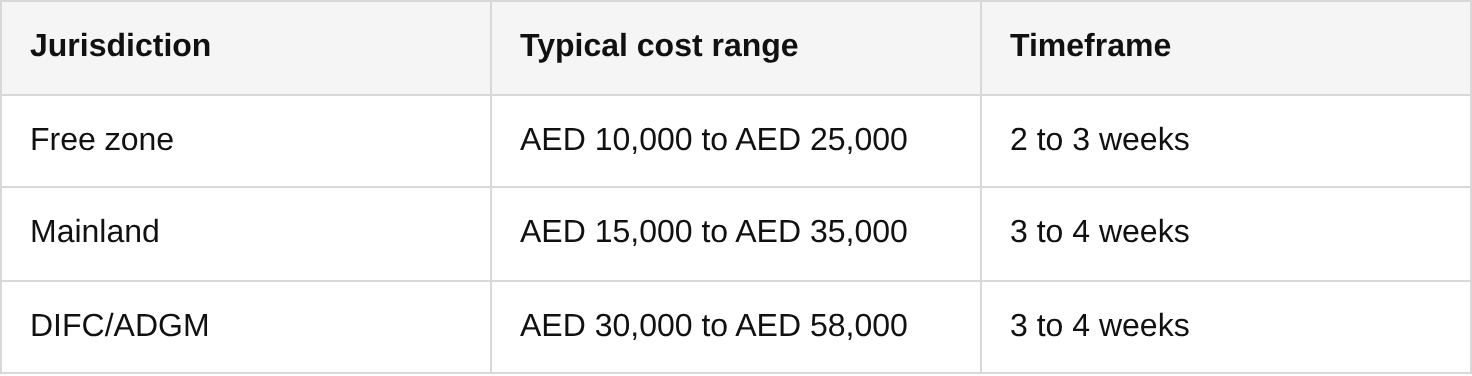
Having seen the rationale for Dubai holding companies, practical steps become key, especially for those new to Dubai’s business landscape. The setup mechanics involve choosing between mainland, DIFC/ADGM, or free zones, each with distinct regulatory, legal, and tax treatment. The process typically involves 12 steps and costs range from AED 10,000 to AED 58,000 depending on the zone and license type.
Step-by-step overview:
- Define your asset types and investment objectives
- Select the appropriate jurisdiction (mainland, DIFC, ADGM, or free zone)
- Engage a registered agent or formation specialist
- Reserve your company name and prepare constitutional documents
- Apply for a holding company license (starting from AED 5,000)
- Open a corporate bank account
- Register for Economic Substance Regulations (ESR) compliance
- Register for UAE Corporate Tax
- Transfer assets into the holding structure
- Establish subsidiary SPVs if required
- Set up governance documents, including shareholder agreements
- Engage ongoing compliance and accounting support
For investors focused on property, the Dubai real estate investment guide provides a strong foundation for understanding how corporate ownership of real estate interacts with Dubai’s property laws. If your portfolio includes commercial assets, reviewing the Dubai commercial property process is equally important before finalizing your structure.
Pro Tip: Free zones are faster and cheaper to set up, but if you plan to hold UAE mainland real estate directly, a mainland or DIFC structure may be more appropriate. Clarify your asset roadmap before committing to a jurisdiction.
Risks, challenges, and evolving policies
The advantages are clear, but any robust decision needs to balance both upside and risk. Dubai holding companies are not a set-and-forget solution.
Regulatory and compliance complexity
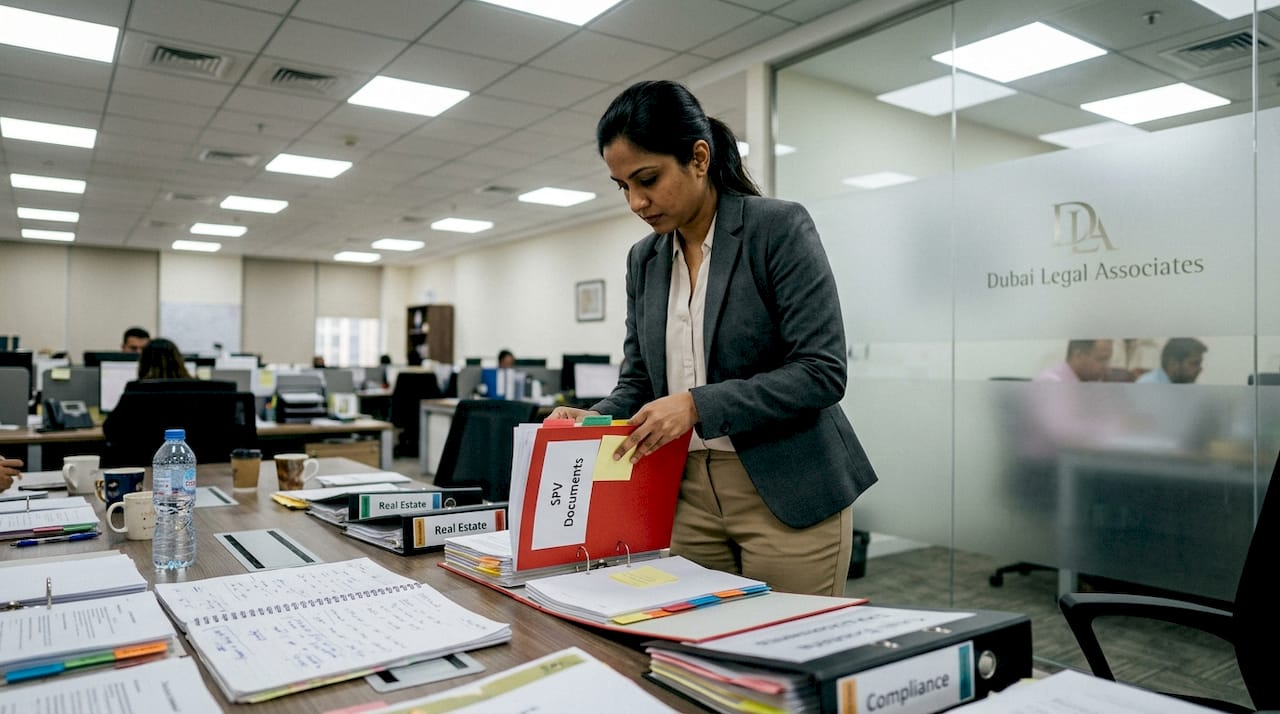
Each jurisdiction carries its own compliance calendar. ESR filings, Ultimate Beneficial Owner (UBO) registers, corporate tax returns, and annual license renewals all require attention. Missing a deadline can result in penalties or, in serious cases, deregistration. Professional compliance support is not optional for most investors; it is a practical necessity.
Policy and market evolution
Risks include real estate cycles, global shocks, compliance costs, and policy changes such as the introduction of corporate tax. The UAE’s introduction of a 9% corporate tax in 2023 was a significant policy shift, and further changes cannot be ruled out. Structures that were optimal three years ago may need revisiting today.
Key risks to monitor:
- Compliance costs increasing as reporting obligations expand
- Real estate market cycles affecting asset valuations within the structure
- Policy changes including tax rule amendments and free zone regulation updates
- Global regulatory pressure on tax transparency and beneficial ownership disclosure
- Banking access as some international banks apply enhanced due diligence to UAE structures
Understanding UAE real estate regulations is essential before transferring property into a holding company, as transfer fees and ownership rules vary. You should also be familiar with Dubai’s real estate regulator and how the Dubai Land Department governs corporate property ownership.
“A holding company is only as strong as the compliance culture behind it. The structure creates the opportunity; disciplined management protects it.”
A seasoned perspective: What most guides miss about Dubai holding companies
Most articles on Dubai holding companies focus on the headline benefits: tax efficiency and asset protection. Those are real and valuable. But after working with international investors across multiple market cycles, the insight that matters most is this: the real value of a Dubai holding structure is its flexibility to evolve.
Once established, your holding company can expand to hold assets across new jurisdictions, add subsidiary SPVs for new asset classes, or restructure to accommodate new partners or succession needs. That adaptability is what separates a good structure from a great one.
Conventional wisdom treats holding companies as a one-time legal decision. In practice, they are a living framework that requires active, ongoing strategic management. The investors who benefit most are those who treat their holding structure as a strategic tool, not a filing cabinet.
The most costly mistakes we see are not in the setup phase. They come later, when investors neglect evolving compliance obligations or fail to update their structure as Dubai’s policy environment shifts. Understanding why Dubai remains a compelling investment destination is part of staying strategically aligned with the market over time.
Get expert support for your Dubai holding company setup
Setting up a holding company in Dubai involves real decisions with long-term consequences. The jurisdiction you choose, the assets you transfer, and the compliance framework you build all shape your outcomes for years to come.

Working with an experienced Dubai advisor ensures you avoid the structural mistakes that are expensive to correct later. At anthonyjosephaj.com, you get access to expert guidance on company formation, real estate acquisition within corporate structures, and the full range of Dubai investment services. Whether you are starting from scratch or restructuring an existing portfolio, the right support makes the process faster, cleaner, and more strategically sound. Reach out today to discuss your specific objectives.
Frequently asked questions
What assets can I place in a Dubai holding company?
You can hold real estate, company shares, IP, and cash, isolating each from the operational risks of your subsidiaries. This legal separation is the core function of the holding structure.
Is there any tax on dividends or capital gains for Dubai holding companies?
Qualifying dividends and capital gains are subject to 0% corporate tax under the participation exemption, provided the holding meets the required ownership thresholds and holding period criteria.
How long does it take to set up a holding company in Dubai?
Setup typically takes 2 to 4 weeks depending on the jurisdiction selected, with costs ranging from AED 10,000 to AED 58,000 based on zone and license type.
What are the main risks or challenges of Dubai holding companies?
Key risks include regulatory complexity, ongoing compliance costs, real estate market cycles, and potential policy changes such as future amendments to corporate tax rules.


