

Dubai Rental Laws Explained: Safeguarding Investments
Every real estate portfolio faces legal risks when local regulations are unclear or inconsistent. In Dubai, a robust framework ensures both landlords and tenants operate under established rules, supporting predictable property income and transparent transactions. This article outlines how Dubai’s rental laws—supervised by the Dubai Land Department and RERA—define contract requirements, rent increase limits, ownership types, and legal remedies. Understanding these regulations empowers international investors to safeguard capital and manage property with confidence in the United Arab Emirates’ most investor-friendly market.
Table of Contents
- Defining Dubai Rental Laws And Their Scope
- Key Tenancy Contract Rules And Ejari System
- Recent Updates: Smart Rental Index And Payments
- Tenant And Landlord Rights, Obligations, Risks
- Eviction, Dispute Resolution, And Compliance Steps
Defining Dubai Rental Laws and Their Scope
Dubai’s rental laws form a structured legal framework designed to protect both landlords and tenants. These regulations govern everything from lease agreements to dispute resolution, creating a predictable environment for property investments. Understanding this scope is essential before committing capital to residential or commercial rental properties.
The Dubai Land Department (DLD) and Real Estate Regulatory Agency (RERA) serve as the primary regulators. They establish rules, enforce compliance, and maintain the registry of all rental transactions. When you register a tenancy contract, these agencies document your property rights and create enforceable records.
Dubai’s rental laws apply to several property categories:
- Residential apartments and villas
- Commercial retail and office spaces
- Mixed-use developments with rental components
- Furnished and unfurnished properties
- Long-term leases and seasonal rentals
These regulations extend beyond Dubai proper. Throughout the United Arab Emirates, similar frameworks exist under UAE real estate regulations, though specific rules vary by emirate. Understanding these UAE rental frameworks helps contextualize Dubai’s position as the most investor-friendly market.
The scope covers critical investor concerns: rental income protection, tenant screening procedures, maintenance obligations, and eviction processes. It addresses payment schedules, deposit requirements, and renewal conditions. Most importantly, it specifies your legal remedies when disputes arise.
One distinguishing feature: Dubai allows freehold and leasehold ownership simultaneously, each with distinct rental implications. Freehold properties offer permanent ownership rights. Leasehold properties involve time-limited ownership, typically 99 years, affecting both rental strategy and exit planning.
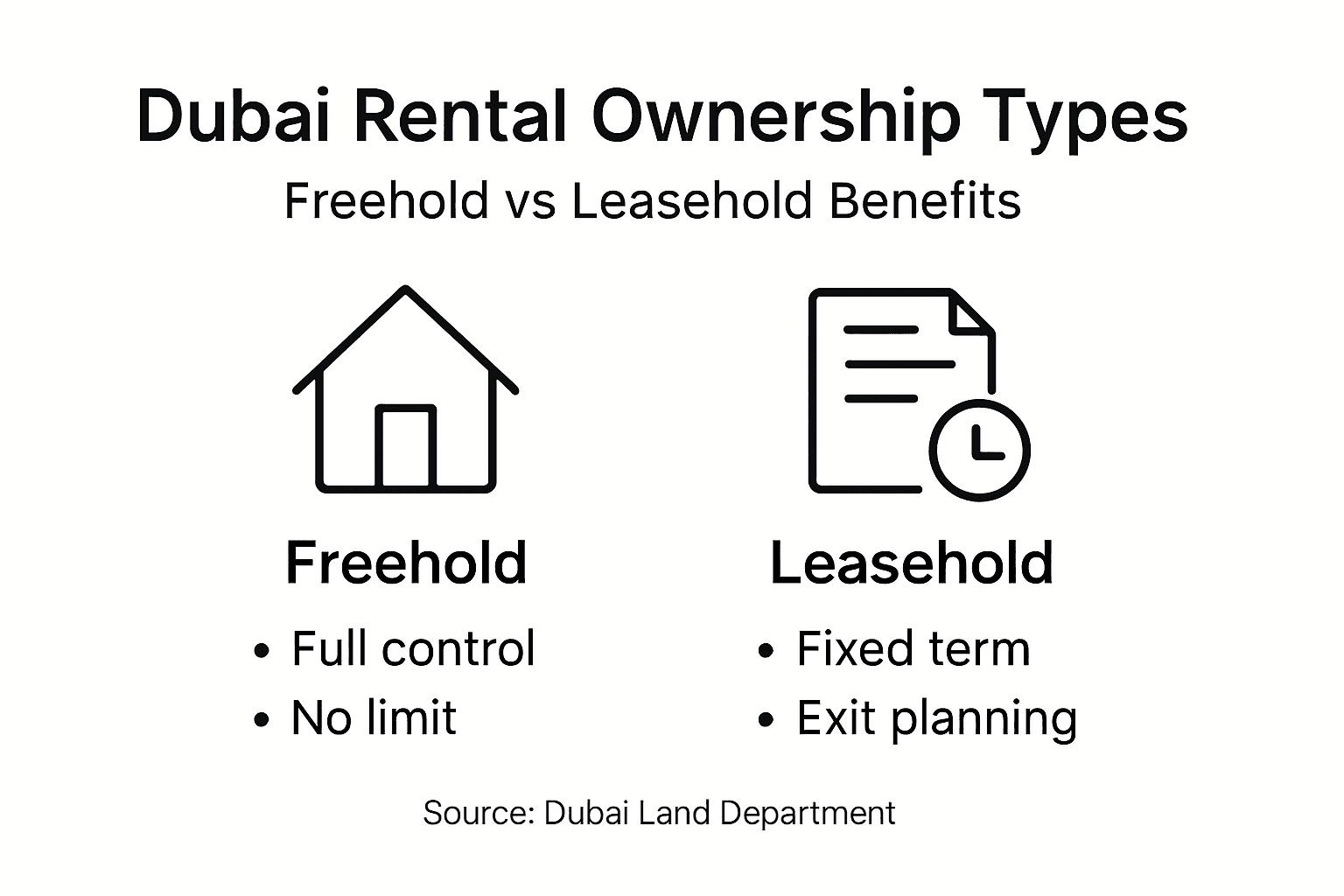
Here’s a comparison of freehold vs leasehold ownership and their rental implications in Dubai:
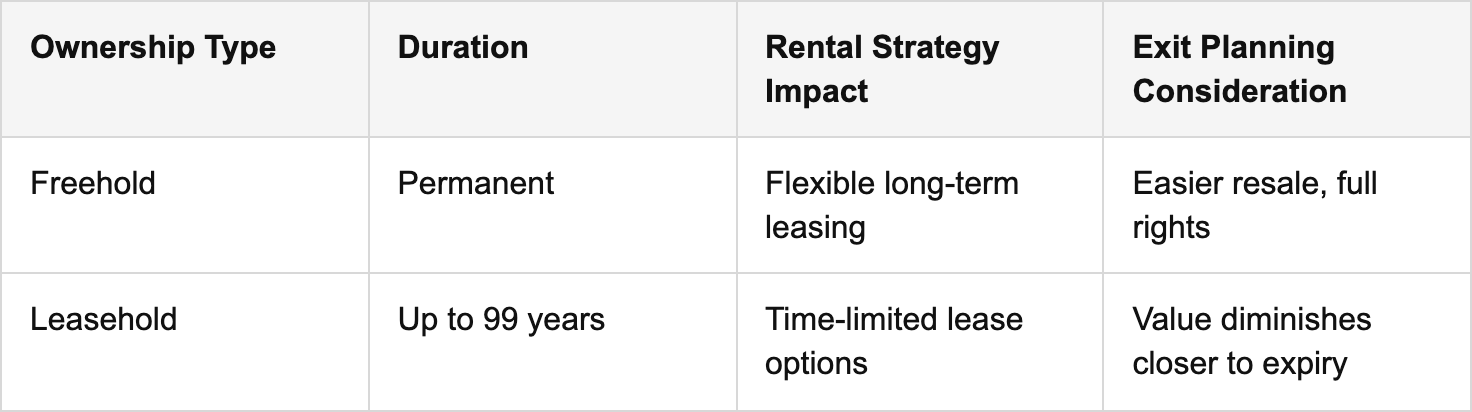
Understanding these ownership types helps investors optimize rental strategies and plan future exits.
Another key element: Rent Control Law establishes maximum annual rental increases. Currently, increases are capped at specific percentages depending on market conditions. This predictability appeals to international investors seeking stable, regulated returns rather than volatile markets.
These laws also address lease termination, renewal rights, and dispute escalation. They clarify whether a landlord must provide cause for non-renewal and outline the notice periods required. Understanding these timelines prevents costly legal disputes and protects your rental income stream.
Dubai’s rental framework balances investor protection with tenant safeguards, creating long-term stability for property income strategies.
The scope includes digital requirements. RERA mandates online registration for all rental contracts, creating transparent records. This transparency reduces fraud and strengthens your property’s marketability when selling or refinancing.
Pro tip: Register your tenancy contracts immediately with RERA to establish legal proof of rental agreements and protect your income from potential tenant disputes.
Key Tenancy Contract Rules and Ejari System
Your tenancy contract is the legal foundation of your rental investment. It defines every critical element: rental amount, payment dates, maintenance responsibilities, and eviction procedures. Without a properly structured contract, you lose critical protections when disputes arise.
Dubai requires all residential and commercial leases to follow RERA tenancy standards. These standards ensure contracts include mandatory clauses protecting both parties. The contract must specify lease duration, rental payment schedules, security deposit amounts, and grounds for eviction.
Key elements your contract must address:
- Lease term and renewal conditions
- Monthly or annual rent and payment method
- Security deposit amount and refund terms
- Maintenance obligations for landlord and tenant
- Termination clauses and notice periods
- Dispute resolution procedures
The Ejari system is your enforcement mechanism. This digital platform, operated by RERA, registers all tenancy contracts and prevents duplicate leasing. When you register a contract through Ejari, you create an enforceable legal record that courts recognize.
Ejari prevents fraud by blocking simultaneous leasing of the same property. If a tenant claims they have rights to a unit you already leased, Ejari registration proves your contract’s priority. This system protects your rental income from false claims.
Registration is not optional—it’s a legal requirement for contract enforceability. Without Ejari registration, you cannot pursue eviction proceedings or recover unpaid rent through courts. The investment in registration fees (typically AED 200-500) provides access to Dubai’s entire legal system.
The registration process takes minutes online. You upload the signed contract, tenant identification, and property documents. RERA issues a registration certificate confirming your legal standing.
Ejari registration transforms a private agreement into a legally enforceable contract recognized by Dubai courts.
Once registered, your contract becomes binding and difficult to dispute. Tenants cannot claim they didn’t understand terms. They cannot demand changes without mutual written consent. This clarity protects your investment strategy.
Your contract should address automatic renewal or termination. Some investors prefer yearly renewals requiring active renegotiation. Others structure indefinite leases with annual rent adjustments within RERA limits. Choose the approach matching your long-term strategy.
Include clear payment terms. Specify whether rent is due on the 1st of each month or another date. Define penalties for late payment and procedures for bounced checks. These details prevent payment disputes before they start.
Pro tip: Register your tenancy contract through Ejari within 30 days of signing to establish legal proof and enable court enforcement of payment obligations or eviction proceedings.
Recent Updates: Smart Rental Index and Payments
Dubai’s rental market evolved significantly with the introduction of the Smart Rental Index. This tool changed how rent increases work, replacing arbitrary decisions with market-based calculations. For international investors, this shift brings predictability and data-driven rent adjustment strategies.

The Smart Rental Index uses real market data to establish rent caps for each property type and location. Rather than allowing unlimited increases, the Smart Rental Index regulates permissible rent increases based on market averages. Your ability to raise rent now depends on how far below market your current rent sits.
The index operates through a tiered system:
- Properties 0-5% below market average: minimal or zero increase permitted
- Properties 5-10% below market: capped increases of approximately 5%
- Properties 10%+ below market: higher increase percentages allowed
This system protects tenants from sudden, excessive rent hikes while allowing landlords to reach market rates gradually. If your property rents significantly below market value, you gain legitimate opportunities to increase revenue. If already at market rates, you cannot raise rent further.
The Smart Rental Index offers predictable rent increases for both landlords and tenants:
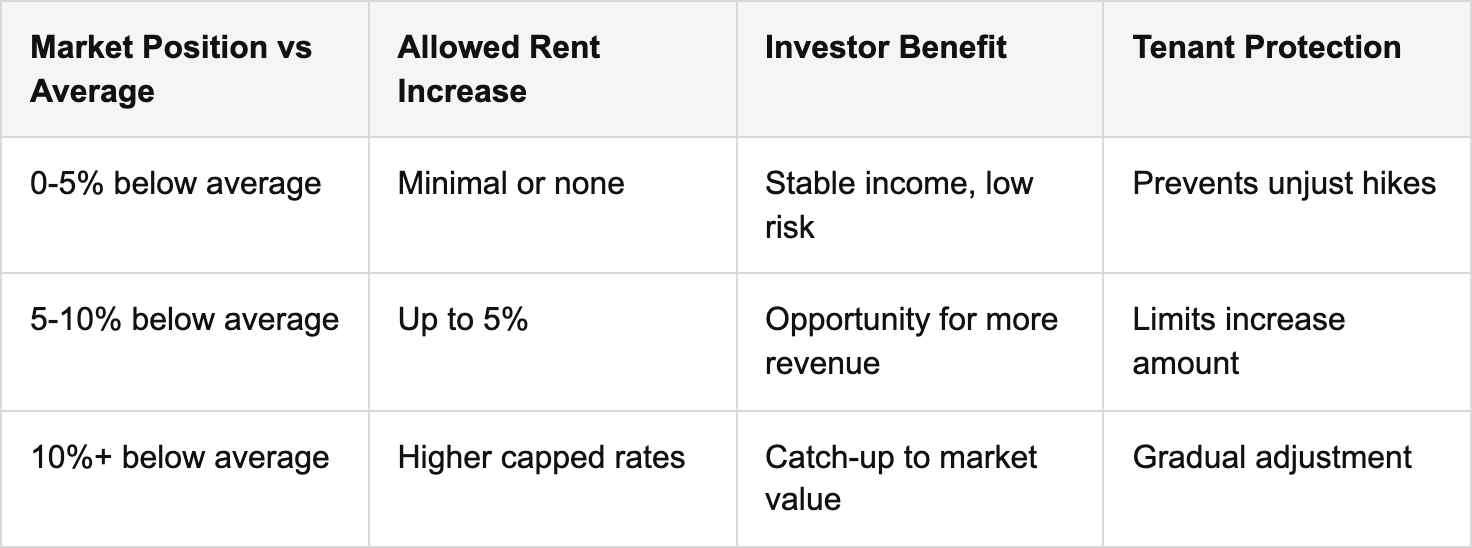
This tiered system supports fair, data-driven rent adjustments based on real market conditions.
The Smart Rental Index requires you to justify any rent increase with market data. You cannot simply decide to raise rent because you need more income. RERA publishes market reports showing average rents by property type, location, and amenities. These reports become your supporting documentation.
Payment standardization represents another major update. Dubai now mandates clear payment schedules specified in tenancy contracts. Rent must be paid on fixed dates you establish upfront, preventing confusion or disputes about payment timing.
Many investors structure payments as annual lump sums, quarterly installments, or monthly amounts. The key is clarity. Your contract must state exactly when payments are due and what consequences follow late payment.
The Smart Rental Index transformed rent increases from discretionary decisions into transparent, data-driven calculations.
Digital payment integration accelerated through recent reforms. RERA encourages online payment methods, creating transparent transaction records. This documentation protects you when disputes arise about whether tenants actually paid.
These updates benefit serious investors. They eliminate guesswork about rental competitiveness and create clear rules for income growth. They also reduce tenant disputes by establishing transparent, objective standards.
Stay current with quarterly Smart Rental Index updates. Market dynamics shift, and properties that were below-market in Q1 may reach market rates by Q3. Understanding these timing patterns helps you optimize rent increase strategies.
Pro tip: Review the Smart Rental Index quarterly and document your property’s market position to justify rent increases within permitted caps and avoid tenant disputes during renewals.
Tenant and Landlord Rights, Obligations, Risks
Dubai rental law creates a balanced framework protecting both parties. Understanding your specific rights and obligations prevents costly disputes and protects your investment. The law clearly defines what you can and cannot do as a landlord, plus consequences for violations.
As a landlord, you possess the right to collect rent on agreed dates without dispute. You can raise rent within Smart Rental Index limits and require tenants to maintain the property. You can also evict tenants for valid cause following proper legal procedures.
Your core obligations are equally important:
- Provide a habitable property meeting safety and building codes
- Maintain structural integrity and common areas
- Respect tenant privacy and provide proper notice before entry
- Follow strict eviction procedures with valid cause
- Honor rent increase caps established by RERA
Tenants must pay rent on time and register the tenancy contract through Ejari. They must maintain the property in good condition and respect your ownership rights. They cannot make structural changes or sublease without written consent.
Both parties face significant risks when breaching terms. Rental dispute protections allow either side to pursue legal remedies through the Rental Disputes Centre. If you evict illegally, courts can award tenants damages plus back rent compensation.
Common landlord mistakes create expensive problems. Raising rent beyond Smart Rental Index limits gives tenants grounds to challenge the increase. Entering the property without proper notice violates tenant rights. Failing to maintain the property allows tenants to withhold rent and pursue legal action.
Tenant violations also trigger consequences. Unpaid rent allows you to pursue eviction and recover outstanding amounts through courts. Property damage beyond normal wear gives you grounds to retain security deposits and claim additional damages.
RERA enforces these rights equally; violations by either party result in legal consequences and financial penalties.
The Rental Disputes Centre handles conflicts when negotiation fails. This specialized court processes cases faster than general courts and applies rental law expertise. Both parties can present evidence and arguments before a judge.
Notice periods matter significantly. You cannot evict without providing proper notice specifying the reason. Tenants cannot suddenly vacate without notice unless you violate your obligations seriously. These timelines typically range from 30 to 90 days depending on circumstance.
Security deposits require specific handling. You must return deposits within 30 days of lease termination, minus legitimate deductions for damage. Withholding deposits without itemized documentation opens you to legal disputes.
Understand that eviction notice requirements demand valid cause and proper documentation. Wrongful eviction carries significant liability. Tenants can dispute notices and demand proof of grounds, so documentation protects you.
Pro tip: Document all tenant communications, maintenance requests, and rent payments digitally to establish clear evidence if disputes reach the Rental Disputes Centre.
Eviction, Dispute Resolution, and Compliance Steps
Eviction in Dubai demands strict adherence to legal procedures. Landlords cannot simply remove tenants or change locks. You must follow specific notice periods and provide valid justification, or courts will reject your eviction case and potentially award damages.
Eviction notice periods depend on your reason for removal. For non-payment of rent, you can serve notice immediately and proceed to court after 30 days. For sale of the property or personal use, you must provide 12 months’ notice, giving tenants ample time to relocate.
The eviction process follows these sequential steps:
- Serve written notice specifying the reason and date
- Wait required notice period (30 days minimum, 12 months for sale/personal use)
- File case with Rental Disputes Centre if tenant doesn’t vacate
- Attend hearing and present evidence
- Obtain court judgment authorizing eviction
- Execute eviction with legal enforcement
Skipping steps or providing inadequate notice invalidates your eviction. Tenants can challenge your case, and courts will dismiss it if procedures weren’t followed precisely. This delay costs you months in lost rental income.
The Rental Disputes Centre (RDC) handles all rental conflicts outside traditional courts. This specialized forum processes cases faster and applies rental law expertise. Both parties present arguments before a judge who understands Dubai’s rental framework.
Dispute resolution begins with mediation when possible. The RDC encourages negotiation before formal proceedings, saving both parties time and legal fees. If negotiation fails, the RDC schedules a hearing where evidence is presented.
Strict eviction procedures protect tenants from arbitrary removal while allowing landlords legitimate grounds for enforcement.
Common reasons courts reject eviction cases include insufficient notice, lack of valid cause, or procedural errors. You cannot evict for personal complaints or arbitrary decisions. You need documented cause: unpaid rent, property damage, or legitimate property use needs.
Compliance with registration requirements protects your legal standing. Unregistered contracts create evidentiary problems in court. When disputes arise, RERA registration provides proof of your tenancy terms, strengthening your position.
Payment documentation matters significantly. Bank transfers, receipts, and official payment records prove rent collection and establish tenant compliance. If tenants claim they paid but you never received funds, documentation reveals truth.
Maintenance compliance also protects you. Rental Disputes Settlement mechanisms require landlords to maintain properties properly. Failure to repair critical systems gives tenants grounds to withhold rent or pursue counter-claims.
Keep detailed records of all communications. Text messages, emails, and written notices create evidence trails. When disputes reach the RDC, documentation determines outcomes.
Notice tenants properly and in writing. Verbal notices don’t satisfy legal requirements. Written notices must specify the reason, date served, and required response period. Keep copies for your records.
Pro tip: Initiate eviction proceedings immediately after the required notice period expires; delays strengthen tenant defenses and may allow them to claim abandonment by the landlord.
Protect Your Dubai Rental Investments with Trusted Expert Guidance
Navigating Dubai’s detailed rental laws can feel overwhelming, especially when your investment depends on secure tenancy contracts, proper Ejari registration, and complying with the Smart Rental Index. Many investors struggle with understanding rent increase caps, eviction procedures, and protecting their income from tenant disputes. If you want to safeguard your property income and confidently manage legal complexities, expert support is vital.

Turn uncertainty into opportunity with Anthony Joseph’s comprehensive real estate solutions. As a highly awarded Dubai-based broker and business mentor, Anthony offers tailored services including property management, legal compliance assistance, and strategic rental advice that align perfectly with Dubai’s evolving rental framework. Start protecting your investment today by partnering with a trusted authority who understands every nuance of Dubai’s rental laws. Visit Anthony Joseph Real Estate now to access personalized guidance and ensure your rental portfolio thrives within the legal landscape.
Frequently Asked Questions
What are the primary organizations regulating rental laws in Dubai?
The primary regulators are the Dubai Land Department (DLD) and the Real Estate Regulatory Agency (RERA), which establish rules, enforce compliance, and maintain the registry of all rental transactions.
What should a tenancy contract in Dubai include to be legally enforceable?
A tenancy contract must specify the lease term, rental payment schedules, security deposit amounts, maintenance obligations, termination clauses, and dispute resolution procedures to meet RERA’s standards for enforceability.
How does the Smart Rental Index affect rent increases for landlords in Dubai?
The Smart Rental Index establishes rent caps based on real market data, allowing landlords to raise rents predictably within limits depending on how far the current rent is below market averages, thus preventing arbitrary increases.
What are the consequences of improper eviction procedures for landlords in Dubai?
Improper eviction procedures can lead to rejection of the eviction case by the courts, potential legal penalties, and financial consequences, including having to compensate tenants for unlawful eviction.


