

Property snagging in Dubai: Essential steps for smart investors
TL;DR:
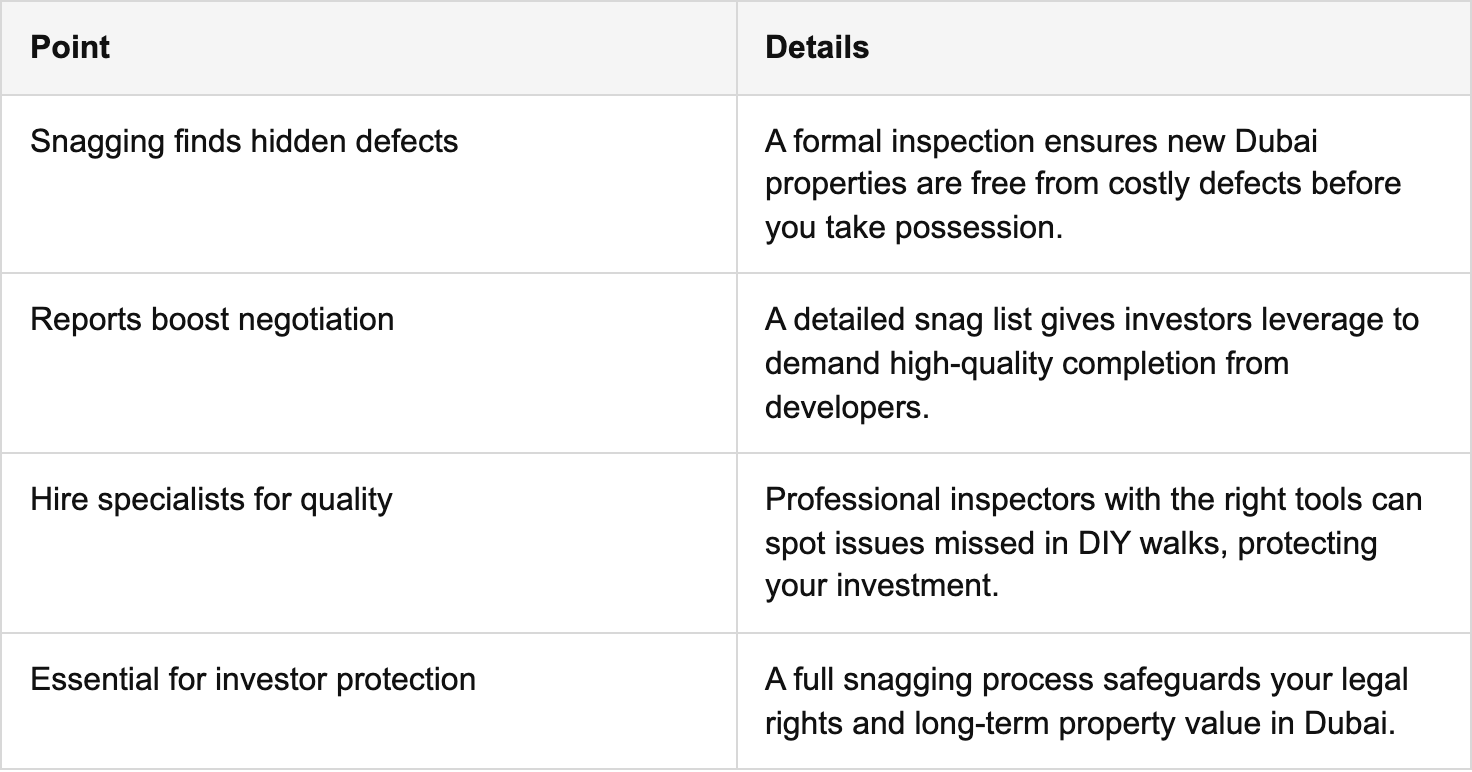
- Property snagging is a systematic inspection process essential for Dubai investors to identify defects before handover, ensuring legal and financial protection. Professional snagging provides comprehensive detection, formal reporting, and stronger negotiation leverage compared to DIY approaches. Conducting thorough snagging enhances property value, facilitates compliance with warranties, and prevents costly repairs post-ownership.
Brand-new Dubai properties carry an undeniable appeal, but a flawless finish on inspection day does not guarantee a defect-free home. Many international investors sign handover documents only to discover cracked tiles, faulty plumbing, or poorly fitted fixtures weeks later. At that point, your leverage over the developer is significantly reduced. Property snagging is a systematic inspection of a newly built or recently handed-over property to uncover defects, incomplete work, and workmanship issues before final acceptance. This guide walks you through every stage, so you protect your investment from day one.
Table of Contents
- What is property snagging and why does it matter in Dubai?
- How the property snagging process works
- DIY versus professional snagging: Which is right for investors?
- How snagging affects Dubai property handover and value
- What most investors miss about property snagging in Dubai
- Expert guidance for Dubai property investment success
- Frequently asked questions
Key Takeaways
What is property snagging and why does it matter in Dubai?
With the basics introduced, it’s crucial to understand exactly what snagging is and the role it plays for Dubai property investors.
Dubai’s off-plan market is one of the most active in the world, with thousands of new units handed over each year across master-planned communities such as Dubai Creek Harbour, Mohammed Bin Rashid City, and Jumeirah Village Circle. That volume creates real quality-control pressure. Even premium developers working with reputable contractors can deliver units with finishing defects, MEP (mechanical, electrical, and plumbing) shortfalls, or incomplete common-area works.
Snagging is defined as the formal process of identifying these defects before you accept the property, giving you documented grounds to require the developer to correct them at no cost to you. In legal terms, this inspection provides the evidentiary foundation for your rectification claim. Without it, you are accepting the unit “as-is” and may face out-of-pocket repair costs later.
From a pure investment perspective, the stakes are high. Whether you plan to rent the property immediately or resell it, any visible or functional defect reduces both rental appeal and capital value. A well-executed snagging inspection is a core component of real estate due diligence that every investor should build into their handover timeline.
Common defects identified during snagging in Dubai include:
- Paint runs, uneven surfaces, or mismatched finishes on walls and ceilings
- Cracked, chipped, or misaligned floor and wall tiles
- Defective or missing grout and sealant around wet areas
- Poorly fitted doors and windows that do not close or seal correctly
- Plumbing leaks, low water pressure, or slow drainage
- Electrical faults, non-functional sockets, or incorrectly positioned switches
- Air-conditioning systems that underperform or fail to maintain set temperatures
- Balcony waterproofing failures and inadequate drainage gradients
- Incomplete or malfunctioning smart-home or intercom installations
“Property snagging is a systematic inspection of a newly built or newly handed-over (or recently renovated) property to find defects, incomplete work, and workmanship/finishing issues before final acceptance or handover sign-off.” — NAPSI
The variety and frequency of these issues may surprise you. Even luxury units in high-end towers regularly present five to thirty snags on first inspection, and some reports from independent inspectors in the UAE suggest that complex villas can yield well over one hundred items. Treating snagging as optional is a costly misconception.
How the property snagging process works
Understanding the “why” leads naturally to “how.” Here is the snagging workflow every investor should follow.
The snagging workflow consists of four core stages: inspection and testing, logging each snag with precise location and description, compiling a structured report, and following up with rectification and re-inspection to formally close each item. Each stage has practical requirements that investors need to prepare for.
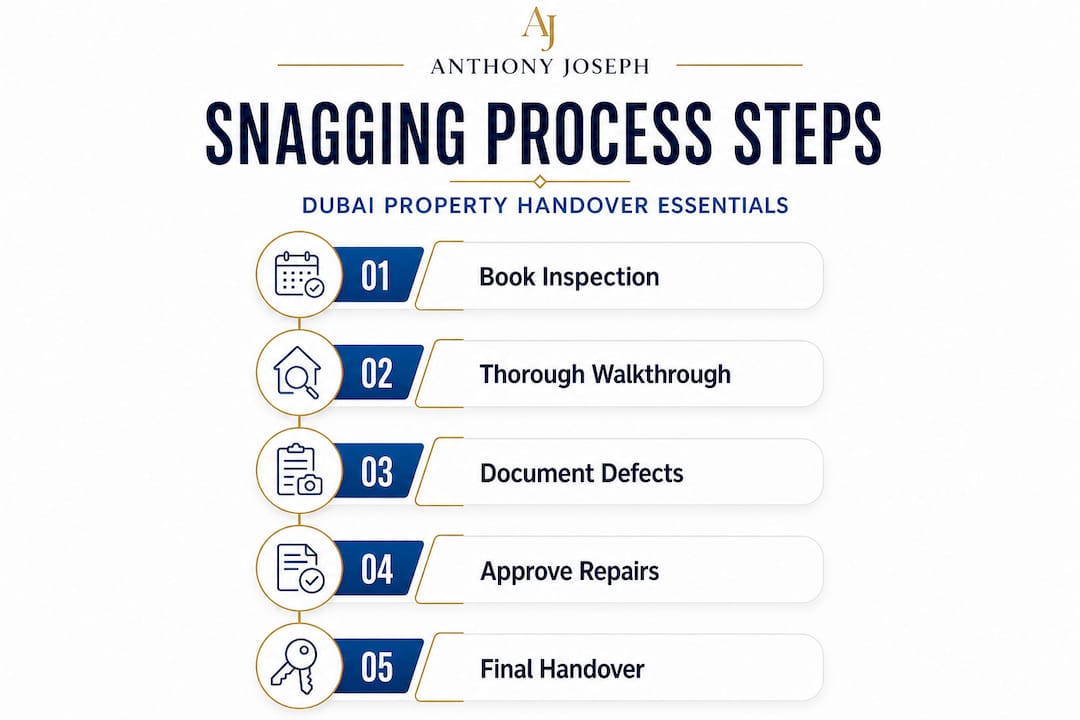
Step-by-step snagging process:
- Schedule the inspection before final sign-off. Book your snagging inspection after the developer issues a handover notice but before you sign acceptance documents or make the final payment. This timing is your primary point of leverage.
- Conduct a room-by-room physical walkthrough. Each room, bathroom, kitchen, utility space, balcony, and parking bay should be checked systematically. Do not skip any area, including service corridors and storage rooms.
- Test all systems actively. Switch every light on and off, run every faucet, flush every toilet, test each air-conditioning unit, activate all sockets with a plug tester, and verify intercom and smart-home functions. Visual checks alone miss operational faults.
- Log every snag in real time. Record each defect with its precise location (room name, wall elevation, floor level), a brief description, and a photograph. Numbering each item sequentially creates a traceable, auditable list.
- Compile and submit a formal snag report. The written report with photographs should be submitted to the developer in writing, referencing the unit number, development name, and date of inspection. Email delivery creates a time-stamped record.
- Allow the developer rectification time. Dubai developers typically have a contractual and statutory obligation under the RERA warranty to repair structural and finishing defects. Standard timelines range from two to six weeks for finishing issues.
- Perform a re-inspection. Once the developer confirms repairs are complete, conduct a second walkthrough to verify each closed item. Do not accept verbal assurances. Only sign off when every snag is physically resolved.
Pro Tip: Schedule your snagging inspection at least one to two weeks before your intended handover date. This gives you time to complete the re-inspection and still meet any transfer deadlines at the Dubai Land Department without being rushed into signing off prematurely.
The table below summarizes what gets checked during each phase:
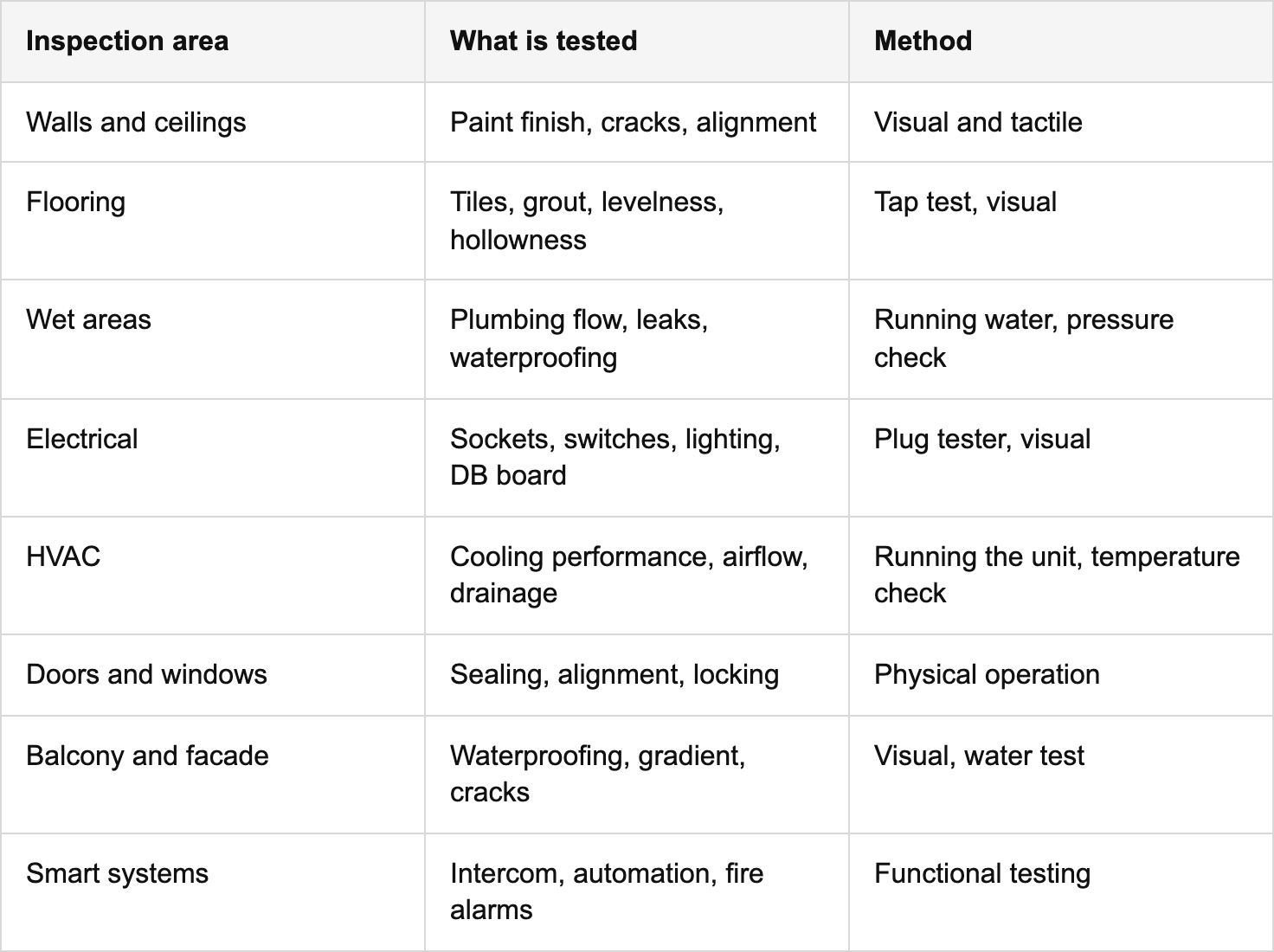
Maintaining an auditable record through every stage of this workflow is what makes your property management workflow run smoothly from the day you take possession. Investors who manage property in Dubai professionally understand that a documented handover is the foundation of a well-maintained asset.
DIY versus professional snagging: Which is right for investors?
Once the process is clear, the next question for every investor is: do it yourself, or hire a professional?
DIY snagging means conducting the inspection yourself, typically using a personal checklist and a smartphone camera. This approach is free, flexible, and gives you direct familiarity with your new property. However, it has significant limitations. Most investors, even experienced ones, lack the technical background to identify concealed plumbing faults, assess air-conditioning refrigerant pressure, interpret electrical DB board configurations, or detect hollow-tile syndrome in large-format flooring.
Professional snagging guidance consistently demonstrates that specialized knowledge and tools improve detection of less obvious or concealed defects that a standard visual walkthrough misses entirely. Certified inspectors operating in Dubai typically use thermal imaging cameras to identify moisture ingress or insulation gaps behind walls, borescopes for hard-to-reach cavities, laser levels to measure floor gradients, and calibrated plug testers for electrical circuits.
The practical difference is significant. A DIY inspection might identify fifteen to twenty visible snags. A professional inspector working the same unit may log forty to sixty or more, including concealed issues that could become expensive problems within twelve to twenty-four months of occupancy.
Key advantages of professional snagging inspectors:
- Access to specialist equipment not available to the average investor
- Familiarity with Dubai Building Code standards and developer-specific finishing specifications
- Structured reporting that carries more formal weight in developer negotiations
- Experience identifying material substitutions where cheaper finishes replace specified ones
- Objective third-party status, which developers tend to respond to more promptly
- Reduced personal time commitment for investors based overseas
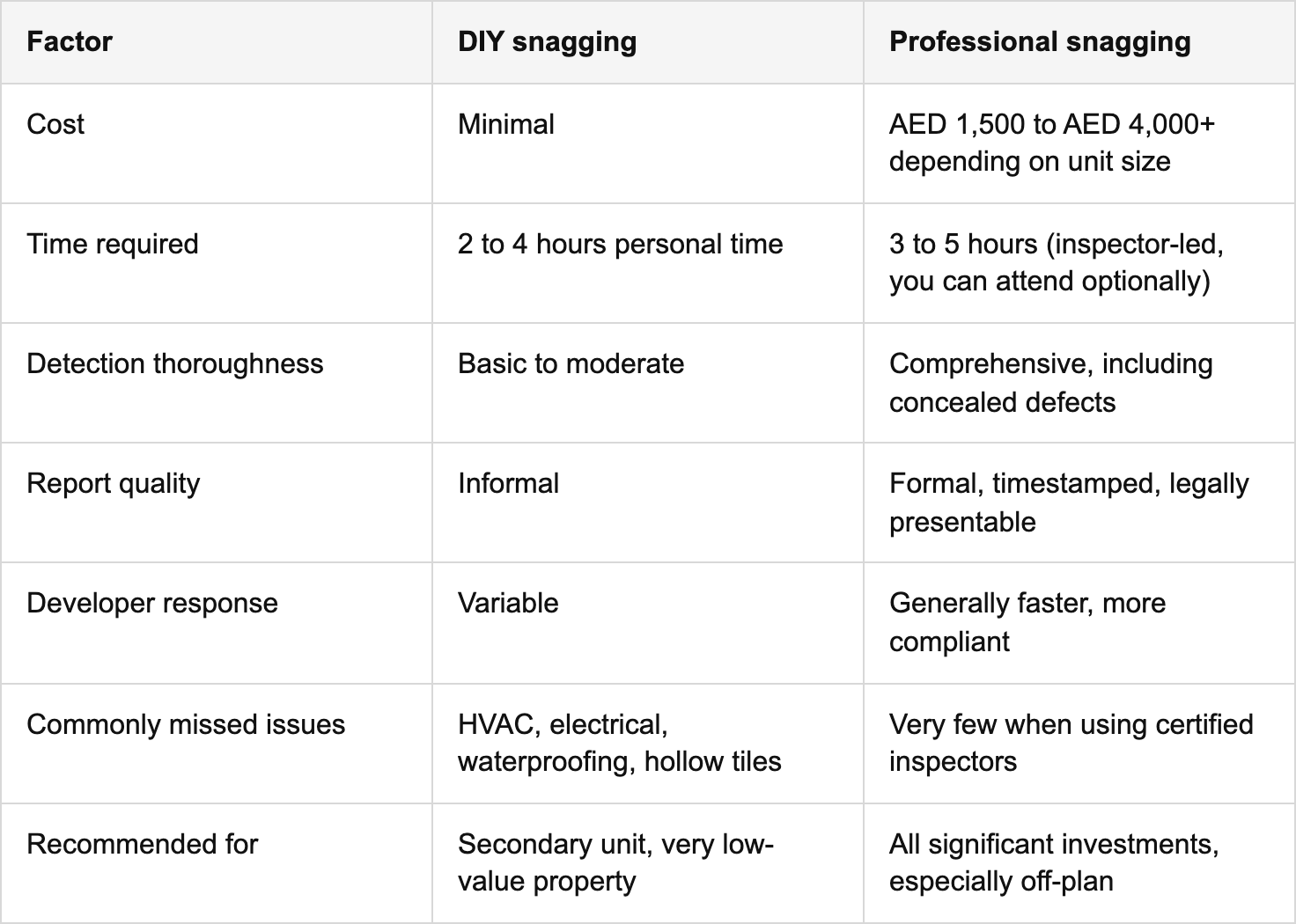
For international investors, the case for professional snagging is particularly strong. You may not be present in Dubai during the handover window, and entrusting the inspection to a certified professional with a transparent reporting process provides both practical coverage and peace of mind. The relatively modest cost is negligible against the potential repair and dispute costs it prevents.
How snagging affects Dubai property handover and value
Making the right snagging decision can have long-lasting effects. Here is how it impacts your actual handover and future property value.

The formal snag list is more than a punch list of repairs. It is a legal document that triggers your developer’s contractual obligations before ownership is transferred. Under Dubai’s real estate regulatory framework, developers carry defect liability warranties that cover structural issues for ten years and finishing defects for one year from the date of the completion certificate. However, you can only enforce those warranties on issues that you have documented and formally reported.
A structured, auditable snag list, as described in property management sources, must be revisited after rectification to ensure the list is actually closed, not just generated. This distinction matters enormously. Developers may mark items as resolved without completing the work to the required standard. Re-inspection is the only way to confirm genuine closure.
Key ways that snagging affects your handover and property value:
- Handover leverage. A pending snag list gives you documented grounds to delay signing the acceptance form until repairs are complete, preventing the developer from walking away from defects.
- Payment timing. Investors can often defer the final payment installment until snag closure is confirmed, depending on the sales agreement terms. Always review your SPA (Sales and Purchase Agreement) for this clause.
- Rental readiness. A property with unresolved snags requires you to spend time and money on repairs before tenanting, delaying your rental yield and increasing your total acquisition cost.
- Resale value. Buyers conducting their own due diligence will identify defects during viewing or commission their own inspection. A property with visible or functional issues will trade at a discount or sit on the market longer.
- Insurance and warranty claims. Documented snag records support warranty claims and insurance assessments if concealed defects manifest later.
Pro Tip: Always obtain written confirmation, signed by a developer representative, that each snag item has been resolved before you proceed to the property handover process and DLD transfer. A verbal sign-off has no enforceability.
“For methodology quality control, the term ‘snag list’ is treated as a structured, auditable defect record, and sources stress repeating inspections after rectification so the list is actually closed, not just generated.” — ProjectManager.com
The long-term asset protection argument is straightforward. Every AED you invest in professional snagging returns multiples in avoided repair costs, preserved rental yield, and protected resale price. Investors who skip this step often pay the real cost twelve to eighteen months into ownership.
What most investors miss about property snagging in Dubai
There is a pattern among investors who go through property snagging and still end up disappointed. They complete the process, receive a report, and then accept partial fixes or verbal promises from the developer’s site team. Snagging becomes a procedural exercise rather than a strategic negotiation.
The real value of a professional snag report is not the list itself. It is the documented, timestamped, photographic evidence that gives you leverage in every conversation with the developer. Developers in Dubai respond very differently to a formal report submitted by a certified inspector than to a handwritten note from an investor. The professional report signals that you are prepared, informed, and willing to assert your rights formally if necessary.
Too many investors treat snagging as a formality rather than a strategic tool. They accept cosmetic fixes on items that have deeper causes, or they sign acceptance under time pressure without completing re-inspection. Developers are aware of this pattern, and timelines around handover are sometimes designed to create urgency that overrides due diligence.
The investors who get the best outcomes treat every snag as a negotiation point and every report as a legal document. They do not escalate unnecessarily, but they do not abandon their position either. This mindset, combined with professional inspection tools and structured documentation, consistently produces better physical outcomes and fewer post-handover disputes.
DIY snagging is not just a risk to defect detection. It is a risk to your negotiating position. A developer is far more likely to discount the concerns of an investor with a smartphone photograph than to dismiss the findings of a certified inspector’s thermal report and calibrated electrical assessment. The investment in professional snagging is an investment in your ability to enforce your rights.
Expert guidance for Dubai property investment success
Armed with snagging insights, here is how you can ensure your Dubai property purchase is fully protected with expert support.
Navigating the handover process, identifying the right snagging inspector, and negotiating with a developer requires experience that goes beyond reading guides. Working with a seasoned Dubai real estate broker gives you access to a professional network that includes vetted snagging inspectors, legal advisors, and property managers who understand the standards and developer practices specific to this market.

Anthony Joseph and the team at anthonyjosephaj.com work with international investors at every stage of the Dubai property journey, from off-plan acquisition through to handover, tenanting, and resale. If you want a smooth handover backed by expert guidance, reach out today to discuss your purchase and ensure your snagging process is handled strategically from start to finish.
Frequently asked questions
What are the most common defects found during property snagging in Dubai?
Typical snags include paint imperfections, cracked or hollow tiles, plumbing leaks, slow drainage, faulty electrical sockets, and incomplete MEP systems. Finishing and workmanship issues are by far the most frequent category across both mid-range and luxury Dubai developments.
Is property snagging mandatory for investors in Dubai?
Snagging is not a legal requirement, but it is strongly recommended because developers are generally only obligated to rectify defects that are formally reported before handover acceptance. A structured snag list is the only reliable way to document and close those issues.
When should property snagging be performed?
Snagging should be completed after construction is finished but before you sign the acceptance form or make the final payment. The snagging workflow should always conclude with a re-inspection confirming all items are resolved before you proceed to transfer.
Should investors hire a professional snagging inspector?
Yes, professional inspectors are strongly recommended for all significant Dubai investments. Specialized tools and expertise allow certified inspectors to detect concealed defects in plumbing, electrical systems, and waterproofing that a visual walkthrough will routinely miss.


