
Optimize your property management workflow in Dubai
TL;DR:
- Dubai property management requires strict compliance with RERA, Ejari, Trakheesi, and Dubai REST systems.
- Digital tools and AI-driven platforms significantly improve efficiency, response times, and legal protection.
- A well-optimized workflow ensures scalable returns, reduces disputes, and builds resilient property portfolios.
Managing property in Dubai is not a passive endeavor. Between navigating Real Estate Regulatory Authority (RERA) requirements, maintaining high tenant standards, and protecting your rental yields in one of the world’s most competitive markets, the gap between a structured workflow and an improvised one can cost you thousands of dirhams and months of stress. Whether you own a single apartment in Downtown Dubai or a portfolio of villas in Palm Jumeirah, a well-optimized property management workflow is your foundation for consistent performance, legal compliance, and long-term asset growth.
Table of Contents
- Understand Dubai’s property management framework
- Essential tools and technology for efficient workflows
- Step-by-step property management workflow in Dubai
- Common pitfalls and troubleshooting tips
- A practitioner’s view: Why workflow is your real competitive edge in Dubai
- Get personalized workflow support for your Dubai property
- Frequently asked questions
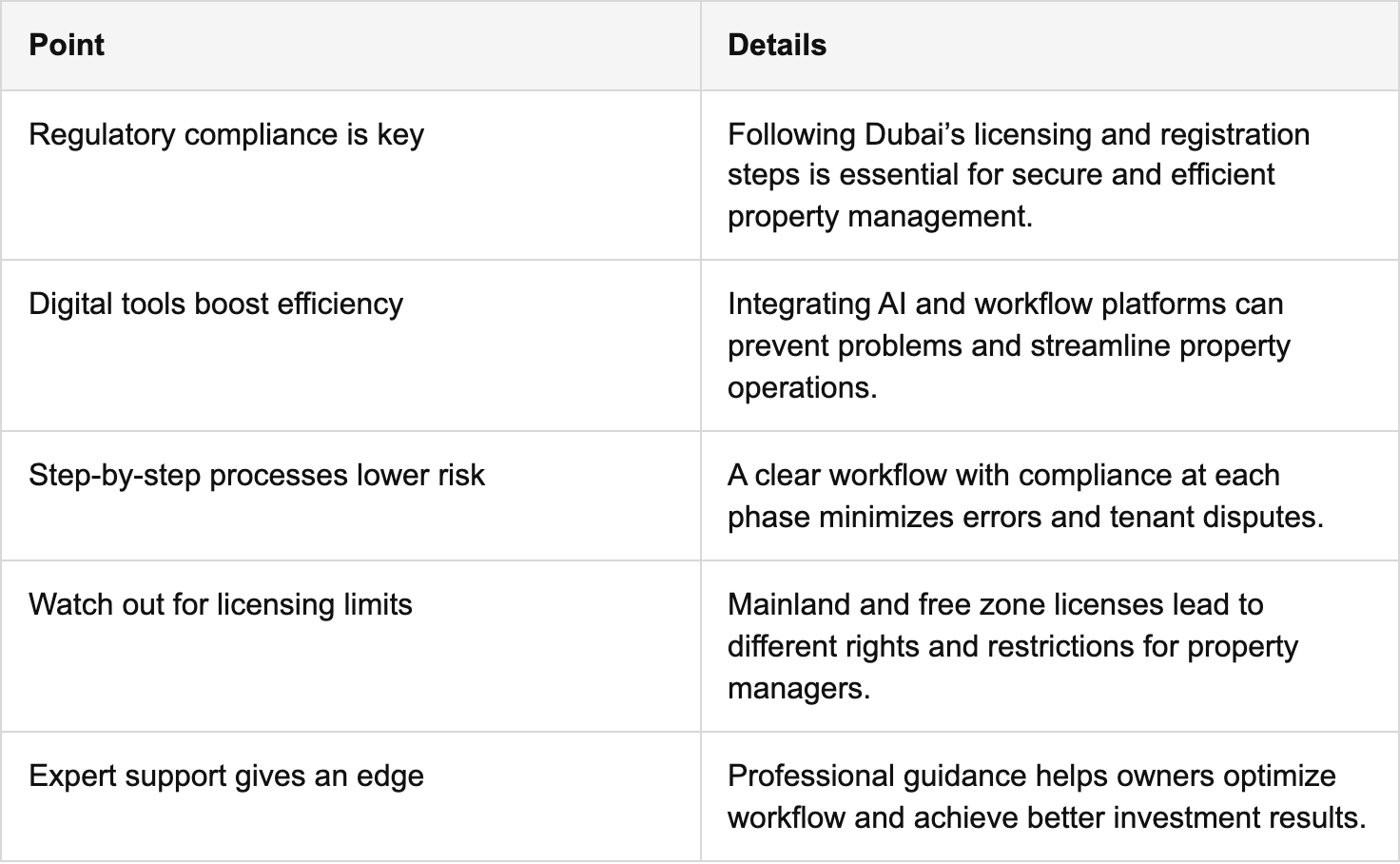
Key Takeaways
Understand Dubai’s property management framework
With your workflow goals in mind, let’s start with the basics — understanding what’s required in Dubai.
The first thing you need to recognize is that Dubai property management operates within a tightly regulated environment. The Dubai Land Department (DLD) oversees the entire real estate sector, and RERA functions as its regulatory arm. Every property manager or management company must be registered with RERA to legally operate. This is not optional. Without proper authorization, you expose yourself and your tenants to legal disputes, fines, and contract invalidation.
Beyond RERA, there are three other critical systems you must integrate into your workflow from day one:
- Trakheesi system: This is RERA’s platform for licensing real estate professionals and tracking brokerage activity. If you are managing properties on behalf of others, access to Trakheesi is mandatory.
- Ejari registration: Every tenancy contract in Dubai must be registered through Ejari, the official tenancy contract registration platform. Skipping this step does not just create administrative risk. It invalidates your contract in the eyes of the law.
- Dubai REST app: The Real Estate Self Transaction (REST) app is the DLD’s digital transaction platform. It allows landlords, managers, and tenants to complete contracts, verify ownership, and conduct property transactions from a smartphone.
The core regulatory steps include RERA registration for managers, Trakheesi system access for brokers, mandatory Ejari for all tenancy contracts, and integration with the Dubai REST app for digital workflows. Understanding these steps is not just about compliance. It directly shapes how efficient your day-to-day workflow can be.
Mainland vs free zone licensing
Your business structure also determines your operational scope. Mainland licensed companies can manage third-party properties across Dubai. Free zone companies, on the other hand, are limited to managing their own assets or offering consultancy services. This distinction matters enormously when you are building a scalable management operation.
Here is a quick reference table to help you orient your compliance checklist:
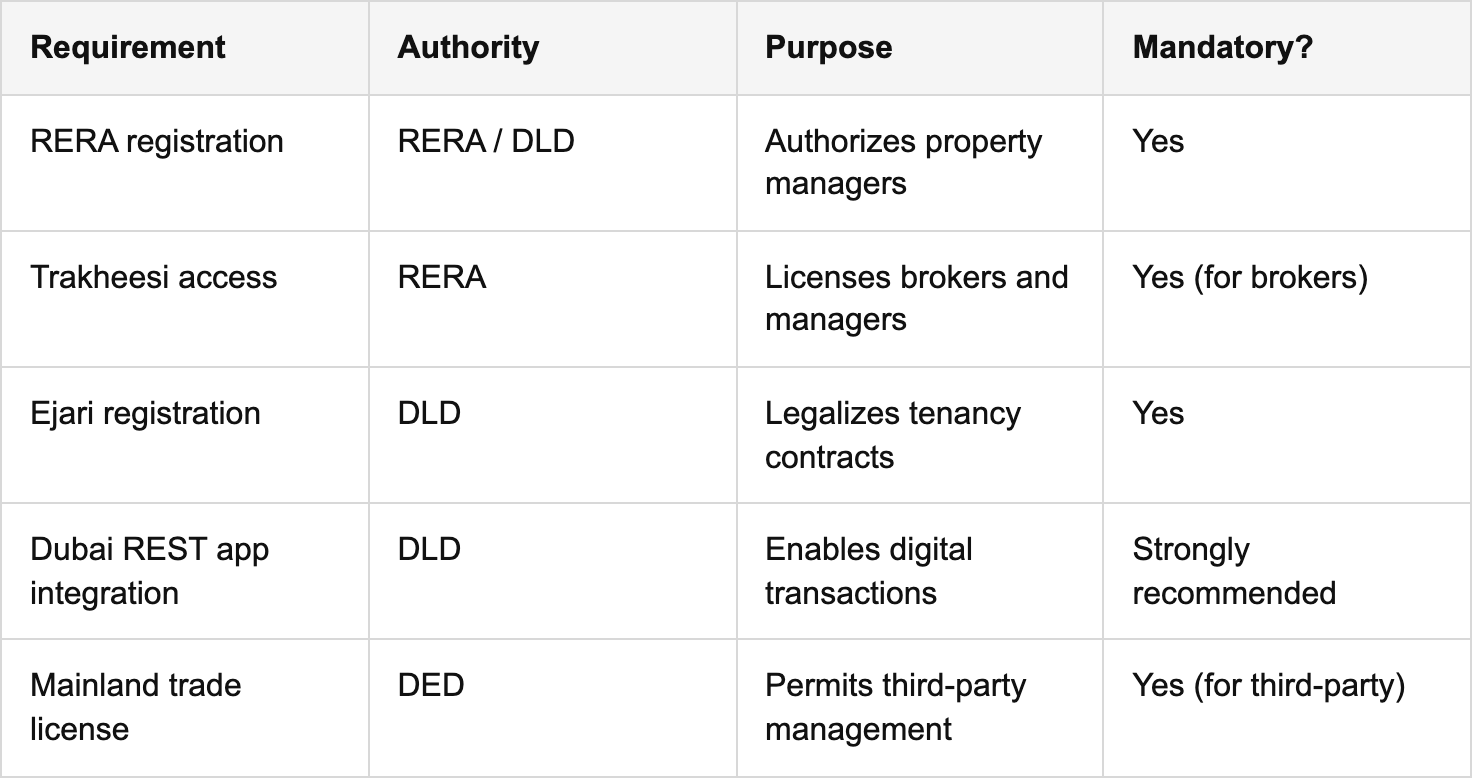
Getting these foundations in order is not just about avoiding penalties. It is about building a workflow that runs predictably, scales gracefully, and protects your returns.
Essential tools and technology for efficient workflows
Once you grasp the regulatory landscape, it’s time to look at the tools that turn compliance into true efficiency.
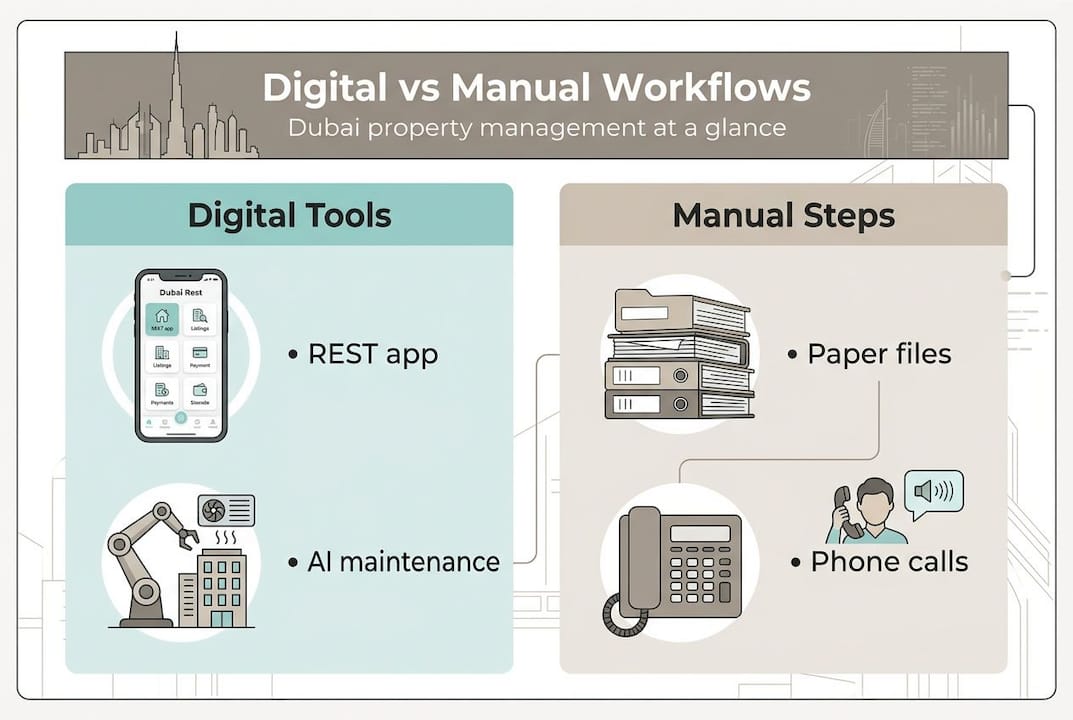
The digital transformation of property management in the UAE is accelerating faster than most owners realize. Manual processes, paper-based lease files, and phone-call-only communication are not just inefficient. They are increasingly incompatible with tenant expectations and regulatory requirements in 2026.
The most effective workflows today integrate several layers of technology. At the base level, platforms like the Dubai REST app and Ejari’s online portal allow you to handle registrations, renewals, and verifications without physical visits to government offices. This alone can save your team dozens of hours per month on administrative tasks.

One level up, purpose-built property management software (tools like Yardi, MRI Software, or regional alternatives) allows you to centralize maintenance requests, lease tracking, rent collection, and owner reporting in one system. These platforms reduce the chance of missed deadlines and make it far easier to generate compliance-ready documentation on demand.
The most significant efficiency gains, however, come from artificial intelligence. AI-powered predictive maintenance tools reduce equipment breakdowns by 30 to 50 percent, and AI chatbots handle 60 to 80 percent of routine tenant queries without human intervention. That means fewer emergency calls at 11 p.m. and more time spent on strategic decisions that grow your portfolio. These are not future projections. These are capabilities available to Dubai property managers right now, and the benefits to your management strategy are measurable and substantial.
Comparing digital vs manual workflow approaches
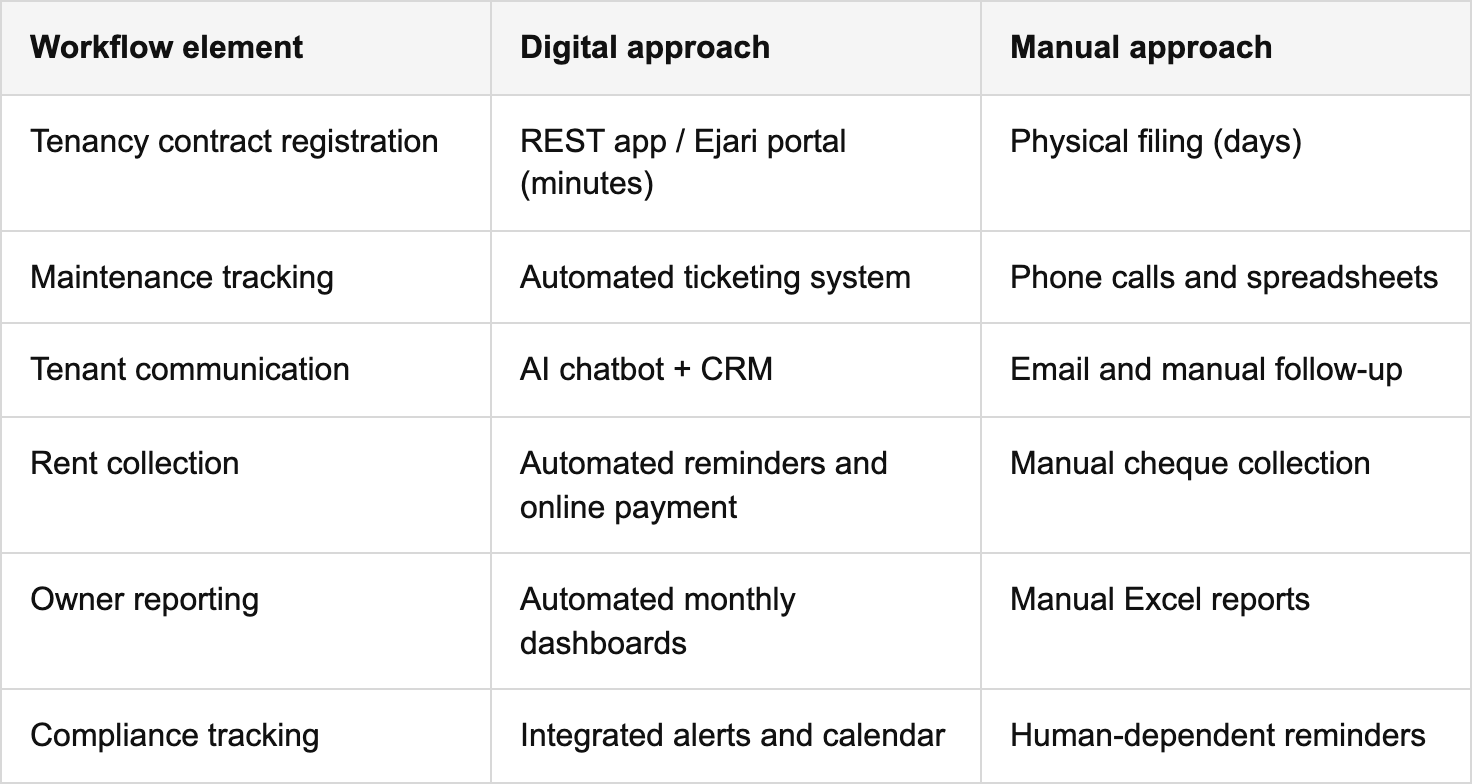
The performance gap between these two approaches is not marginal. Owners using digital workflows consistently report higher asset uptime (above 95 percent), faster response times, and fewer disputes with tenants.
Pro Tip: Do not attempt to implement every tool at once. Phase your technology adoption over two to three quarters, starting with Ejari digitization and rent collection automation. This approach protects team morale, reduces training errors, and allows you to measure ROI at each stage before committing to additional investment.
Step-by-step property management workflow in Dubai
With technology and regulations in context, here’s how you put it all together step by step.
A successful property management workflow is not a single act. It is a repeating cycle of structured actions that move from acquisition through lease renewal and back again. Each phase has its own compliance touchpoints, communication requirements, and documentation standards.
-
Property acquisition and onboarding: Confirm ownership documentation through the DLD and verify the property’s current status in the REST app. Establish a management agreement with the owner if you are operating as a third-party manager, and ensure your RERA credentials are current.
-
Property preparation and marketing: Conduct a detailed inspection and document the condition with photographs and a signed inventory report. Set the rental price based on current RERA-approved rental index data to avoid disputes down the line.
-
Tenant screening and selection: Collect and verify Emirates ID, visa documentation, and employment or income proof. Run credit and reference checks. Maintain a standardized screening checklist for every applicant to ensure consistent, defensible decisions.
-
Tenancy contract drafting and Ejari registration: Use RERA-approved contract templates. Once signed, register the tenancy agreement through Ejari immediately. As required by law, all tenancy contracts must be registered through Ejari, and integration with the Dubai REST app ensures your digital workflow stays current and verifiable.
-
Move-in and key handover: Conduct a formal move-in inspection with the tenant present. Document all meter readings (DEWA, gas, district cooling) and issue a signed handover report. Register the DEWA account in the tenant’s name through the eService portal.
-
Ongoing management and routine maintenance: Set up a digital maintenance ticketing system. Schedule preventive maintenance for HVAC, plumbing, and common areas on a quarterly basis. Respond to tenant requests within 24 hours and resolve routine issues within 72 hours to maintain tenant satisfaction and protect your property rating.
-
Rent collection and financial reporting: Use automated payment reminders 15 days before each cheque date. Track all payments in your property management platform and generate monthly financial reports for the owner. Flag any defaults immediately and follow the RERA dispute process if resolution is needed.
-
Lease renewal or termination: Notify the tenant of renewal terms at least 90 days before contract expiry, as required by Dubai tenancy law. If renewing, update the Ejari registration. If terminating, conduct a move-out inspection, reconcile the security deposit, and update DLD records accordingly.
Pro Tip: Set automated calendar alerts for every critical deadline in your management cycle: Ejari renewals, rent increase notices, inspection schedules, and RERA license renewals. A single missed deadline can trigger a legal dispute that costs far more than the time you saved by skipping the reminder.
Compliance warning: Operating a tenancy without a registered Ejari contract is one of the most common and costly errors Dubai property owners make. Without Ejari registration, your contract has no legal standing in RERA’s dispute resolution system. If a tenant defaults or disputes a notice, you lose your primary legal instrument. Register every contract, every time, without exception.
Common pitfalls and troubleshooting tips
With your workflow established, it’s critical to watch for common mistakes — and know how to address them quickly.
Even experienced property owners in Dubai fall into predictable traps that disrupt their workflow and reduce returns. Knowing where these failure points typically occur puts you in a strong position to prevent them before they escalate.
The most frequent compliance errors include:
- Operating without current RERA registration: RERA licenses require periodic renewal. Many managers allow these to lapse, unknowingly voiding their authority to act on behalf of property owners.
- Missing or delayed Ejari registration: Some owners skip Ejari because they trust the tenant, or they simply forget. Either way, it creates an unenforceable contract and disqualifies you from using RERA’s dispute resolution mechanisms.
- Poor system integration: Using separate tools for maintenance, rent collection, and tenant communication without connecting them creates data silos. When a dispute arises, you cannot quickly produce a coherent record of events, which weakens your legal position.
- Incorrect rent increase notices: Dubai law specifies both the notice period and the permissible increase percentage based on the RERA rental index. Issuing rent increase notices without verifying the index creates grounds for dispute.
One often-overlooked risk involves business structure. Mainland licensing is required for third-party property management, while free zone companies can only manage their own assets or offer consultancy services. If you are operating under a free zone license and managing properties for other owners, you are doing so outside your legal authority. This can result in contract disputes and regulatory penalties. Understanding mainland vs free zone management structures is not just an administrative detail. It is a fundamental legal boundary that shapes your entire business model.
Workflow disruptions often trace back to documentation gaps. Ensure that every tenant interaction, maintenance request, payment, and inspection is logged within your management platform. If a dispute reaches RERA, your records are your evidence.
RERA’s dispute resolution system is an effective mechanism, but only for those who have followed the correct procedures from the start. Trying to resolve a dispute without proper documentation puts you at a serious disadvantage, regardless of the merits of your case.
Pro Tip: Schedule a quarterly workflow audit. Review your active contracts for Ejari status, check that all licenses are current, audit your maintenance ticket resolution times, and verify your financial reporting is up to date. A 90-minute audit every three months can prevent issues that would otherwise take weeks and significant legal fees to resolve.
A practitioner’s view: Why workflow is your real competitive edge in Dubai
Having explored pitfalls, let’s go beyond the basics and see why workflow mastery is the real difference-maker.
Most property owners in Dubai focus almost exclusively on acquiring the right asset in the right location. That is understandable. But the investors who consistently outperform the market are not just the ones who bought well. They are the ones who operate well.
In my experience working with property owners across Dubai’s freehold and leasehold markets, the most common cause of below-average returns is not a bad property. It is a broken process. A missed Ejari renewal, an unresolved maintenance ticket, a delayed rent increase notice — each of these seems minor in isolation. Together, they erode tenant trust, expose you to disputes, and reduce your asset’s long-term value.
Workflow is the lever that maximizes safe returns over time. It allows you to scale from one property to ten without proportionally scaling your stress or your staff. It creates the paper trail that protects you legally. And it delivers the consistent tenant experience that leads to longer tenancies, fewer vacancies, and stronger rental yields.
The owners who treat workflow as a competitive strategy rather than an administrative burden are the ones who build genuinely scalable, resilient portfolios in Dubai.
Get personalized workflow support for your Dubai property
If you want a faster, easier path to a streamlined workflow, expert guidance can make all the difference.
Setting up and maintaining a fully compliant, technology-enabled property management workflow in Dubai requires more than following a checklist. It requires informed judgment, market knowledge, and the kind of experience that only comes from working across multiple property types and transaction stages. The expert Dubai property advisers at Anthony Joseph’s platform offer exactly that.

Whether you are a first-time landlord trying to get your Ejari setup right or a seasoned investor looking to systematize management across a growing portfolio, personalized professional support helps you avoid costly errors and capture the full return your assets deserve. Reach out today to access tailored property management workflow solutions backed by deep expertise in Dubai’s real estate market.
Frequently asked questions
What is the most important regulatory step in property management workflow in Dubai?
RERA registration is the essential first step, as it authorizes property managers and establishes legal standing within Dubai’s regulatory framework. Without it, all management activities lack official sanction.
How does AI improve property management workflow?
AI-driven predictive maintenance reduces equipment breakdowns by 30 to 50 percent, and automated chatbots resolve 60 to 80 percent of routine tenant queries, freeing your team to handle higher-value tasks. The result is lower operational costs and faster response times.
Can free zone companies manage third-party properties in Dubai?
No. Only mainland licensed firms can legally manage third-party properties in Dubai; free zone companies are restricted to managing their own assets or providing consultancy services.
Why is Ejari registration part of the workflow?
Ejari registration is mandatory for all tenancy contracts and is the legal mechanism that makes your agreement enforceable under Dubai law, including access to RERA’s dispute resolution system.
What KPIs indicate a successful property management workflow in Dubai?
Asset uptime above 95 percent and strong first-time fix rates on maintenance requests are two of the clearest signals that your workflow is operating at a high level of efficiency and reliability.


