

Notary role in UAE property transactions: key facts
TL;DR:
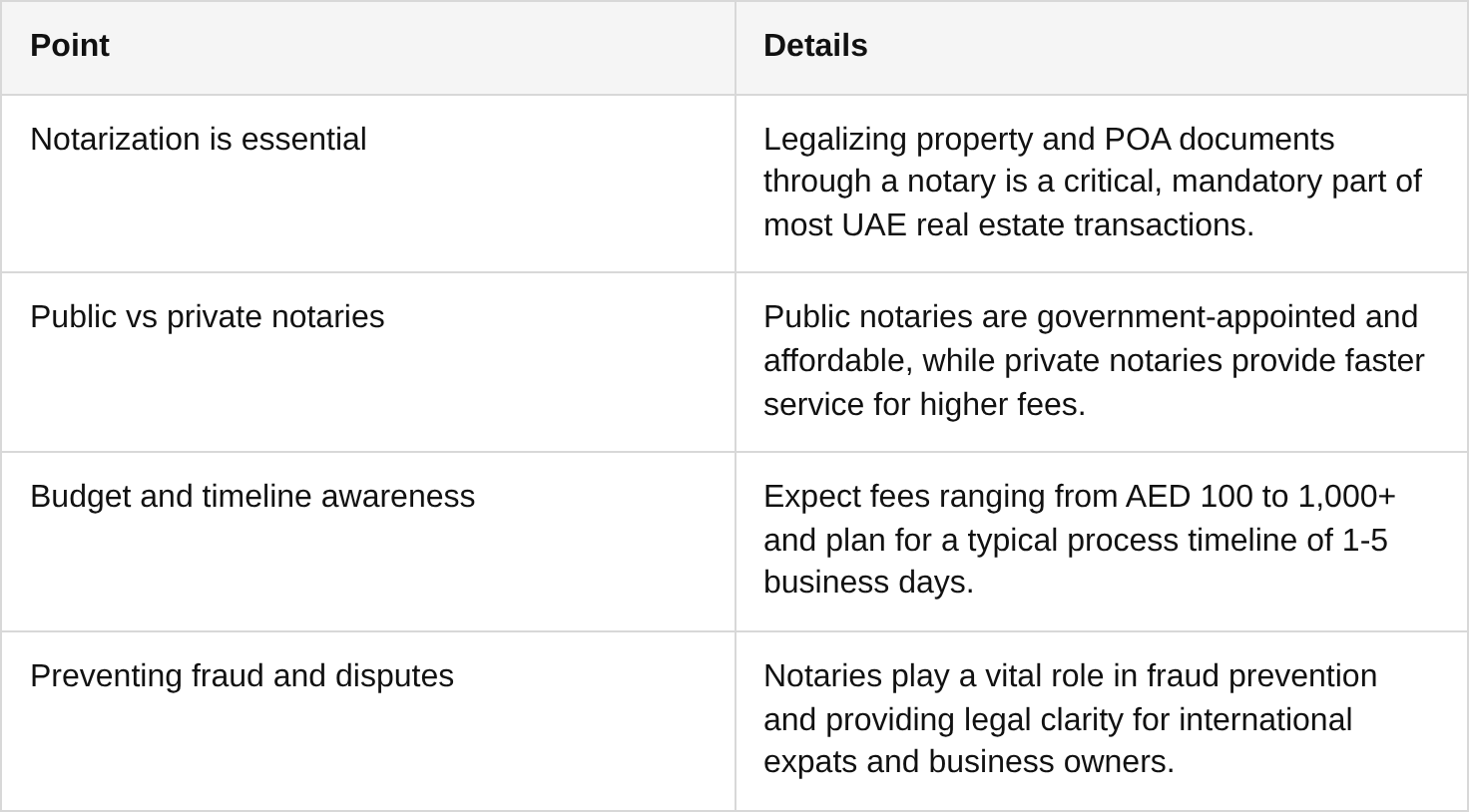
- UAE law mandates notarization for property transfers, POAs, and mortgage documents to prevent fraud and ensure validity.
- Private notaries are faster and more flexible but cost more than public notaries, which are government-operated.
- Proper notarization is crucial to legally protect transactions, avoid delays, and safeguard against future disputes.
Many expats and business owners in the UAE treat notarization as a box-ticking exercise, something you do quickly before the real work begins. That assumption is expensive. A missing notarial stamp, a poorly prepared power of attorney, or a document signed without proper witness verification can invalidate an entire property transfer, freeze mortgage disbursements, or leave you exposed to fraud claims. The UAE’s legal framework treats notarization as a foundational safeguard, not a formality. This guide walks you through what a notary does, why the process matters, which documents require it, what it costs, and how to choose the right notary for your situation.
Table of Contents
- What is a notary and why do UAE property transactions require notarization?
- Types of notaries in the UAE: Public vs private
- Key documents and procedures for property notarization
- Costs, timelines, and practical considerations
- Expert perspective: Why notaries are your legal safeguard beyond paperwork
- Need help with UAE property notarization?
- Frequently asked questions
Key Takeaways
What is a notary and why do UAE property transactions require notarization?
Now that you’re aware of how easily confusion can arise, let’s clarify the basics: what exactly does a notary do in the UAE, and why is it so crucial for property deals?
A notary is a public official authorized by the state to verify identities, witness signatures, and authenticate legal documents. In the UAE, notaries operate under the Ministry of Justice and are bound by Federal Law No. 4 of 2012 on Notary Public. Their authority gives signed documents a level of legal weight that private agreements simply cannot match. When a notary stamps a document, it becomes a public instrument, meaning courts recognize it as authentic without requiring further proof.
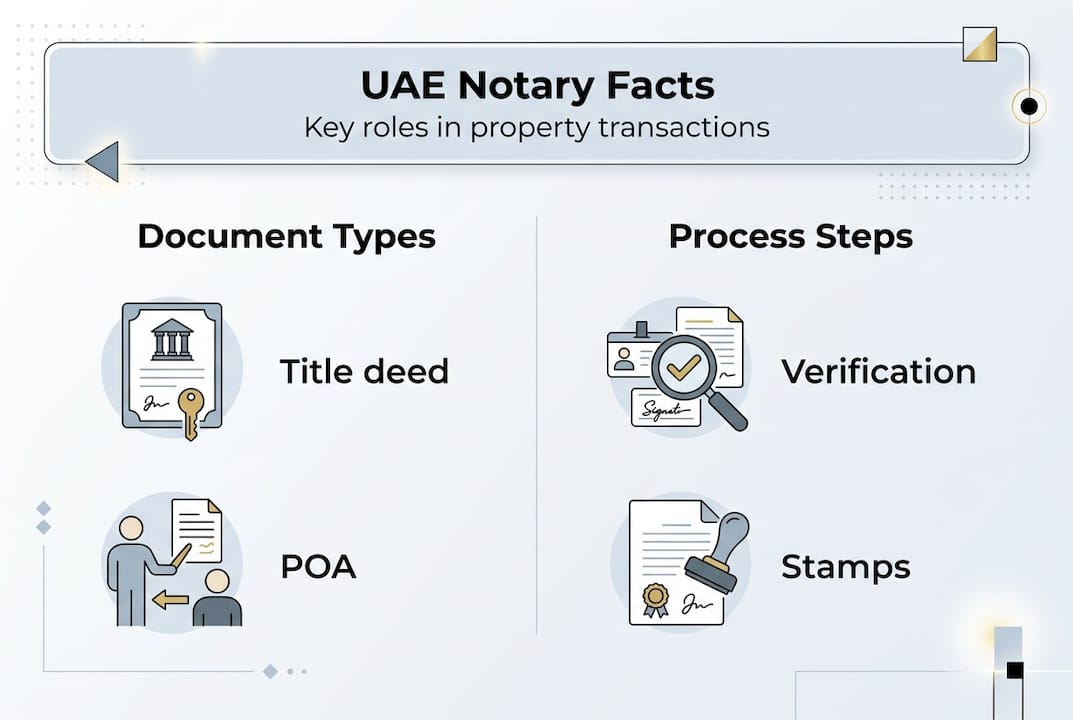
For property transactions specifically, notarization is not optional. The UAE requires it for:
- Sales and purchase agreements transferring title between parties
- Powers of attorney (POA) authorizing someone to act on your behalf in a property deal
- Mortgage documents and lender-required declarations
- Corporate resolutions when a company is buying or selling real estate
- Lease agreements in certain emirates where registration is mandatory
The purposes behind this requirement are practical. Notarization prevents fraud by confirming that the person signing is who they claim to be. It ensures informed consent, meaning both parties understood what they were agreeing to at the time of signing. It also creates a public record, which protects all parties if a dispute arises later. As fraud prevention is a recognized core function of notaries in the UAE, skipping this step removes a critical layer of legal protection.
“A notarized document carries the presumption of authenticity in UAE courts. An unnotarized agreement may still be enforceable, but proving its validity becomes significantly harder and more expensive.”
If you skip notarization, the consequences can be severe. Deals can be declared void, title transfers can be rejected by the Dubai Land Department, and you may face civil or criminal liability if the other party claims the agreement was forged or coerced. Understanding UAE real estate regulations before you sign anything is essential, and so is knowing how notarization fits into the broader MOU in property deals process.
Types of notaries in the UAE: Public vs private
Once you know the basics of notarization, it’s critical to understand your options and the differences between public and private notaries.
The UAE offers two distinct notary channels, and choosing the right one depends on your timeline, budget, and the complexity of your transaction.
Public notaries are government officials stationed at notary branches within the courts system. They follow fixed procedures, charge government-regulated fees, and operate during standard business hours. The process is reliable but can involve longer wait times, especially during peak periods. Public notaries are the standard choice for routine documents and straightforward property transfers.
Private notaries are licensed lawyers authorized by Dubai Courts to perform notarial functions. They offer flexible scheduling, including evenings and weekends, faster appointment availability, and the ability to travel to your location. The trade-off is cost: private notaries charge significantly more. Private notaries are preferred for efficiency, while public notaries remain the traditional choice for standard transactions.
Here is a side-by-side comparison to help you decide:
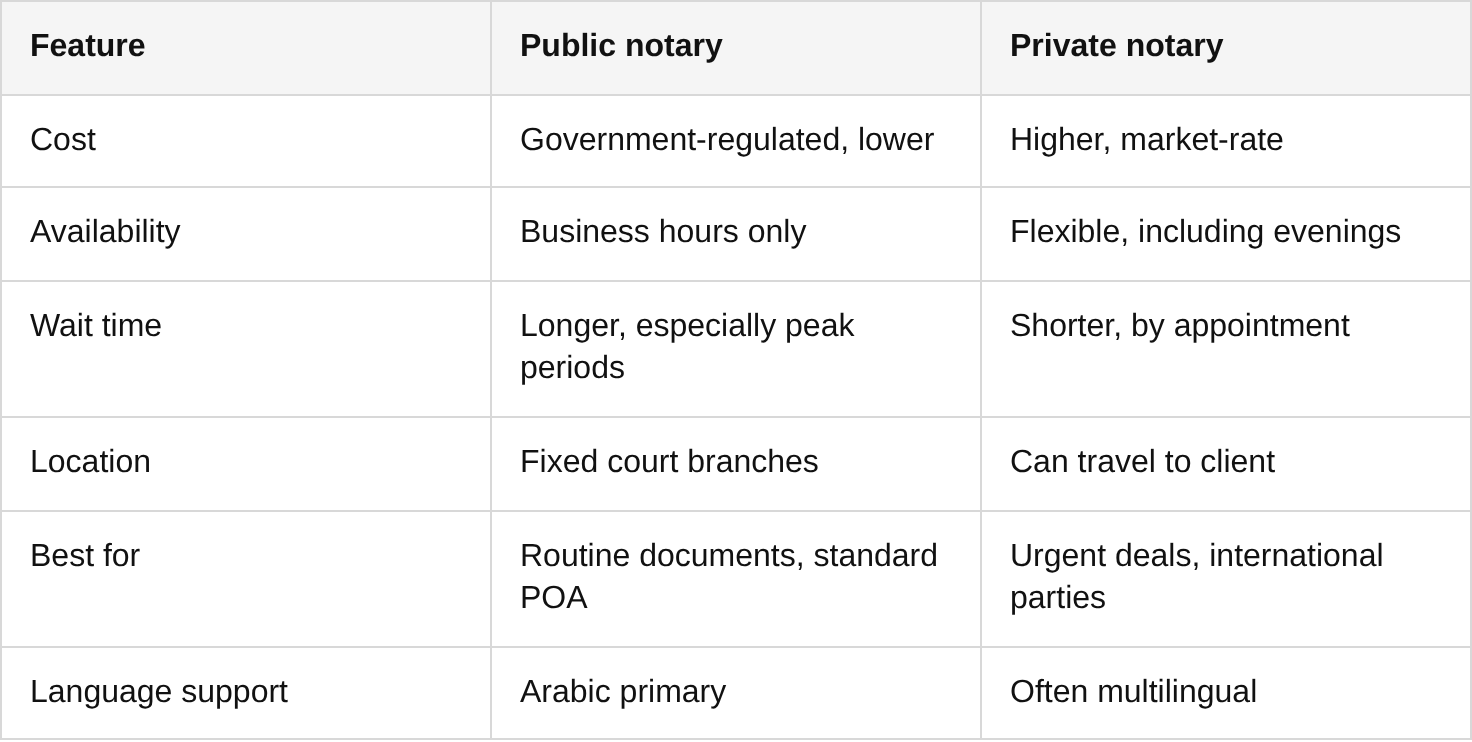
For expats managing cross-border transactions or business owners with tight closing deadlines, a private notary often makes more sense despite the higher fee. If you’re executing a straightforward POA for a local property purchase, a public notary is perfectly adequate and more cost-effective.
Pro Tip: If you’re dealing with types of property ownership such as freehold versus leasehold, the notarization requirements and document complexity can differ. Confirm with your notary in advance which documents are needed based on the ownership structure.
Key documents and procedures for property notarization
With your preferred notary selected, you need to prepare the right documents and follow the correct steps to avoid pitfalls.

Notarization in the UAE follows a structured process. Arriving unprepared is one of the most common reasons transactions get delayed. Here is what you need and what to expect.
Essential documents for property notarization:
- Passport copies of all parties (buyer, seller, and any authorized representatives)
- Emirates ID for UAE residents
- Original sales agreement or MOU
- Title deed (for resale transactions)
- Corporate documents if a company is involved (trade license, board resolution, authorized signatory certificate)
- Arabic translation of any non-Arabic documents, certified by a legal translator
- POA document if someone is signing on behalf of another party
Step-by-step notarization process:
- Prepare and review all documents with your legal advisor before the appointment
- Obtain certified Arabic translations for any foreign-language documents
- Book your appointment at a public notary branch or contact a private notary directly
- Attend in person with all original documents and copies
- The notary verifies identities and reviews the document content
- All parties sign in the notary’s presence
- The notary applies the official stamp and registers the document
- You receive the notarized original and certified copies
Key statistic: Notary fees for property documents in the UAE public system typically range from AED 400 to AED 600, and the standard processing timeline is 1 to 5 business days.
Common errors that lead to rejections include submitting photocopies instead of originals, missing witness signatures, or presenting documents without certified Arabic translations. Always confirm the specific requirements with your notary office before your appointment, as requirements can vary between emirates.
For more complex transactions, thorough due diligence in Dubai is strongly recommended before notarization begins. If you’re also managing property in Dubai on behalf of a landlord, a properly notarized POA is non-negotiable. Understanding UAE real estate regulations in full gives you a clearer picture of where notarization fits within the broader compliance landscape.
Costs, timelines, and practical considerations
Understanding costs and time expectations is essential to plan your transaction confidently.
Budgeting for notarization is straightforward once you know the fee structures. The numbers vary significantly depending on whether you use a public or private notary and the type of document involved.
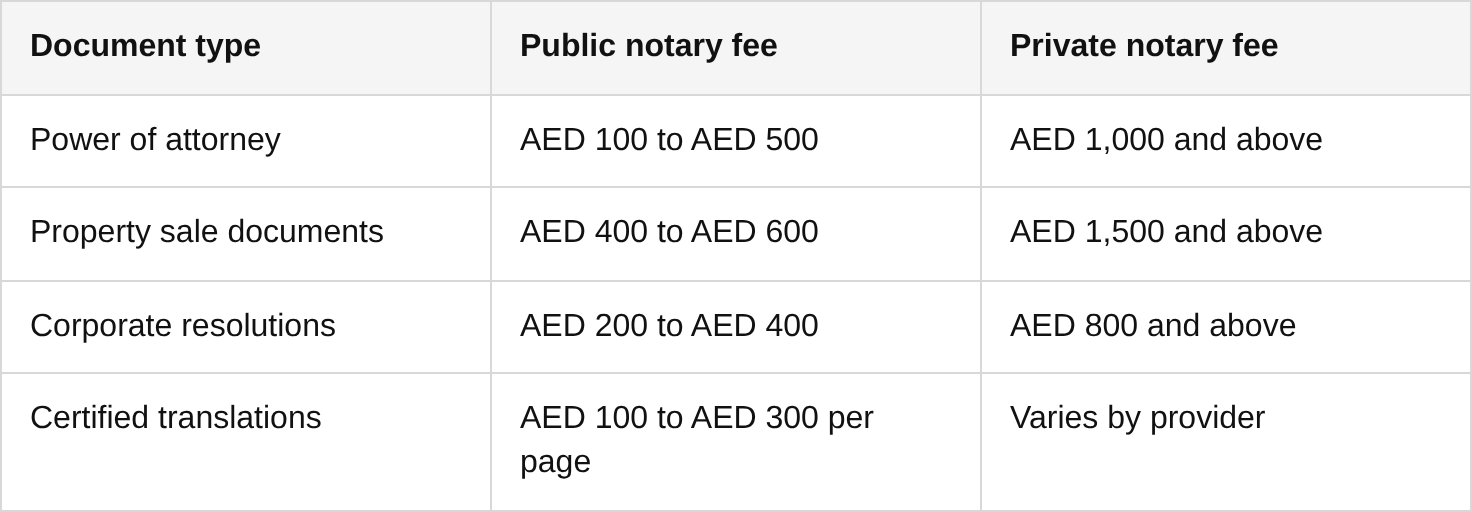
As noted, POA fees range from AED 100 to AED 500 at public notaries and AED 1,000 or more at private notaries, with property document processing taking 1 to 5 business days depending on workload and complexity.
Beyond the base fee, factor in these additional costs:
- Certified Arabic translation: Required for all non-Arabic documents
- Urgent processing fees: Private notaries may charge a premium for same-day service
- Travel fees: If the notary comes to your office or home
- Witness fees: Some notary offices charge for providing official witnesses
Timelines matter more than most buyers realize. A delayed notarization can push back your Dubai Land Department registration date, which in turn can affect your mortgage disbursement schedule or your visa application timeline if the property is tied to an investor visa.
Pro Tip: Always build a 5-business-day buffer into your property closing schedule specifically for notarization. If you’re paying a Dubai property transfer fee at the Land Department, you’ll need your notarized documents ready before that appointment.
Also worth noting: notarization costs are separate from real estate tax in Dubai and other transaction fees. Keep them in separate budget lines to avoid surprises at closing.
Expert perspective: Why notaries are your legal safeguard beyond paperwork
Beyond facts and fees, it’s worth stepping back to consider what a notary truly represents for property buyers and business owners.
In my experience working with expats and investors across Dubai’s real estate market, the most costly mistakes rarely come from bad deals. They come from informal arrangements that seemed fine at the time. A handshake agreement, a WhatsApp confirmation, a document signed in a hotel lobby without proper verification. These shortcuts feel efficient in the moment, but they create legal vulnerabilities that surface months or years later, often at the worst possible time.
The UAE’s legal system is built on documentation. Notaries are fundamental in preventing real estate fraud in this market, and that function is not symbolic. It is structural. When you use a notary, you are not just complying with a rule. You are building a verifiable chain of consent and identity that protects your investment from the moment the ink dries.
Savvy buyers and sellers use notarial processes proactively. They notarize POAs early, before they need them urgently. They ensure corporate documents are authenticated before entering negotiations. They treat the notary appointment as a strategic step, not an administrative hurdle. Paired with tools like escrow accounts in Dubai and working with a qualified real estate agent, proper notarization creates a transaction structure that is genuinely difficult to challenge.
For newcomers especially, the notary is your first line of legal defense in a market that moves fast and rewards preparation.
Need help with UAE property notarization?
If you want certainty and peace of mind with notarial processes, expert support is available.
Navigating notarization requirements across different property types, ownership structures, and corporate setups can feel overwhelming, especially if you’re managing a transaction from overseas or working under a tight deadline. Getting the details wrong at this stage can cost you far more than a notary fee.

At anthonyjosephaj.com, we provide tailored guidance for expats and business owners who need clarity on UAE property legal processes, including notarization, due diligence, and transaction structuring. Whether you’re buying your first Dubai property or managing a portfolio, our team is here to make sure every legal step is handled correctly, efficiently, and with full transparency.
Frequently asked questions
Is notarization mandatory for all property transactions in the UAE?
Notarization is legally required for powers of attorney, most property sale transfers, and certain real estate contracts in the UAE, though specific requirements can vary by emirate and document type.
How much does notary service cost for a power of attorney in Dubai?
Public notary fees for POA range from AED 100 to AED 500, while private notaries typically charge AED 1,000 or more depending on complexity and urgency.
What is the difference between a public notary and a private notary?
Public notaries are government officials with fixed fees and standard wait times, while private notaries are authorized lawyers offering faster, more flexible but more expensive services.
Can expats use a private notary for urgent property transactions?
Yes, private notaries offer greater efficiency for urgent cases and are frequently chosen by expats who need flexible scheduling or faster turnaround on time-sensitive property deals.


