
How to Manage Property in Dubai for Optimal Results
Securing real estate assets in Dubai demands more than just financial strength. For high-net-worth investors from around the world, understanding Dubai’s unique blend of legal property regulations and operational requirements is fundamental. With strict frameworks set by the Dubai Land Department and RERA, every strategic move must align with official protocols and your investment objectives. This step-by-step guide offers clear insights to help you navigate compliance, select expert management, and maximize your property’s returns while safeguarding your interests.
Table of Contents
Step 3: Establish Effective Financial And Maintenance Systems
Step 5: Monitor Performance And Ensure Regulatory Compliance
Step 1: Assess Investment Objectives and Legal Requirements
Successfully managing property in Dubai requires a strategic approach that begins with thoroughly understanding your investment objectives and navigating the complex legal landscape. Your initial focus should be on clearly defining what you want to achieve through your real estate investment and ensuring complete alignment with Dubai’s sophisticated regulatory framework.
To effectively assess your investment objectives, start by conducting a comprehensive evaluation of your financial goals. Are you seeking long-term capital appreciation, consistent rental income, or a combination of both? Dubai’s property market offers diverse opportunities, and understanding legal investment structures is crucial for making informed decisions. Consider the following key factors:
Compare common property types and their investment profiles in Dubai:

Personal investment timeline: Short-term (1-3 years) vs. long-term (5-10 years)
Risk tolerance: Conservative vs. aggressive investment strategies
Capital availability: Total investment budget and potential financing options
Property type preferences: Residential, commercial, or mixed-use developments
Legal requirements in Dubai demand meticulous attention. The Dubai Land Department and Real Estate Regulatory Agency (RERA) have established comprehensive regulations to protect investors. You must understand critical legal aspects such as:
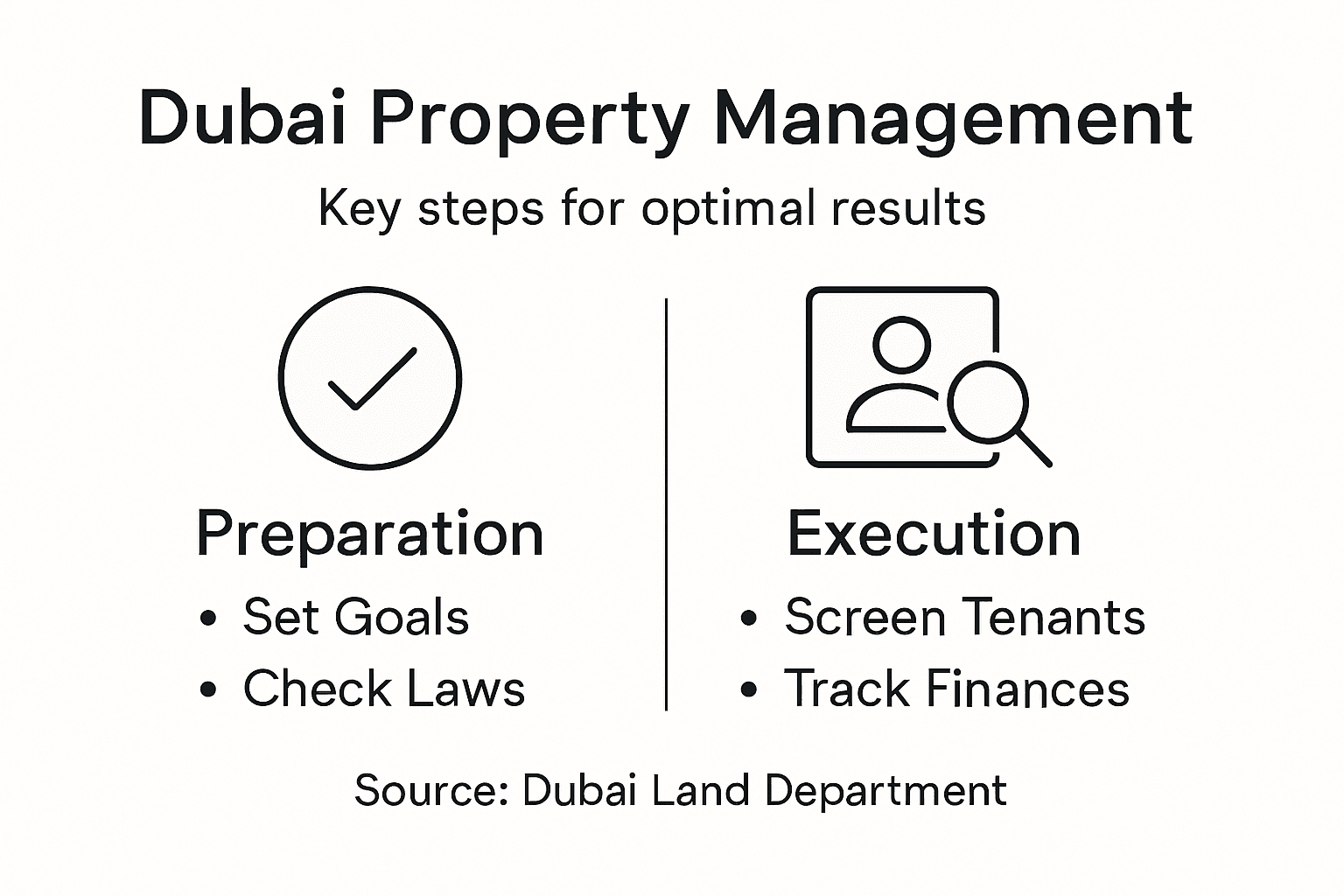
Here’s a summary of legal property ownership structures in Dubai and their strategic impacts:

Freehold vs. leasehold ownership structures
Registration procedures with official authorities
Escrow account regulations for off-plan properties
Required documentation for foreign property investors
Successful Dubai property investment hinges on understanding local regulations and aligning them with your personal financial strategy.
Pro tip: Engage a licensed real estate consultant familiar with Dubai’s intricate property laws to help navigate complex legal requirements and minimize potential investment risks.
Step 2: Select and Appoint Qualified Property Managers
Selecting the right property management team is a critical step in maximizing your Dubai real estate investment potential. Your chosen managers will serve as the primary interface between you and your property, handling everything from tenant relations to maintenance and financial reporting.
When searching for property managers, focus on professionals with proven expertise in property management strategies. Look for candidates who demonstrate the following essential qualifications:
Professional certifications in real estate management
Local market experience in Dubai’s unique property landscape
Multilingual communication skills
Proven track record of successful property portfolio management
Technology-enabled reporting and management systems
To ensure you select the most qualified property management team, implement a rigorous screening process:
Request comprehensive portfolios from potential management firms
Verify professional licenses and industry credentials
Check references from current and previous clients
Conduct in-depth interviews to assess communication and problem-solving skills
Review their fee structures and service level agreements
Effective property management in Dubai requires a strategic partnership built on trust, expertise, and transparent communication.
Pro tip: Request detailed performance metrics and case studies from potential property managers to validate their ability to maximize your investment returns and minimize operational challenges.
Step 3: Establish Effective Financial and Maintenance Systems
Establishing robust financial and maintenance systems is crucial for protecting your Dubai property investment and ensuring long-term profitability. Your goal is to create a comprehensive framework that minimizes risks, maximizes returns, and maintains your property’s value through strategic planning and proactive management.
Your financial and maintenance approach should align with RERA compliance standards, which mandate strict operational protocols. Develop a comprehensive system that addresses key financial and maintenance requirements:
Detailed budgeting for operational expenses
Preventive maintenance scheduling
Digital tracking of repair and maintenance records
Reserve fund management
Transparent expense reporting
Implement a systematic approach to financial and maintenance management:
Create a dedicated property management bank account
Establish quarterly financial review processes
Develop a comprehensive maintenance checklist
Set up automated expense tracking systems
Implement regular property condition assessments
Successful property management in Dubai requires meticulous financial planning and consistent maintenance strategies that protect your investment’s long-term value.
Pro tip: Invest in cloud-based property management software that integrates financial tracking, maintenance scheduling, and reporting to streamline your operational efficiency and provide real-time insights into your property’s performance.
Step 4: Implement Tenant Screening and Leasing Processes
Successful property management in Dubai hinges on implementing a comprehensive tenant screening and leasing process that protects your investment while ensuring stable, reliable occupancy. Your approach must balance thorough vetting with efficient, professional procedures that attract high-quality tenants and minimize potential risks.
Develop a systematic screening strategy that goes beyond basic background checks. While no specific research links are available, key components of an effective tenant screening process include:
Employment verification for income stability
Credit history assessment
Previous rental reference checks
Identity document authentication
Criminal background screening
Implement a structured tenant selection and leasing workflow:
Create a standardized application form
Establish clear eligibility criteria
Conduct comprehensive background investigations
Schedule in-person or virtual interviews
Prepare comprehensive lease agreements
Collect security deposits and initial payments
Effective tenant screening is the foundation of successful property management, protecting your investment and ensuring long-term financial stability.
Pro tip: Develop a consistent, transparent screening process that treats all applicants fairly while maintaining rigorous standards to attract professional, reliable tenants.
Step 5: Monitor Performance and Ensure Regulatory Compliance
Monitoring your property’s performance and maintaining strict regulatory compliance are critical components of successful real estate management in Dubai. This step involves developing a comprehensive strategy that tracks financial performance, maintains legal standards, and ensures your investment remains protected and profitable.
Implement a robust monitoring approach aligned with RERA compliance standards, focusing on key performance indicators and regulatory requirements:
Financial performance tracking
Maintenance schedule adherence
Tenant satisfaction metrics
Regulatory documentation management
Risk assessment and mitigation
Develop a systematic compliance and performance monitoring process:
Create detailed monthly financial reports
Conduct quarterly property condition assessments
Review and update regulatory documentation
Implement automated compliance tracking systems
Schedule regular internal and external audits
Maintain transparent communication with regulatory bodies
Proactive performance monitoring and regulatory compliance are not just legal requirements but strategic investments in your property’s long-term success.
Pro tip: Leverage technology-driven compliance management tools that provide real-time insights and automated alerts to help you stay ahead of regulatory changes and potential performance issues.
Take Control of Your Dubai Property Investment with Expert Guidance
Managing property in Dubai involves navigating complex legal requirements and ensuring effective tenant screening and maintenance systems. If you want to transform challenges like regulatory compliance, tenant selection, and performance monitoring into seamless opportunities for maximizing your returns, expert support is essential. Avoid costly mistakes and unlock your property’s true potential with professional strategies tailored to Dubai’s unique real estate market.

Discover how Anthony Joseph’s award-winning expertise can empower your investment journey. From mastering freehold ownership to selecting top-tier property managers, you can rely on proven solutions for every step of managing property in Dubai. Visit Anthony Joseph’s official website to explore trusted property management services and gain access to exclusive insights that align with RERA compliance standards. Don’t wait for challenges to arise. Secure your property’s success now by partnering with a leading Dubai real estate expert who turns complexities into clear results. Learn more and take action today at Anthony Joseph’s platform.
Frequently Asked Questions
What are the key steps to assess investment objectives for property management in Dubai?
To assess your investment objectives, start by clearly defining your financial goals, such as long-term capital appreciation or consistent rental income. Evaluate factors like your investment timeline, risk tolerance, and available capital to create a focused property investment strategy.
How can I select a qualified property management team for my Dubai investment?
Choose a property management team by looking for professionals with certifications in real estate management and proven local market experience. Conduct a thorough screening process that includes checking references and assessing their fee structures.
What financial systems should I establish for optimal property management in Dubai?
Establish robust financial systems that include detailed budgeting, transparent expense reporting, and digital tracking for maintenance records. Create a dedicated property management bank account and conduct quarterly financial reviews to maintain oversight.
How can I implement effective tenant screening processes for my rental property in Dubai?
Implement a comprehensive tenant screening process that includes employment verification, credit history assessments, and criminal background checks. Standardize your application form and maintain clear eligibility criteria to attract quality tenants.
What performance indicators should I monitor to ensure compliance in property management?
Track key performance indicators, such as financial performance, tenant satisfaction metrics, and adherence to maintenance schedules. Schedule regular property assessments and maintain updated regulatory documentation to stay compliant and protect your investment.
How often should I review my property management strategies to ensure optimal results?
Review your property management strategies at least quarterly to ensure they align with both performance outcomes and regulatory compliance. Conduct detailed monthly financial reports and property condition assessments to adjust your management practices accordingly.


