

What is due diligence in Dubai real estate: guide 2026
International investors often underestimate how Dubai’s unique regulatory framework transforms due diligence from a routine checklist into a sophisticated compliance exercise. Unlike Western markets where title searches dominate, Dubai’s system demands simultaneous navigation of Islamic finance principles, developer escrow regulations, and stringent AML protocols that can derail transactions within hours. This guide reveals the specific legal, financial, and strategic checks that separate successful Dubai property investments from costly mistakes, equipping you with actionable frameworks to evaluate opportunities confidently in 2026’s competitive market.
Table of Contents
- What Is Due Diligence In Dubai Real Estate: A Comprehensive Overview
- Legal And Financial Due Diligence: Verifying Ownership And Investment Viability
- Off-Plan Vs Ready Properties: Due Diligence Nuances And Risks
- Practical Due Diligence Strategies For International Investors In Dubai
- How We Support Your Due Diligence Journey In Dubai Real Estate
- Frequently Asked Questions
Key takeaways
What is due diligence in Dubai real estate: a comprehensive overview
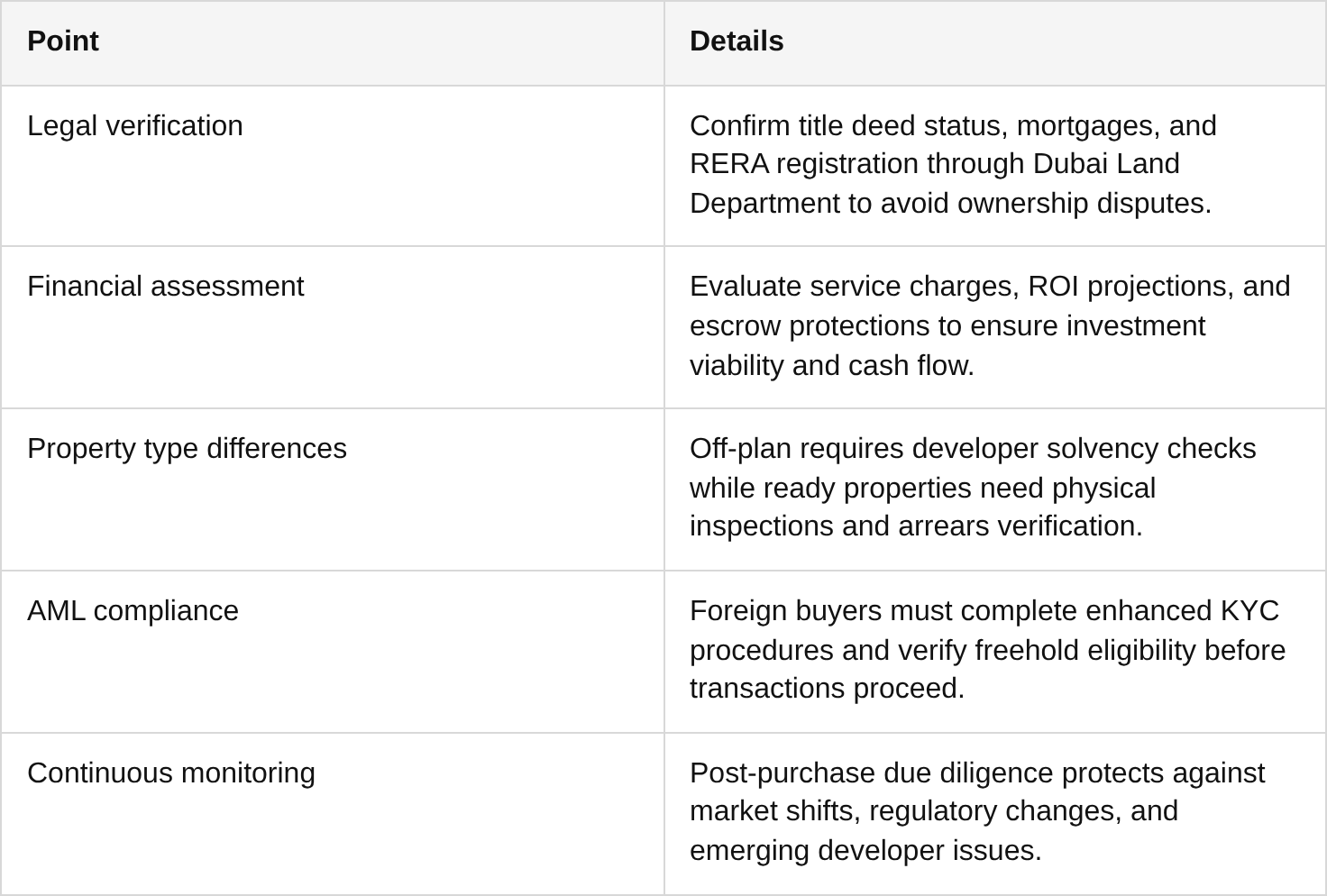
Due diligence in Dubai real estate encompasses legal, financial, physical, and commercial investigations that protect international investors from hidden liabilities and compliance violations. This multi-layered process goes far beyond price negotiation or location analysis, requiring systematic verification of ownership legitimacy, financial obligations, and regulatory adherence across Dubai’s unique property ecosystem.
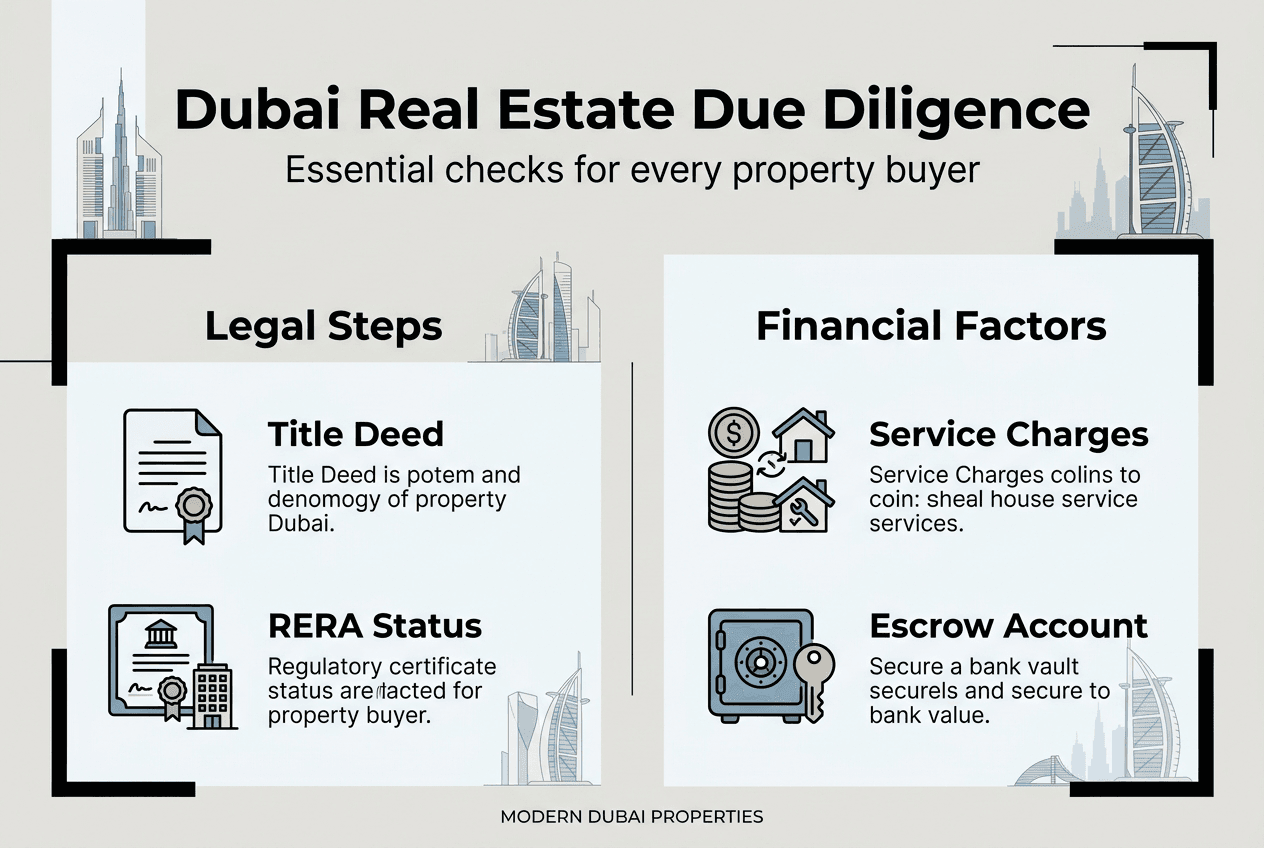
The legal dimension centers on title deed authentication through the Dubai Land Department, mortgage encumbrance searches, and confirmation that developers hold valid RERA registration for off-plan projects. Financial due diligence examines service charge histories, strata management fees, and projected returns against actual market performance data. Physical assessments identify structural defects or maintenance issues that could trigger unexpected costs, while commercial analysis evaluates neighborhood dynamics, rental demand patterns, and exit strategy feasibility.
Dubai’s regulatory bodies enforce specific requirements that differ markedly from Western jurisdictions:
- Dubai Land Department manages all property registration and title transfers
- Real Estate Regulatory Agency oversees developer compliance and escrow accounts
- Dubai Financial Services Authority monitors mortgage providers and financing structures
- Anti-Money Laundering units scrutinize transaction sources and beneficial ownership
These checks protect you from disputes over ownership legitimacy, undisclosed mortgages that cloud title, or developers who mismanage escrow funds. Understanding UAE real estate regulations becomes essential because Dubai operates under civil law principles where documentation standards and enforcement mechanisms function differently than common law systems prevalent in the UK, US, or Australia.
Due diligence transforms from administrative burden to strategic advantage when you recognize that Dubai’s transparent registry systems actually simplify verification compared to markets with fragmented record-keeping.
The scope extends beyond transaction completion. Ongoing monitoring after purchase ensures you stay informed about regulatory changes affecting foreign ownership, new tax implementations, or community management issues that could impact property values. This proactive approach prevents situations where investors discover problems only when attempting to sell or refinance years later.
Legal and financial due diligence: verifying ownership and investment viability
Legal verification covers title deeds, mortgages, RERA registration, and sale agreement reviews to establish clear ownership and compliance status. You must personally verify that the seller holds legitimate title through Dubai Land Department records, not rely solely on developer or agent assurances. This process reveals whether properties carry existing mortgages, court judgments, or other encumbrances that could block your ownership rights or trigger unexpected financial obligations.
Title deed verification requires examining the official registry entry that shows current owner details, property boundaries, and any registered liens. Mortgage searches identify outstanding financing that must be cleared before transfer, while RERA checks confirm that off-plan developers maintain proper licensing and escrow arrangements. The sale and purchase agreement demands legal review to ensure terms align with Dubai regulations regarding payment schedules, handover conditions, and dispute resolution mechanisms.
Freehold versus leasehold distinctions carry profound implications for foreign investors. Freehold areas grant full ownership rights without time limitations, while leasehold properties restrict foreigners to maximum 99-year terms. Zoning classifications determine permissible uses, whether residential, commercial, or mixed, affecting rental strategies and future development potential.
Financial due diligence evaluates service charges, ongoing costs, return projections, and payment structures that determine actual investment profitability. Service charge histories reveal whether communities maintain properties adequately or face deferred maintenance that could trigger special assessments. Payment plan terms for off-plan purchases must align with construction milestones and escrow release schedules to protect your capital.
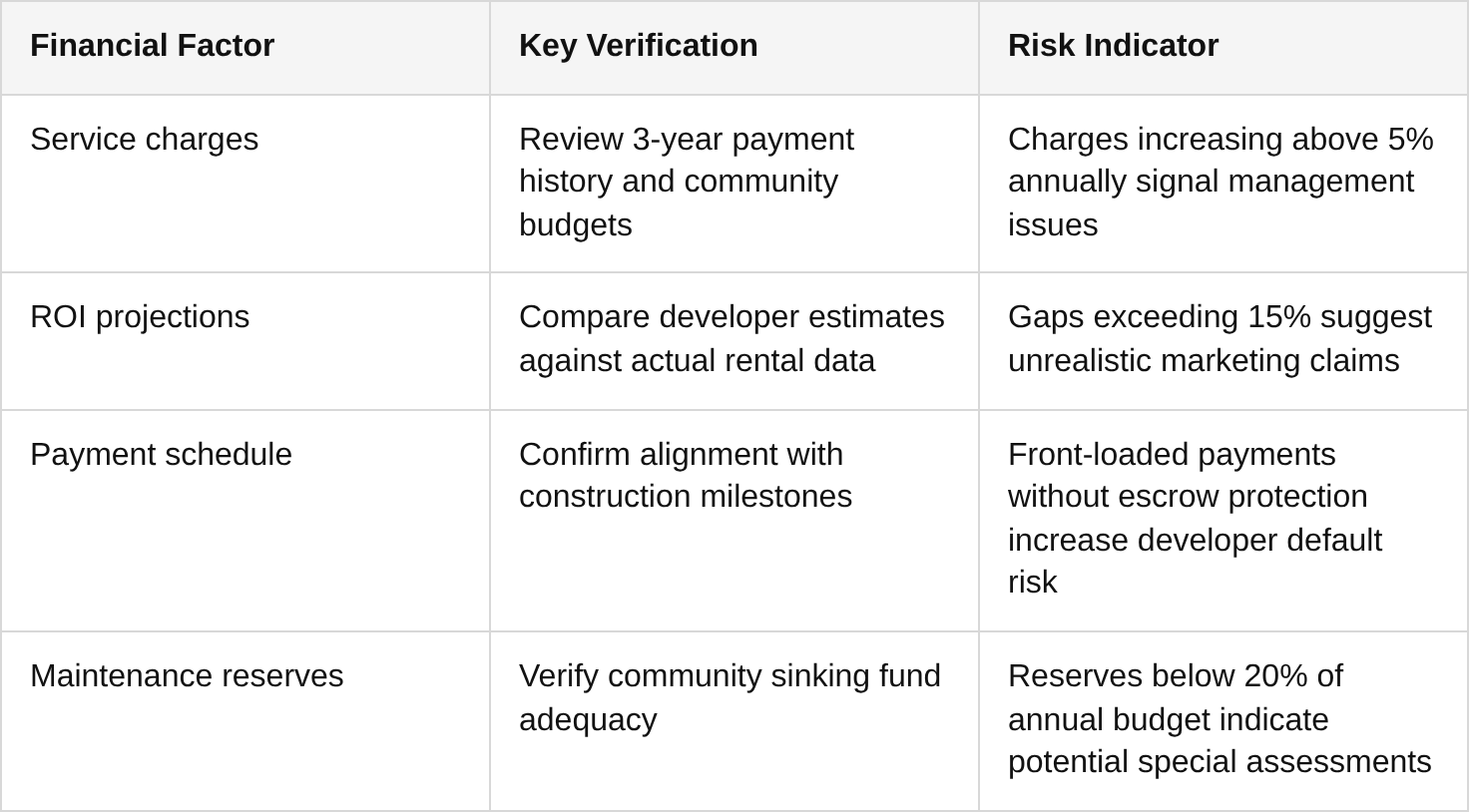
Pro Tip: Always verify that developers deposit your off-plan payments into escrow accounts regulated by RERA, ensuring funds remain protected if construction delays or developer insolvency occurs.
The financial analysis must incorporate Dubai’s unique cost structure where service charges can range from AED 5 to AED 25 per square foot annually depending on community amenities and management quality. Understanding real estate tax facts helps you model true ownership costs since Dubai imposes no property taxes but charges various transaction and registration fees that impact your return calculations.
Off-plan vs ready properties: due diligence nuances and risks
Off-plan properties represent units purchased during construction phases, while ready properties offer immediate occupancy with completed infrastructure and established community operations. This fundamental distinction drives dramatically different due diligence priorities and risk profiles that international investors must understand before committing capital.

Off-plan due diligence emphasizes developer reputation, escrow verification, and delivery risks that could extend timelines by 6 to 18 months beyond promised completion dates. You face construction quality uncertainties, potential design changes, and market condition shifts that might affect property values by completion. Developer solvency becomes paramount since bankruptcy or financial distress can freeze projects indefinitely, trapping your capital despite escrow protections.
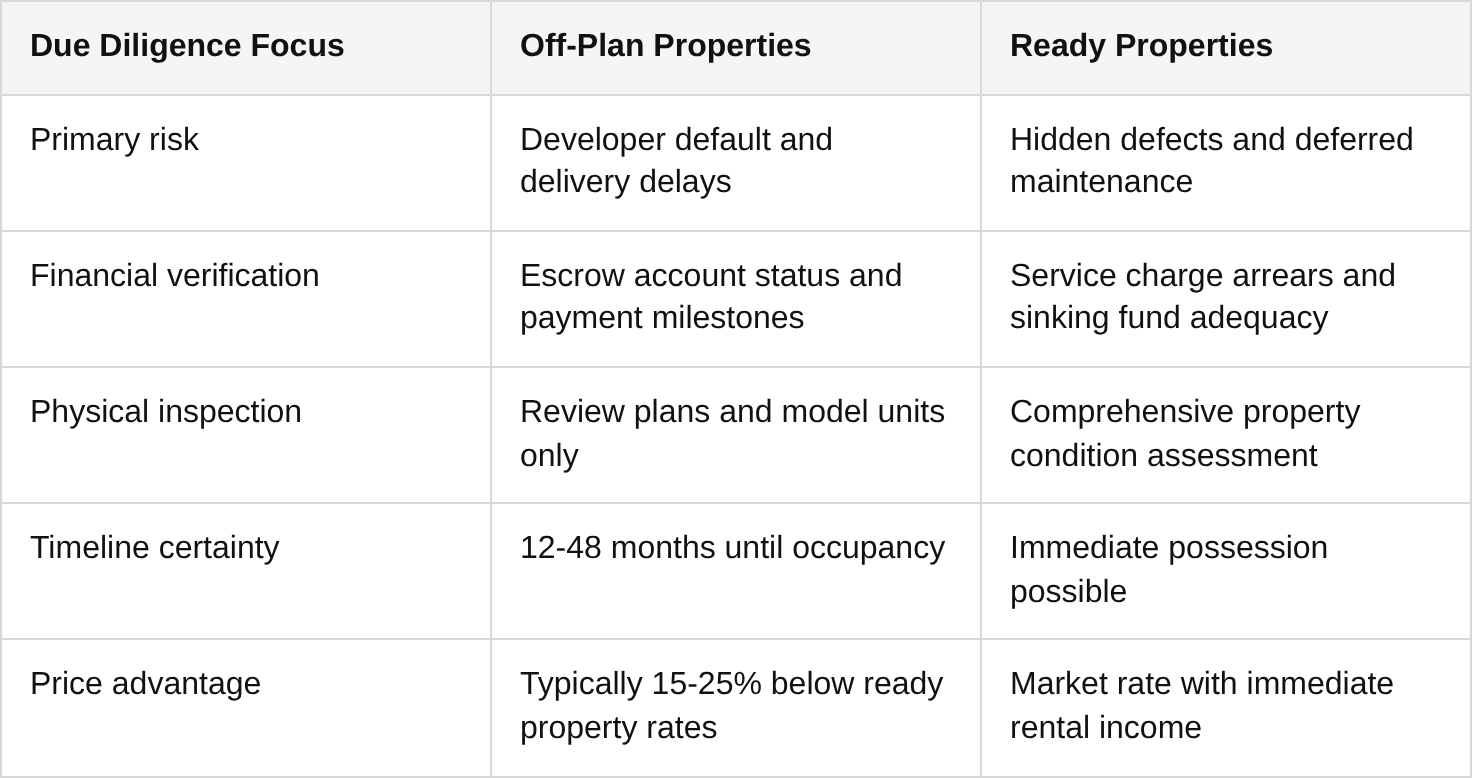
Ready property risks concentrate on physical condition, hidden defects, and outstanding charges that sellers might conceal to expedite transactions. You must conduct thorough inspections covering structural integrity, mechanical systems, and finish quality to identify issues requiring immediate remediation. Service charge arrears represent a critical concern since Dubai law makes these obligations transfer with property ownership, meaning you inherit previous owner debts unless explicitly cleared before completion.
Foreign investors must verify freehold eligibility and complete enhanced AML procedures that scrutinize fund sources and beneficial ownership structures. Dubai restricts foreign ownership to designated freehold zones, making location verification essential before signing agreements. Anti-money laundering regulations require comprehensive documentation of income sources, business activities, and transaction purposes that can delay closings if not prepared in advance.
Pro Tip: Use Dubai Land Department mobile applications and official RERA registries to independently verify developer credentials, project approvals, and escrow account status rather than accepting third-party representations.
Off-plan purchases offer price advantages and customization opportunities but demand patience and risk tolerance for construction uncertainties. Ready properties provide immediate cash flow and certainty but typically cost 15 to 25 percent more than comparable off-plan units. Your investment timeline, risk appetite, and income requirements should drive this strategic choice, with due diligence procedures adapted accordingly. The escrow account protections for off-plan purchases provide some security but don’t eliminate all developer-related risks that careful vetting must address.
Practical due diligence strategies for international investors in Dubai
International investors need systematic approaches that address Dubai’s specific compliance requirements while aligning with strategic investment objectives and residency goals. The following framework guides you through essential verification steps:
- Complete AML and KYC documentation early by gathering bank statements, income tax returns, business ownership records, and fund source explanations that satisfy Dubai’s enhanced scrutiny standards for foreign buyers.
- Verify freehold designation for your target property through official Dubai Land Department records, confirming that your nationality qualifies for ownership in that specific zone.
- Research developer track record by examining completed project quality, delivery timeline history, and financial stability indicators including credit ratings and outstanding litigation.
- Analyze market exit strategy by evaluating historical price appreciation, rental yield trends, and liquidity metrics that indicate how quickly you could sell if circumstances change.
- Calculate total ownership costs including purchase price, registration fees, service charges, maintenance reserves, and insurance to determine actual return on investment.
- Engage qualified legal counsel and real estate professionals who understand international investor needs and can stress-test assumptions against Dubai market realities.
Golden Visa eligibility considerations add another layer to due diligence when you seek UAE residency through property investment. The program requires minimum AED 2 million property purchases with RERA valuation confirmation, making accurate property assessment critical for visa qualification. Your due diligence must verify that properties meet program criteria and that valuations align with purchase prices to avoid visa application rejections.
Pro Tip: Engage qualified legal and real estate professionals to stress-test investment scenarios and tailor due diligence procedures to your specific objectives, whether prioritizing rental yield, capital appreciation, or residency qualification.
Continuous monitoring after purchase protects against regulatory changes, market shifts, and community management issues that could impact property values or ownership rights. Subscribe to Dubai Land Department updates, monitor RERA announcements affecting your property type, and maintain relationships with community management to stay informed about special assessments or policy changes. This ongoing vigilance allows proactive responses to emerging issues before they escalate into costly problems.
Buyers bear due diligence costs ranging from AED 5,000 to AED 25,000 depending on property complexity, but this investment represents the best insurance against future liabilities that could exceed hundreds of thousands in remediation or legal fees.
Tailoring due diligence to your investor profile matters significantly. Yield-focused investors prioritize rental market analysis and tenant demand verification. Growth-oriented buyers emphasize infrastructure development plans and neighborhood appreciation potential. Residency seekers concentrate on Golden Visa criteria and property valuation accuracy. Understanding how to evaluate Dubai real estate through these different lenses ensures your due diligence addresses what actually matters for your specific situation rather than following generic checklists that miss critical details.
How we support your due diligence journey in Dubai real estate
Navigating Dubai’s complex due diligence requirements demands expertise that combines legal knowledge, market intelligence, and practical transaction experience. We provide international investors with comprehensive support covering compliance verification, financial analysis, and strategic investment evaluation tailored to your specific objectives.
Our services include detailed legal compliance reviews that verify title legitimacy, mortgage status, and RERA registration while ensuring your transaction meets AML requirements. We analyze financial projections against actual market data, assess developer credibility through proprietary research, and coordinate physical inspections with qualified professionals. For investors pursuing residency, we guide Golden Visa application requirements and confirm property eligibility before you commit capital.

Visit our platform to access personalized consulting that transforms due diligence from overwhelming complexity into confident decision-making. We help you evaluate Dubai real estate opportunities through frameworks proven across hundreds of successful international investments.
Our commitment centers on safeguarding your property investment through expert guidance that identifies risks before they become costly problems, ensuring your Dubai real estate journey succeeds from initial due diligence through long-term portfolio management.
Frequently asked questions
What is due diligence in real estate and why is it important?
Due diligence represents a comprehensive investigation process that examines legal, financial, physical, and commercial aspects of property transactions before purchase completion. This systematic verification protects investors from hidden liabilities, ownership disputes, and compliance violations that could trigger financial losses or legal complications. Dubai’s unique regulatory environment makes thorough due diligence essential since foreign investors face specific requirements around freehold eligibility, AML compliance, and developer escrow protections that don’t exist in many Western markets.
How does AML and KYC impact due diligence for international buyers in Dubai?
Anti-money laundering and know-your-customer compliance requires international buyers to document income sources, business ownership structures, and transaction purposes through bank statements, tax returns, and corporate records. Dubai authorities scrutinize foreign investments more intensively than domestic transactions, often requesting additional explanations for fund transfers or business relationships. This enhanced due diligence can extend transaction timelines by two to four weeks if documentation isn’t prepared in advance, but it builds transparency and trust within Dubai’s real estate ecosystem while protecting against illicit activity that could compromise your investment.
What are the risks of buying off-plan compared to ready properties in Dubai?
Off-plan purchases carry delivery delay risks averaging 6 to 18 months beyond promised completion dates, developer insolvency possibilities that could freeze projects despite escrow protections, and construction quality uncertainties until physical inspection becomes possible. Ready properties present different challenges including hidden structural defects, deferred maintenance issues, and outstanding service charge arrears that transfer to new owners under Dubai law. Off-plan offers price advantages of 15 to 25 percent below ready property rates but demands patience and risk tolerance, while ready properties provide immediate occupancy and rental income with greater certainty about actual condition and community operations.
Can due diligence help qualify for the Dubai Golden Visa through property investment?
Thorough due diligence verifies that properties meet the AED 2 million minimum value requirement and obtains RERA valuation confirmation essential for Golden Visa applications in 2026. Your investigation must confirm that purchase prices align with official valuations since discrepancies can trigger visa rejections even after property acquisition. Due diligence also ensures properties qualify under program criteria regarding freehold status, completion stage, and mortgage limitations that affect residency eligibility, preventing situations where you complete purchases only to discover visa ineligibility afterward.


