
Why choose Dubai for business: Tax benefits and real estate ROI
TL;DR:
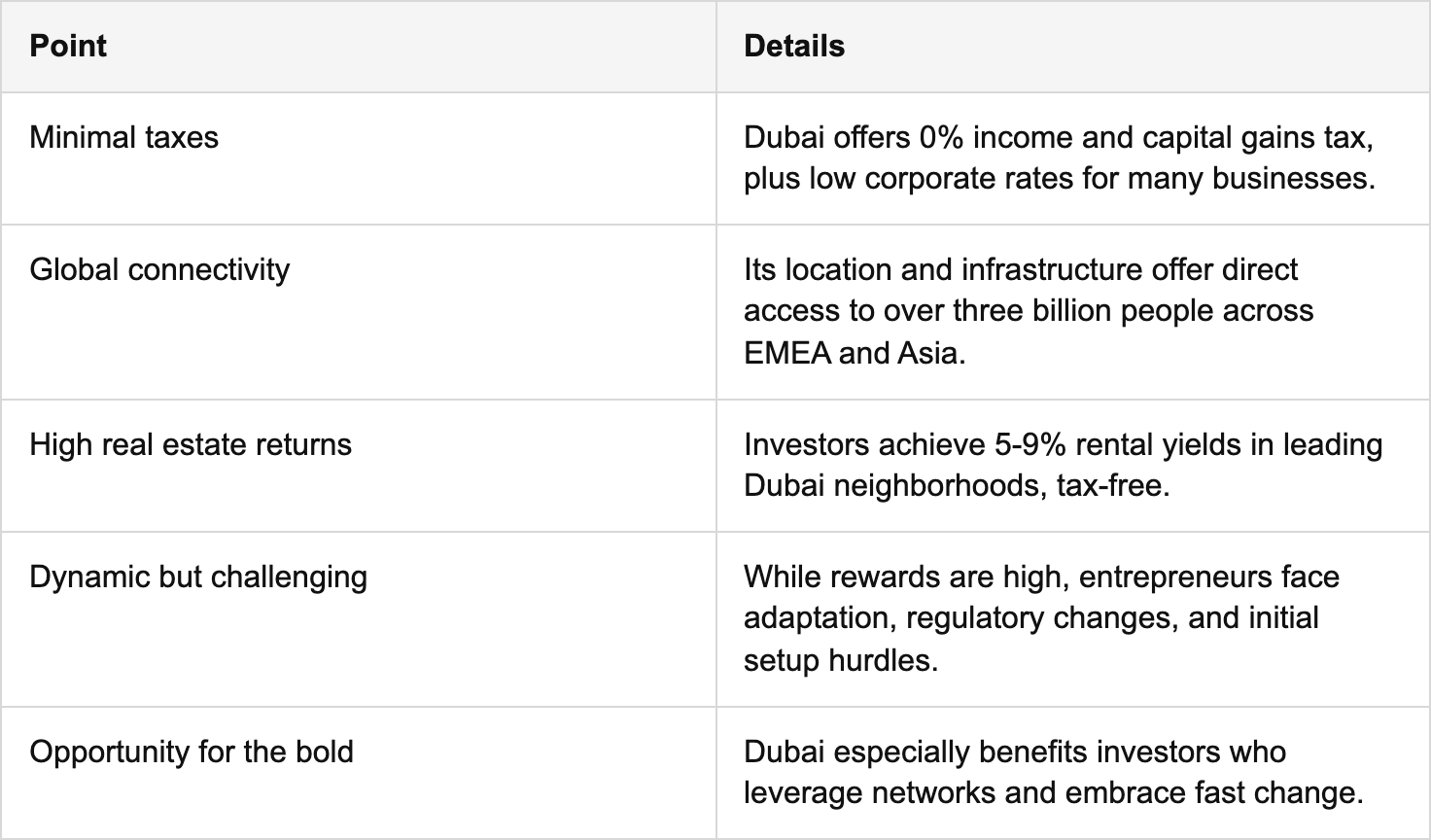
- Dubai offers zero personal income, capital gains, and dividend taxes for investors.
- Its strategic location and infrastructure provide unmatched global market access and logistics efficiency.
- While highly attractive, doing business requires adaptability, local knowledge, and strategic planning.
Dubai offers 0% personal income tax, 0% capital gains tax, and 0% tax on dividends, making it one of the most financially attractive jurisdictions in the world for entrepreneurs and high-net-worth individuals. Yet tax advantages are only part of the story. From its world-class logistics infrastructure to some of the highest rental yields among global cities, Dubai has built a business environment that rewards strategic thinking. This guide breaks down the real reasons international entrepreneurs are choosing Dubai in 2026, covering location, tax structure, real estate returns, and the practical challenges you need to plan around before you commit.
Table of Contents
- Dubai’s strategic location and infrastructure: Gateway to global markets
- World-leading tax regime: Advantages for entrepreneurs and investors
- Real estate: High yields, no annual taxes, diversified opportunities
- Challenges of doing business in Dubai: What to know in 2026
- Unique perspective: Why Dubai rewards bold investors, not the unprepared
- Ready to launch your business or invest in Dubai?
- Frequently asked questions
Key Takeaways
Dubai’s strategic location and infrastructure: Gateway to global markets
Position matters in business. Dubai sits at the crossroads of Europe, Asia, and Africa, giving companies based here access to markets that most other cities simply cannot match. Its strategic location connects to over 3 billion people within an 8-hour flight, a geographic advantage that directly reduces travel costs, shortens supply chains, and accelerates deal cycles for international businesses.
This is not just about flight routes. Dubai has invested heavily in the physical and digital infrastructure that makes global commerce run smoothly.
Key infrastructure highlights:
- Jebel Ali Port handles over 14 million containers per year, ranking among the world’s top 10 busiest ports and serving as the primary logistics gateway between East and West
- Dubai International Airport consistently ranks as the world’s busiest for international passenger traffic, connecting businesses to over 240 destinations
- Free zones such as DIFC, DMCC, and Dubai Internet City offer purpose-built environments for finance, commodities, and technology companies
- Smart city infrastructure includes 5G connectivity, a robust digital payments ecosystem, and government e-services that reduce bureaucratic friction
- Dubai South is emerging as a logistics and aviation hub anchored by Al Maktoum International Airport, which is planned to become the world’s largest airport
“Dubai’s position as a global logistics hub is not accidental. It is the result of decades of deliberate infrastructure investment designed to attract international capital and talent.”
For entrepreneurs evaluating where to base their operations, this infrastructure translates directly into business agility. You can source from Asia, sell into Europe, and manage operations from a city that functions around the clock. Explore Dubai’s geographic advantages further to understand how location shapes investment returns as well.
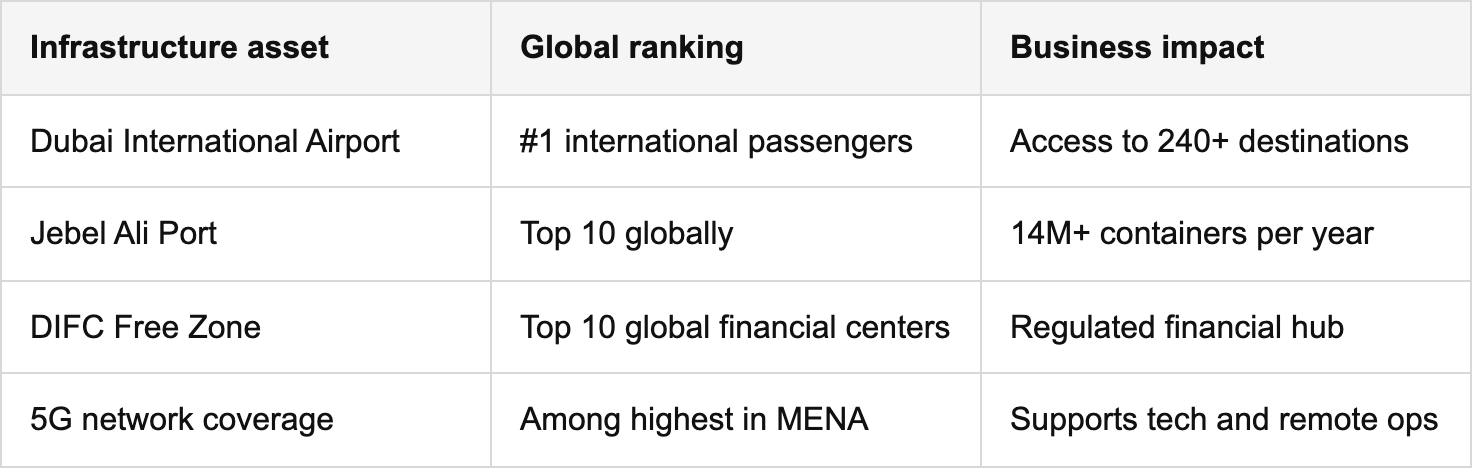
The combination of physical connectivity and digital infrastructure gives Dubai-based businesses a genuine operational edge that is difficult to replicate in comparable cities.
World-leading tax regime: Advantages for entrepreneurs and investors
Few jurisdictions can match Dubai’s fiscal structure for business owners and investors. The 0% personal income, capital gains, and dividend tax environment means you retain significantly more of what you earn compared to operating out of London, New York, or even Singapore.
Tax comparison across major business hubs:
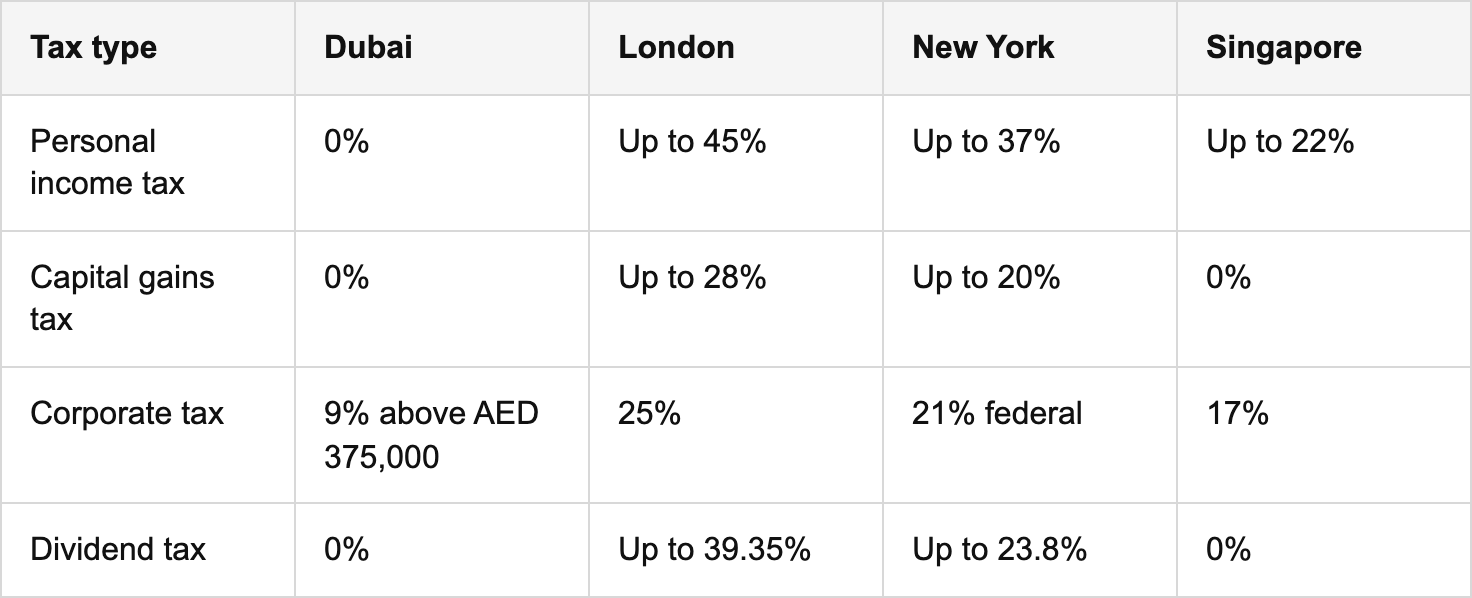
Only 9% corporate tax applies to profits above AED 375,000 (approximately USD 102,000), and most free zone companies that meet substance requirements remain exempt from this. For property investors, the Dubai property taxes guide outlines how minimal transaction-based fees replace the annual property taxes common in Western markets.
Steps to set up a company and understand your tax position:
- Choose your jurisdiction: mainland, free zone, or offshore, each carrying different ownership rules and tax implications
- Select your business activity and obtain the appropriate trade license
- Open a corporate bank account, noting that free zone companies may need additional documentation
- Register for VAT if your annual turnover exceeds AED 375,000
- Confirm substance requirements if operating from a free zone to maintain tax exemptions
- Consult a qualified advisor to review your corporate structure against the real estate tax facts relevant to your investment portfolio
Pro Tip: If your business generates revenue primarily outside the UAE, a free zone structure often delivers the most favorable tax outcome, provided you meet the physical presence and substance requirements set by UAE authorities.
The fiscal clarity Dubai offers is rare. You know your obligations upfront, and the absence of annual property and income taxes creates a predictable financial environment that long-term investors value highly.
Real estate: High yields, no annual taxes, diversified opportunities
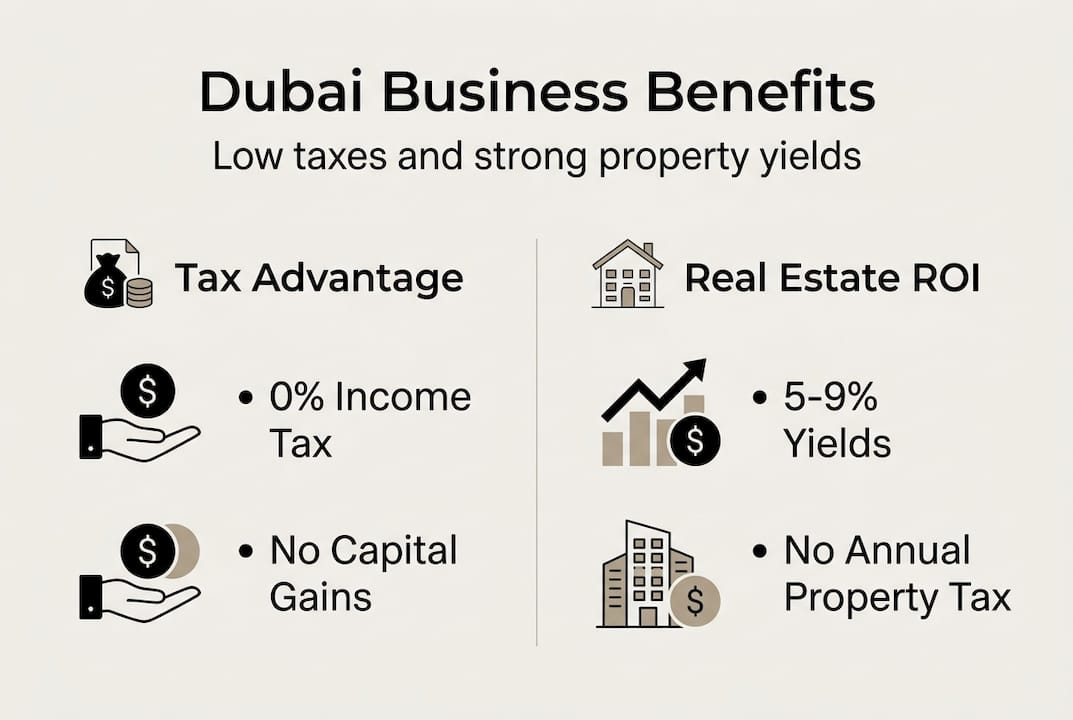
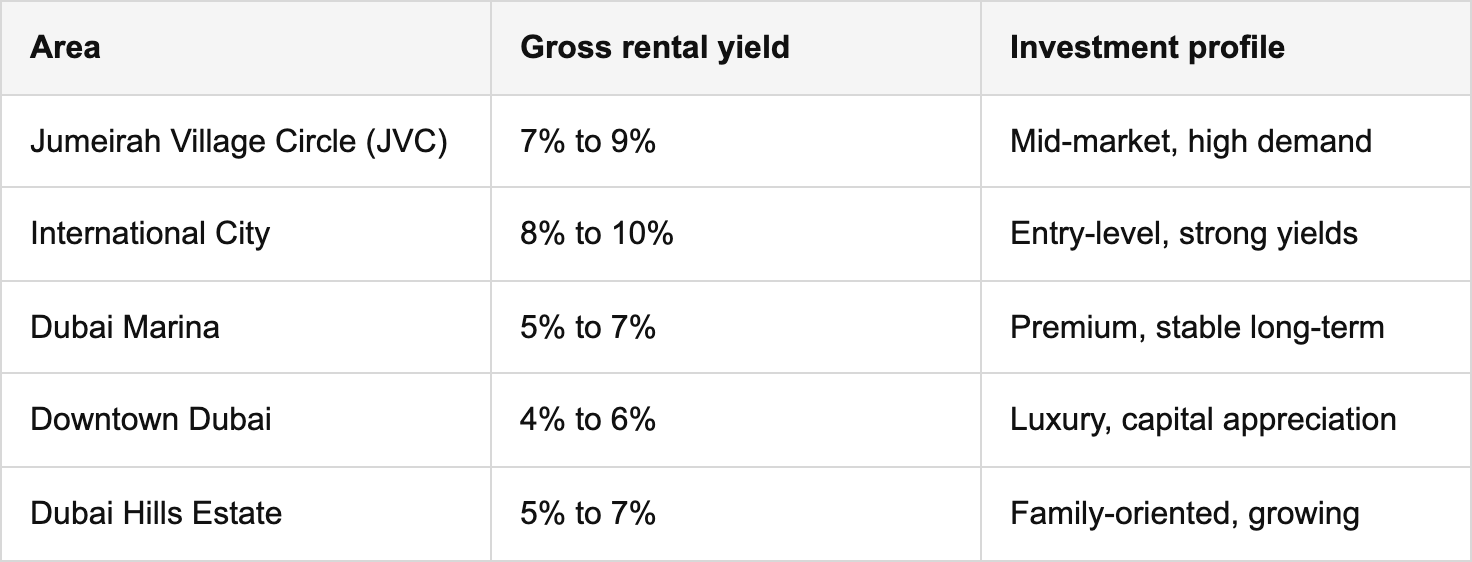
Dubai’s property market is one of the most investor-friendly in the world. Dubai real estate yields range from 5% to 9%, outperforming comparable assets in London and Singapore, where yields typically sit between 2% and 4% after taxes and holding costs.

Rental yield by key neighborhood (2026 estimates):
Beyond yields, the advantages of owning property in Dubai include zero annual property tax, no capital gains tax on sale, and no rental income tax. This means your gross yield is effectively your net yield, a distinction that matters enormously when comparing global markets.
What makes Dubai real estate stand out for investors:
- Golden Visa eligibility for property investments of AED 2 million or more, granting 10-year UAE residency
- Freehold ownership (the right to own property outright, including land) available to foreign nationals in designated zones
- Off-plan market offers below-market entry prices and developer payment plans, ideal for capital appreciation strategies
- Mid-market properties in areas like JVC generate consistent rental income with lower vacancy rates
- Regulated market with RERA (Real Estate Regulatory Agency) oversight providing legal protection for buyers
Stat to note: Dubai’s real estate market recorded over AED 500 billion in transactions in 2024, reflecting sustained investor confidence heading into 2026.
For a forward-looking view, the 2026 real estate trends article maps where demand is heading and which segments are positioned for the strongest growth. Review the Dubai rental market yields breakdown to match your investment strategy to the right neighborhood.
Challenges of doing business in Dubai: What to know in 2026
Dubai’s advantages are real, but a clear-eyed assessment requires acknowledging the friction points that catch unprepared investors off guard. Understanding these challenges upfront is what separates a smooth market entry from a costly one.
Common challenges for foreign entrepreneurs and investors:
- Higher setup costs compared to emerging business hubs like Lisbon or Tallinn. Trade licenses, office leases, and visa fees add up quickly, particularly for mainland companies
- Banking delays for foreign-owned businesses remain a persistent issue. Opening a corporate account can take weeks and requires extensive documentation
- 5% VAT applies to most goods and services, and businesses crossing the AED 375,000 revenue threshold must register and file regularly
- Substance requirements in free zones mean you cannot simply hold a license without demonstrating genuine business activity
- Cultural and regulatory adaptation takes time. Business norms, communication styles, and government processes differ from Western markets
- Market rebalancing in certain property segments means not every area or asset class will deliver the yields that headline figures suggest
“Success in Dubai is not handed to you because the tax rate is zero. It is earned through relationships, adaptability, and a genuine understanding of how the market operates.” Launching a Business in Dubai
Pro Tip: Before committing capital, spend time in Dubai building relationships with local advisors, bankers, and business owners. The intelligence you gather on the ground is worth more than any online research.
For entrepreneurs evaluating their entry structure, the Dubai free zone setup guide and the company formation guide offer detailed roadmaps for navigating licensing, ownership structures, and compliance requirements.
Unique perspective: Why Dubai rewards bold investors, not the unprepared
Here is the part most articles skip. Dubai’s business environment is exceptional, but calling it frictionless is misleading. The city moves fast. Regulations evolve. Market conditions shift. And the investors who thrive here are not simply the ones with the most capital. They are the ones who treat adaptability as a core business skill.
The contrarian reality is that Dubai rewards bold, informed risk-taking backed by strong local relationships, not passive capital deployment. The entrepreneurs who struggle here often arrive expecting a plug-and-play environment. They underestimate banking timelines, overestimate the speed of returns, and underinvest in building the networks that actually open doors.
What sets successful investors apart is a willingness to engage deeply with the market, to understand not just the tax structure but the cultural dynamics, the regulatory direction, and the relationship-driven nature of how business gets done. Explore the business insights section for practical perspectives drawn from real market experience. Dubai is not for the cautious observer. It is for the informed, connected, and decisive.
Ready to launch your business or invest in Dubai?
Dubai’s combination of tax efficiency, global connectivity, and high-yield real estate creates a genuinely compelling case for international entrepreneurs and investors. But the difference between knowing the opportunity and capturing it comes down to execution.

Working with expert Dubai business guidance means you get tailored advice on company formation, property selection, tax structuring, and residency pathways, all from a single trusted source. Anthony Joseph brings years of on-the-ground experience in Dubai’s real estate and business landscape, helping high-net-worth clients move from strategy to results with confidence. Whether you are evaluating your first Dubai property or structuring a multi-asset portfolio, the right guidance makes every step faster, smarter, and more profitable.
Frequently asked questions
Why is Dubai a tax haven for entrepreneurs?
Dubai offers 0% personal income tax, 0% capital gains tax, and 0% tax on dividends, with only a 9% corporate tax applying to profits above AED 375,000, making it one of the most favorable fiscal environments globally.
Which areas in Dubai offer the highest rental returns?
Jumeirah Village Circle, International City, and Dubai Marina consistently deliver 5% to 9% gross yields, with mid-market neighborhoods offering the strongest income-focused returns for investors.
What challenges face foreign entrepreneurs in Dubai?
The primary obstacles include higher setup costs, corporate banking delays, 5% VAT compliance, and the need to adapt to local business culture and evolving regulatory requirements.
How does Dubai’s location benefit international businesses?
Dubai’s position connects businesses to over 3 billion people within an 8-hour flight, supported by the world’s busiest international airport and one of its largest container ports.
What is the minimum investment for Dubai’s Golden Visa?
A minimum property investment of AED 2 million qualifies you for Dubai’s 10-year Golden Visa, granting long-term UAE residency rights to the investor and eligible family members.


