

Dubai Freezone Setup: Unlocking Investment Potential
Global investors often discover that true opportunity in Dubai begins with understanding its intricate network of free zones. With more than 40 multidisciplinary free zones offering 100 percent foreign ownership, complete tax exemptions, and direct capital repatriation, Dubai sets a high standard for business freedom. Yet, every free zone comes with its own legal and operational requirements, making informed selection crucial for protecting investments and maximizing real returns in this world-class commercial hub.
Table of Contents
Dubai Freezones Explained and Misconceptions
Dubai’s free zone system represents a sophisticated economic strategy designed to attract international investors and diversify the emirate’s economic landscape. Multidisciplinary free zones have emerged as powerful platforms enabling global entrepreneurs to establish businesses with unprecedented advantages.
The core concept of a free zone revolves around creating specialized economic areas that offer unique regulatory and tax benefits. These zones provide a strategic environment where foreign investors can:
Achieve 100% business ownership
Enjoy complete tax exemptions
Access world-class infrastructure
Benefit from simplified business registration processes
Receive customs duty exemptions
Contrary to popular misconceptions, free zones are not uniform across the United Arab Emirates. Each zone has distinct characteristics tailored to specific industries and investor needs. Free zone development has strategically evolved from traditional trading models to supporting knowledge-based economic sectors, reflecting Dubai’s sophisticated economic vision.
Navigating free zone selection requires understanding nuanced differences between zones. Investors must conduct thorough research to match their business model with the most appropriate free zone, considering factors like sector specialization, location, infrastructure, and regulatory framework.
Pro tip: Before committing to a specific free zone, schedule consultations with multiple zone authorities and review their specific regulatory requirements to ensure optimal alignment with your business objectives.
Main Freezone Categories and Differences
Dubai’s free zones are strategically designed to support diverse economic sectors, each offering unique advantages for specialized business environments. Industry-specific free zones play a critical role in attracting international investors by providing tailored infrastructure and regulatory frameworks.
The primary free zone categories can be classified into several key sectors:
Technology and Innovation Zones
Focus on startups and digital businesses
Advanced tech infrastructure
Specialized licensing for IT companies
Trading and Logistics Zones
Strategic locations near ports and airports
Customs duty exemptions
Streamlined import/export processes
Financial Services Zones
Banking and investment-focused environments
Regulatory support for financial institutions
Enhanced compliance frameworks
Media and Creative Industry Zones
Dedicated spaces for content creators
Specialized business support services
Networking opportunities for creative professionals
Dubai’s free zone ecosystem contributes significantly to the emirate’s economic diversification, with each zone meticulously designed to foster growth in specific industry segments. These zones are not merely administrative divisions but sophisticated economic platforms that provide comprehensive support for businesses.
Each free zone maintains unique characteristics, including distinct licensing options, infrastructure capabilities, and sector-specific regulations. Investors must carefully evaluate these differences to select the most appropriate zone that aligns with their business model, operational requirements, and long-term strategic objectives.

Here’s a comparison of Dubai’s main free zone categories to help guide your selection:

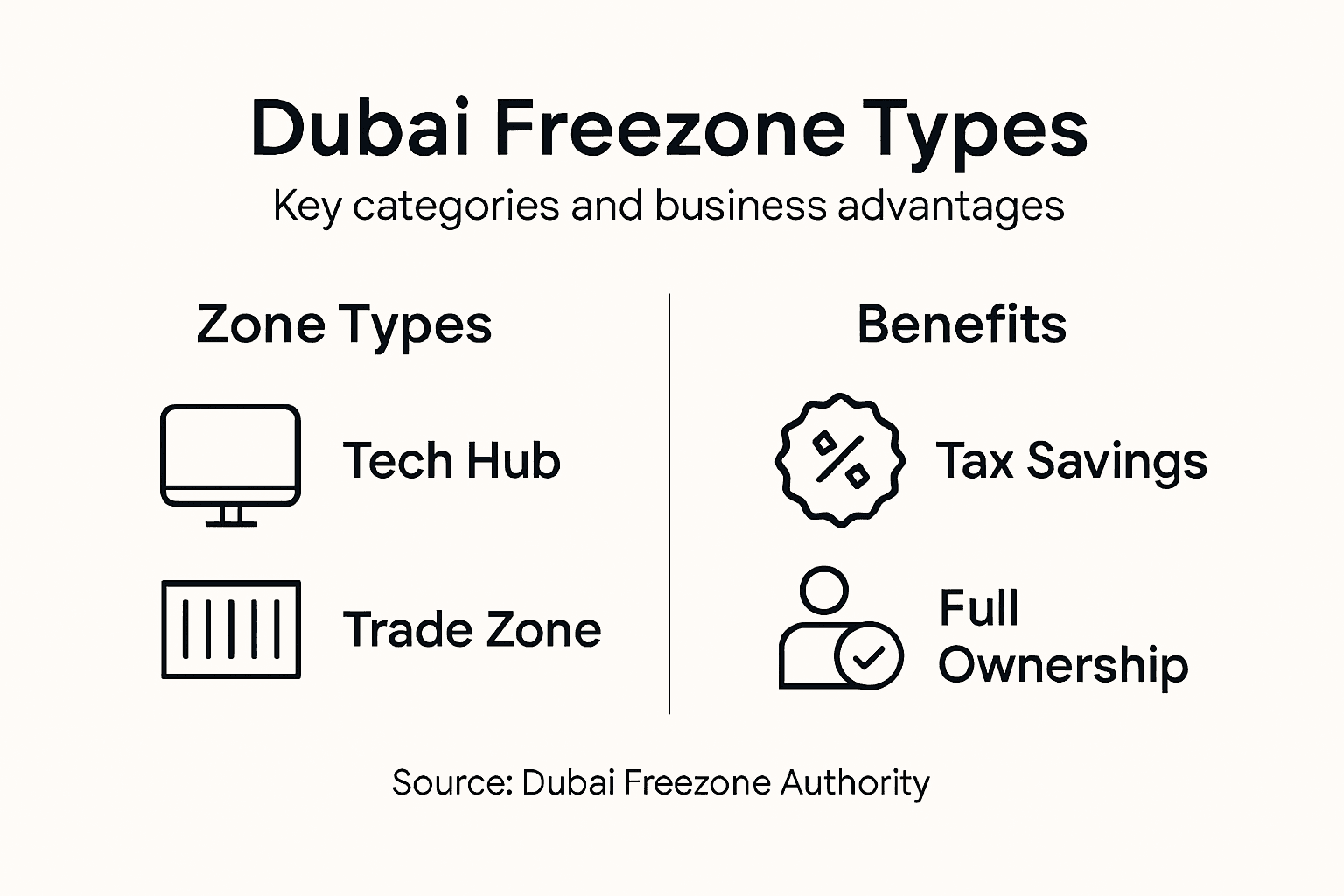
Pro tip: Conduct comprehensive due diligence by scheduling direct consultations with multiple free zone authorities and reviewing their specific regulatory requirements before making a final investment decision.
Company Formation Requirements and Steps
Navigating the company formation process in Dubai’s free zones requires a systematic approach and thorough understanding of regulatory requirements. Company formation procedures involve multiple critical steps that international investors must carefully execute to establish their business successfully.
The comprehensive company formation process typically includes the following key steps:
Business Concept Validation
Research suitable free zone for your industry
Confirm permitted business activities
Assess specific zone requirements
Initial Documentation Preparation
Gather passport copies
Prepare comprehensive business plan
Compile financial proof and capital documentation
Company Name Registration
Select unique business name
Verify name availability
Obtain initial name approval from free zone authority
Office Space Arrangement
Choose physical or virtual office options
Sign tenancy agreement
Confirm space meets free zone specifications
License Application
Submit complete documentation
Pay required fees
Undergo preliminary compliance review
Dubai free zone company formation requires meticulous attention to detail and understanding of specific regulatory nuances. Each free zone maintains unique requirements, making it essential for investors to work closely with authorized representatives who can guide them through the intricate process.
Successful company formation demands comprehensive preparation, including understanding visa provisions, recognizing potential challenges, and maintaining transparent communication with free zone authorities throughout the registration process. Investors should anticipate potential documentation requests and maintain flexibility during the application stage.
Pro tip: Engage a professional consultant familiar with your specific free zone to streamline the company formation process and minimize potential administrative complications.
Ownership, Visas, and Operational Rules
Foreign ownership regulations represent a critical advantage for international investors considering Dubai’s free zone business landscape. The unique legal framework enables 100% foreign ownership, distinguishing these zones from traditional mainland business structures that typically require local partnership.
Key ownership and operational characteristics include:
Ownership Structure
100% foreign ownership permitted
No mandatory local partner requirements
Complete financial and operational control
Visa Eligibility
Residency visas linked to company establishment
Visas for business owners and employees
Renewable based on company license status
Operational Restrictions
Limited direct mainland trading
Mandatory local distributor for mainland business
Specific permitted business activities
Compliance Requirements
Annual license renewal
Maintenance of office space
Regular documentation updates
Dubai free zone operational guidelines establish comprehensive rules governing business activities. These regulations ensure that international investors can operate with significant autonomy while maintaining structured legal frameworks that protect both investor and local economic interests.
The visa process is intricately tied to company registration, with residency permits directly linked to the free zone company’s legal status. Investors must carefully navigate these requirements, ensuring continuous compliance with documentation, office space leasing, and business activity restrictions.
Pro tip: Consult with a specialized free zone consultant to understand the nuanced visa and operational requirements specific to your chosen free zone and business category.
Financial Benefits, Taxes, and Liabilities
Financial advantages of free zones represent a transformative opportunity for international investors seeking strategic tax optimization and reduced operational expenses. The unique fiscal framework in Dubai’s free zones provides comprehensive financial incentives that significantly differentiate these investment environments from traditional business landscapes.
Key financial benefits include:
Tax Exemptions
100% corporate tax elimination
Zero personal income tax
Full profit repatriation
Customs and Duty Benefits
Complete customs duty waiver
Simplified import/export processes
Reduced administrative expenses
Liability Protections
Limited financial risk
Streamlined regulatory compliance
Enhanced investor security
Capital Movement
Unrestricted fund transfers
No currency exchange restrictions
Transparent financial reporting
Free zone tax environments require meticulous compliance to maintain these extraordinary financial benefits. Investors must navigate regulatory frameworks carefully, ensuring adherence to anti-money laundering regulations and maintaining precise financial documentation.
The fiscal policies across different free zones demonstrate nuanced variations, underscoring the importance of comprehensive due diligence. While the overarching financial framework remains consistently attractive, each free zone may present subtle differences in operational guidelines and reporting requirements.
Pro tip: Engage a specialized tax consultant familiar with Dubai free zones to develop a comprehensive financial strategy that maximizes your tax optimization and compliance effectiveness.
Common Pitfalls and How to Avoid Them
Free zone investment risks represent complex challenges that require strategic navigation and comprehensive understanding. International investors frequently encounter nuanced obstacles that can potentially derail their business establishment and operational success in Dubai’s dynamic economic landscape.
Common pitfalls investors must anticipate include:
Regulatory Misunderstandings
Misinterpreting visa restrictions
Overlooking mainland trading limitations
Neglecting zone-specific operational rules
Compliance Challenges
Inadequate documentation preparation
Failure to track regulatory changes
Incomplete understanding of licensing requirements
Financial Planning Errors
Underestimating setup costs
Miscalculating operational expenses
Insufficient contingency budgeting
Strategic Alignment Issues
Selecting incompatible free zone
Misaligning business activities
Overlooking zone-specific industry focus
Free zone investment strategies demand meticulous research and proactive planning. Investors must develop a comprehensive understanding of the intricate regulatory frameworks, maintaining flexibility and continuously updating their knowledge about evolving legal requirements.
Successful free zone investment requires a multifaceted approach that combines thorough due diligence, professional legal consultation, and strategic long-term planning. Investors should prioritize understanding the subtle nuances of each free zone’s specific regulations and maintain open communication channels with relevant authorities.
Below is an overview summarizing potential pitfalls and recommended avoidance strategies for free zone investors:

Pro tip: Develop a comprehensive compliance checklist and schedule quarterly reviews with legal experts to ensure continuous alignment with free zone regulations and minimize potential investment risks.
Unlock Dubai Freezone Investment Potential with Expert Guidance
Navigating Dubai’s complex freezone landscape requires more than just understanding the benefits of 100% foreign ownership, tax exemptions, and strategic business environments. Investors often face challenges matching their unique business models with the right freezone and managing intricate company formation steps without pitfalls. If you want to avoid costly mistakes like regulatory confusion or choosing the wrong zone, expert support is essential.

Tap into Anthony Joseph’s extensive expertise in Dubai’s business and real estate sectors at https://anthonyjosephaj.com. Benefit from tailored company formation services, strategic investment advice, and personalized real estate solutions designed to accelerate your freezone setup success. Start unlocking your full investment potential today by visiting Anthony Joseph's website and securing your future with trusted guidance.
Frequently Asked Questions
What are Dubai free zones?
Dubai free zones are specialized economic areas designed to attract international investors by providing unique regulatory and tax benefits, enabling businesses to operate with 100% foreign ownership and complete tax exemptions.
How do I choose the right free zone for my business?
To choose the right free zone, evaluate your business model, industry sector, location preferences, available infrastructure, and specific regulatory requirements of each zone to find the best fit for your needs.
What are the steps involved in forming a company in a Dubai free zone?
The steps typically include validating your business concept, preparing initial documentation, registering a company name, arranging office space, and applying for a business license with the respective free zone authority.
Can foreign investors own 100% of their business in a Dubai free zone?
Yes, foreign investors are allowed 100% ownership of their businesses in Dubai free zones without the need for a local partner, providing them with complete operational and financial control.


