

Dubai Real Estate Trends 2026: Investment Insights
Choosing where to invest next is always a strategic decision, especially as Dubai’s real estate market prepares for 2026. The city offers high-net-worth investors more than record transaction volumes and a tax-free model. Tight supply in prime villas and waterfront residences keeps luxury properties in demand, while global talent migration and digital accessibility shape fresh opportunities. This article highlights the nuanced trends, risks, and competitive advantages that matter most for informed investment choices in Dubai.
Table of Contents
Defining Dubai Real Estate Trends 2026
Dubai’s real estate market is transforming into a sophisticated, strategic investment landscape in 2026, characterized by nuanced buyer preferences and global economic dynamics. Emerging market trends indicate a significant shift from momentum-driven purchasing toward more calculated, long-term investment strategies.
The market’s evolution is driven by several critical factors that distinguish Dubai’s real estate ecosystem:
Population Growth: Continuous migration of global talent
Digital Infrastructure: Advanced AI and visa systems simplifying investment
Tax Advantages: Continued tax-free investment model
Demographic Diversification: Attracting high-net-worth international investors
Buyers in 2026 are demonstrating more sophisticated selection criteria. Unlike previous years, investors now prioritize:
Connectivity and infrastructure quality
Robust resale potential
Developer track record and reliability
Long-term usability of properties
Comprehensive urban development plans
Luxury Segment Dynamics remain particularly compelling. Global capital inflows continue driving demand, especially in prime villa and waterfront residential categories. The market is experiencing a maturation process, moving from speculative interest toward more sustainable, value-driven investment approaches.
Pro tip: Research developer reputation and infrastructure proximity before making any real estate investment in Dubai’s 2026 market.
Major Market Segments and Dynamics
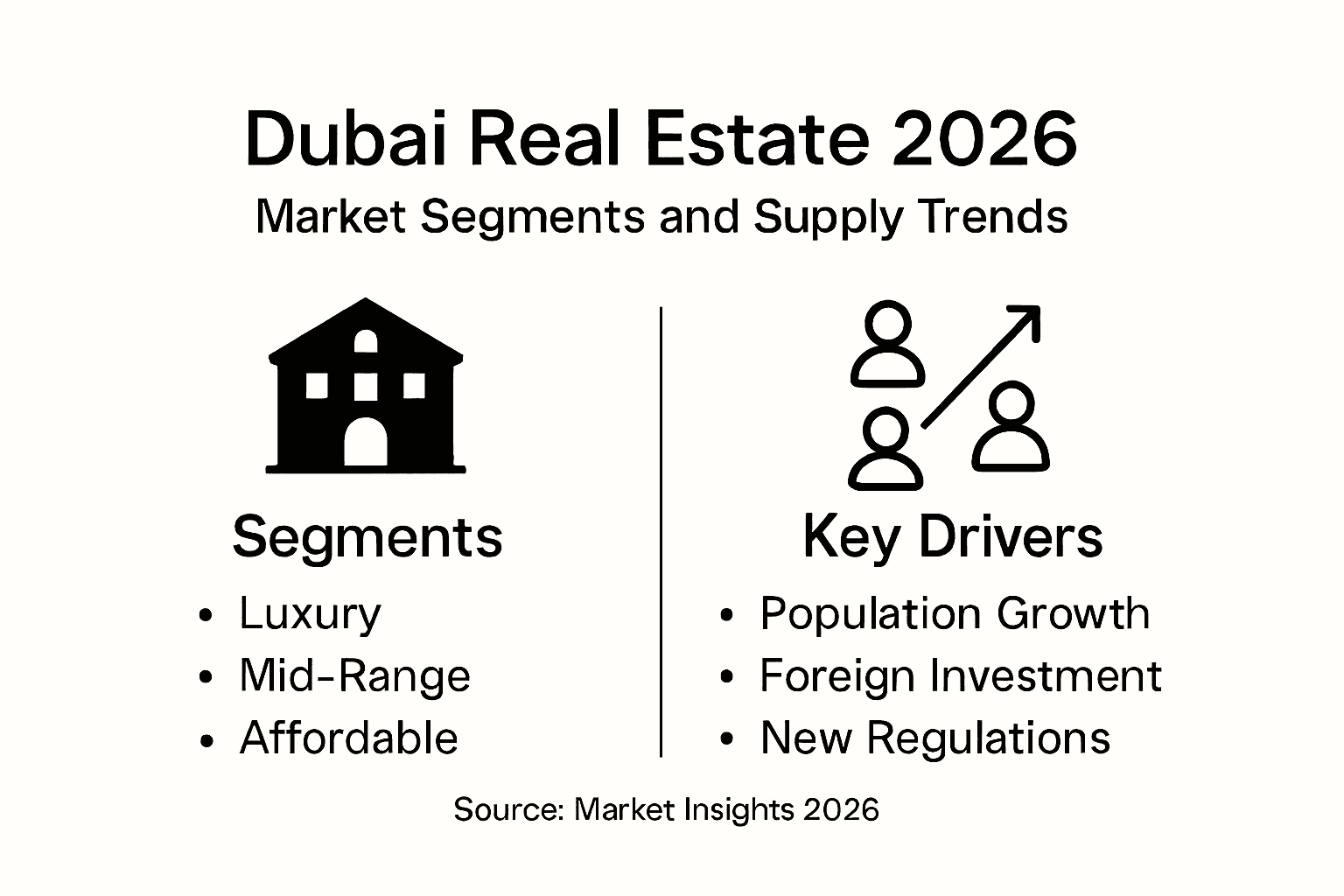
Dubai’s real estate landscape in 2026 presents a complex, multi-layered market segmentation with distinct characteristics in luxury, mid-range, and affordable housing sectors. Market segmentation trends reveal a nuanced investment environment driven by evolving demographic needs and economic factors.
The market segments can be strategically categorized based on key investment characteristics:
Luxury Segment: Prime waterfront properties, ultra-high-end residences
Mid-Range Segment: Modern apartments, family-friendly communities
Affordable Housing: Compact units, emerging neighborhood developments
Each segment demonstrates unique dynamics and investment potential:
Luxury Market Characteristics
Extremely limited supply of premium properties
Continued strong demand from high-net-worth investors
Higher price per square foot compared to other segments
Mid-Range Market Profile
Stabilizing price points after recent rapid appreciation
Growing appeal for end-users seeking long-term residential solutions
Increasing focus on community amenities and lifestyle features
Affordable Housing Trends
Higher supply challenges impacting potential appreciation
Attractive for first-time investors and younger demographics
Strategic development in emerging urban districts
Investment success in 2026 requires understanding the nuanced requirements of each market segment and aligning strategy with specific sector dynamics.
Community-Centered Living has become a significant driver across all market segments, with investors and end-users prioritizing developments that offer comprehensive lifestyle experiences beyond mere physical infrastructure.
Here’s a comparison of Dubai’s major real estate segments for investors considering the 2026 landscape:

Pro tip: Conduct granular market research specific to each real estate segment before making investment decisions in Dubai’s 2026 property landscape.
Price Forecasts, Rental Yields, and Supply
The Dubai real estate market in 2026 presents a sophisticated investment landscape characterized by dynamic pricing models, nuanced rental yields, and strategic supply management. Market investment dynamics indicate a complex ecosystem where pricing strategies intersect with global economic trends and local market conditions.
Key pricing and yield characteristics across market segments include:
Luxury Segment: Higher price volatility
Mid-Range Properties: More stable appreciation rates
Affordable Housing: Competitive rental potential
Waterfront Investments: Premium valuation trends
Rental yield projections demonstrate significant variation across different property types:
Luxury Residential Yields
Estimated 4-6% annual returns
High potential for capital appreciation
Limited but high-value inventory
Mid-Range Apartment Yields
Consistent 5-7% rental returns
Strong end-user demand
Balanced investment risk profile
Affordable Housing Yields
Competitive 4-5% rental returns
Higher supply volume
Attractive for first-time investors
Strategic investors in 2026 will prioritize properties offering comprehensive value beyond immediate financial metrics, including location, infrastructure, and long-term appreciation potential.
Supply Dynamics remain a critical factor, with market segments experiencing different inventory challenges. The interplay between population growth, urban development initiatives, and investment regulations continues to shape Dubai’s real estate supply landscape.
The following table summarizes projected annual rental yields and appreciation potential by segment in Dubai for 2026:

Pro tip: Conduct comprehensive market analysis and diversify investment across multiple property segments to optimize risk and potential returns in Dubai’s 2026 real estate market.
Legal Updates and Residency Pathways
Dubai’s legal and residency framework in 2026 continues to evolve, offering sophisticated pathways for international investors seeking long-term stability and strategic advantages. Investment residency regulations demonstrate a progressive approach to attracting global talent and capital through streamlined legal mechanisms.
Key residency investment pathways include:
Golden Visa: 10-year residency for significant property investments
Real Estate Investor Visa: Property value-based long-term residency
Entrepreneur Visa: Business investment residency options
Remote Work Visa: Digital nomad legal framework
Residency acquisition strategies for investors involve multiple approaches:
Property Investment Thresholds
Minimum investment requirements
Property value qualification criteria
Documentation and verification processes
Business Investment Routes
Startup and entrepreneurial visa options
Capital investment requirements
Sector-specific qualification parameters
Professional Qualification Pathways
Skill-based residency permits
Educational and professional achievement criteria
Specialized talent attraction mechanisms
Legal frameworks in Dubai prioritize creating transparent, investor-friendly environments that balance national interests with international investment attraction strategies.
Regulatory Compliance remains a critical consideration, with ongoing updates designed to maintain Dubai’s competitive edge in the global investment landscape. The integration of digital platforms and streamlined administrative processes continues to simplify investor experiences.
Pro tip: Consult specialized legal professionals to navigate the nuanced residency requirements and optimize your investment strategy in Dubai’s dynamic regulatory environment.
Risks, Opportunities, and Investor Mistakes
Navigating Dubai’s real estate investment landscape requires a sophisticated understanding of potential risks and strategic opportunities. Investment strategies demand careful analysis and proactive risk management to maximize returns and minimize potential pitfalls.
Key investment risks investors must carefully evaluate include:
Market Volatility: Potential sudden price fluctuations
Regulatory Changes: Evolving legal and residency frameworks
Economic Dependency: Global economic interconnectedness
Oversupply Potential: Risk of market saturation
Common investor mistakes that can significantly impact investment outcomes:
Speculative Purchasing
Buying without comprehensive market research
Chasing short-term price momentum
Ignoring long-term property fundamentals
Inadequate Due Diligence
Overlooking developer reputation
Failing to verify property documentation
Neglecting comprehensive legal review
Financial Miscalculations
Underestimating total ownership costs
Ignoring potential maintenance expenses
Overextending personal financial capacity
Successful Dubai real estate investment requires a balanced approach that combines strategic insight, thorough research, and calculated risk management.
Opportunity Identification remains crucial, with sophisticated investors focusing on emerging neighborhoods, infrastructure development zones, and properties with strong long-term appreciation potential. Understanding market nuances separates strategic investors from speculative buyers.
Pro tip: Develop a comprehensive investment strategy that incorporates multiple risk mitigation techniques and maintains flexibility in your real estate portfolio.
Navigate Dubai’s Real Estate Trends with Expert Guidance
Dubai’s 2026 real estate market presents exciting yet complex opportunities for investors seeking long-term value amid evolving buyer preferences and regulatory updates. Understanding critical aspects like luxury segment dynamics, rental yield forecasts, and residency pathways is essential to avoid common pitfalls such as speculative buying and inadequate due diligence. Whether you are focused on high-net-worth luxury investments or exploring mid-range and affordable housing options, personalized expertise can transform uncertainty into confident decision-making.
Unlock your investment potential with Anthony Joseph, a highly awarded Dubai-based real estate broker and trusted advisor. Benefit from tailored solutions in property sales, off-plan investments, property management, and residency services that align perfectly with the nuanced market trends outlined in the article.
Ready to take control of your Dubai real estate journey and avoid costly mistakes?

Discover how strategic insights and professional guidance can maximize your returns and streamline your residency process. Visit Anthony Joseph’s website now to explore comprehensive services designed for international investors and entrepreneurs. Learn more about property sales and rentals, off-plan investment opportunities, and secure your place in Dubai’s thriving market today.
Frequently Asked Questions
What are the key factors driving Dubai’s real estate trends in 2026?
The main factors driving Dubai’s real estate trends include continuous population growth from global talent migration, advanced digital infrastructure, tax advantages, and demographic diversification attracting high-net-worth investors.
How does the investment landscape differ between luxury, mid-range, and affordable housing segments in 2026?
The luxury segment features limited supply and strong demand with premium pricing. The mid-range market indicates stabilizing prices and appeals to long-term residents. The affordable housing segment faces supply challenges but attracts first-time and younger buyers, offering competitive rental returns.
What rental yield can investors expect from different property types in Dubai’s 2026 market?
Expected rental yields in 2026 vary by segment: luxury properties can yield around 4-6%, mid-range apartments can provide 5-7%, and affordable housing typically offers competitive yields of 4-5%.
What legal pathways exist for investors seeking residency in Dubai in 2026?
Investors can explore several legal pathways for residency, including the Golden Visa for significant property investments, Real Estate Investor Visa tied to property value, and business or remote work visas for entrepreneurs and digital nomads.


