
What is Ejari? Complete 2026 guide for Dubai leases
Many expats and investors believe Ejari registration is optional for Dubai rental contracts. It’s not. Dubai law mandates Ejari registration for every residential and commercial lease, and failing to register can cost you up to AED 5,000 in fines while blocking access to essential utilities and visa services. This guide explains what Ejari is, why registration matters, how to complete it correctly, and the legal protections you gain by doing so.
Table of Contents
- What Is Ejari And Why It Matters In Dubai
- Why Ejari Registration Is Mandatory In Dubai
- How To Register Ejari: Step-By-Step Process
- Common Mistakes And How To Avoid Them
Key takeaways
What is Ejari and why it matters in Dubai
Ejari is the official tenancy contract registration system mandated by Dubai’s Real Estate Regulatory Agency and enforced by Dubai Land Department to standardize rental agreements. Launched in 2010, the system transformed how Dubai manages rental contracts by creating a centralized digital database that tracks every registered lease across the emirate.
Think of Ejari as the digital proof that your rental agreement exists in the eyes of Dubai’s government. Without it, your contract holds no legal weight with service providers or immigration authorities, regardless of what you and your landlord signed. The system serves multiple critical functions:
- Legal validation: Converts private rental agreements into government-recognized contracts
- Standardization: Ensures all tenancy terms comply with Dubai property laws and regulations
- Service activation: Provides the documentation foundation for utility connections and visa processing
- Dispute resolution: Creates official records used by rental courts when conflicts arise
- Market transparency: Enables government oversight of rental rates and tenancy conditions
Every residential apartment, villa, and commercial space lease in Dubai must go through Ejari registration. The system applies equally to short-term and long-term rentals, covering everything from studio apartments to multi-million dirham penthouses. Understanding Dubai real estate terms helps you navigate this process more confidently.
Why Ejari registration is mandatory in Dubai
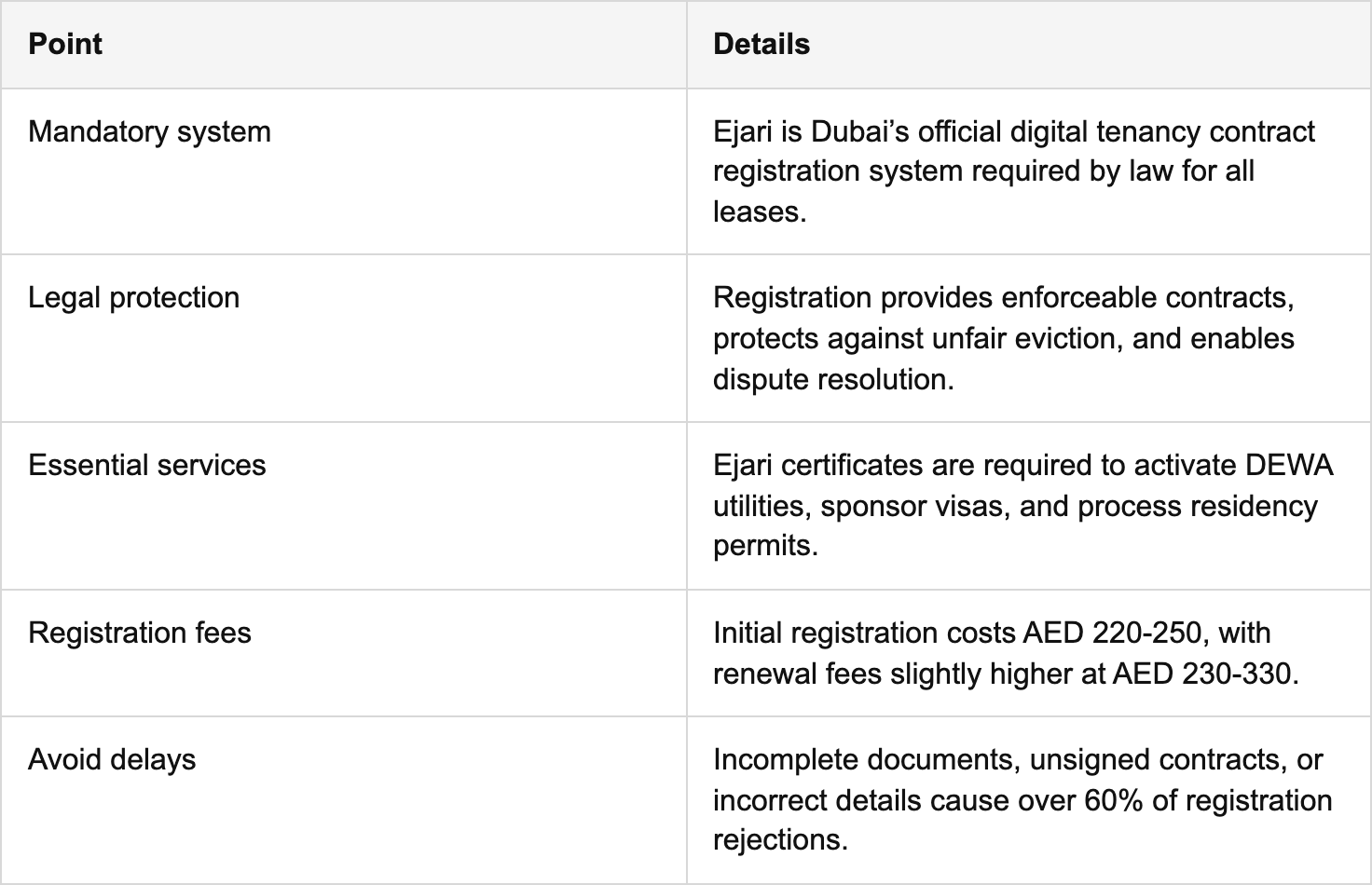
Dubai’s Real Estate Regulatory Agency doesn’t treat Ejari as a suggested best practice. It’s a legal requirement backed by enforcement mechanisms that can disrupt your entire tenancy if ignored. Failure to register results in fines up to AED 5,000 and prevents tenants from activating DEWA utilities or sponsoring visas.
The mandate exists because unregistered contracts create legal gray zones. When disputes arise over security deposits, maintenance responsibilities, or early termination terms, rental courts cannot enforce agreements that were never officially registered. You essentially have no legal standing to defend your rights as a tenant or landlord.
Beyond legal enforcement, Ejari registration controls access to critical services:
- DEWA utilities: Electricity and water accounts cannot be activated without a valid Ejari certificate
- Visa sponsorship: Immigration authorities require Ejari documentation to process family residency permits
- Contract enforceability: Dubai rental laws only protect parties who register their agreements
- Dispute resolution: The Rental Dispute Center rejects cases involving unregistered contracts
- Market compliance: Government can audit rental rates and terms only through registered contracts
International investors and expats often underestimate these requirements until they face utility disconnection threats or visa application rejections. The legal requirements for Dubai expats extend beyond just signing a lease. Your landlord might promise to handle registration later, but that delay leaves you vulnerable. Always verify Ejari completion before moving furniture or transferring security deposits. The Dubai real estate essentials checklist should always include Ejari confirmation as a non-negotiable step.
How to register Ejari: Step-by-step process
Registering Ejari takes 24 to 48 hours once you submit complete documentation. The process has become significantly more streamlined since 2020, with digital options replacing most in-person requirements. Here’s exactly how to complete registration without delays:
-
Gather required documents: Collect your signed tenancy contract with all parties’ signatures clearly visible, landlord’s property title deed copy, tenant passport and Emirates ID copies, and the DEWA premise number for the property. Missing any single document triggers automatic rejection.
-
Choose your registration method: Download the Dubai REST app for online submission or visit an authorized typing center for offline processing. Online registration typically costs less and processes faster, but typing centers help if you’re unfamiliar with Arabic forms.
-
Complete the registration form: Enter tenant and landlord details exactly as they appear on official documents. Typos in names, passport numbers, or Emirates ID information cause immediate rejections. Double-check property address matches the title deed.
-
Pay the registration fee: Registration fees range from AED 220 to AED 250 depending on whether you register online or through a typing center. Payment processes through credit card or approved digital wallets.
-
Receive your Ejari certificate: After approval, you’ll receive a digital certificate via email and SMS. Download multiple copies for utility applications, visa processing, and your personal records. Physical certificates are available upon request but rarely necessary.
Pro Tip: Register Ejari immediately after signing your lease, even before moving in. The certificate takes 1 to 2 business days to issue, and you cannot start DEWA applications or school admissions without it. Don’t wait until you need utilities activated to begin registration.

The real estate tax Dubai facts and how to rent property in Dubai guides complement this process by explaining the broader financial and procedural context for Dubai rentals.
Common mistakes and how to avoid them
Ejari rejections frustrate tenants who assume their paperwork is complete. Over 60% of registration delays stem from missing or incorrect documents, unsigned contracts, or inaccurate tenant and landlord details. Understanding these common pitfalls helps you avoid weeks of processing delays.
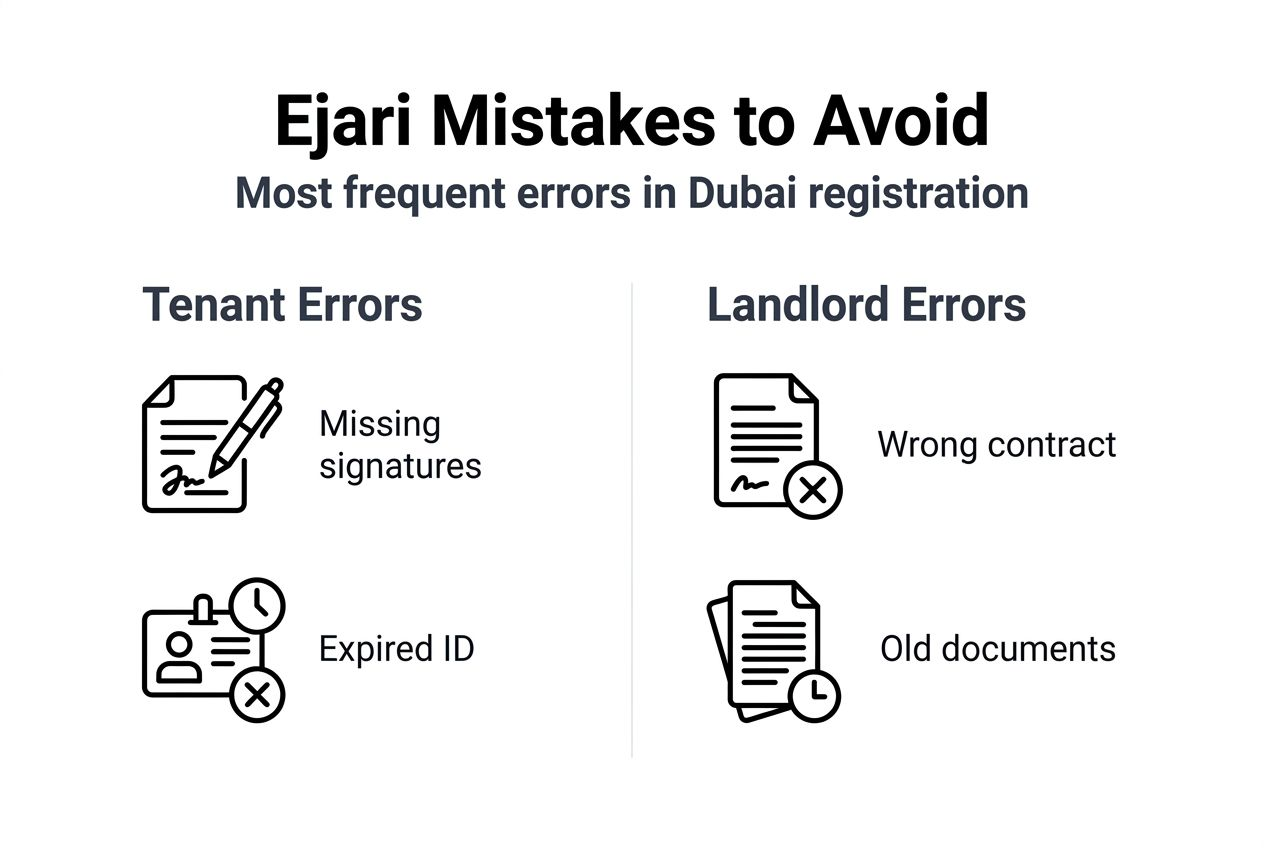
Incomplete signatures: Both tenant and landlord must sign every page of the tenancy contract where signatures are required. A single missing signature triggers rejection. Digital signatures are acceptable if the platform is approved by Dubai Land Department, but physical signatures remain the safest option.
Expired documents: Emirates ID and passport copies must be valid throughout the entire registration process. If your Emirates ID expires in two weeks, renew it before starting Ejari registration. The system flags expired documents automatically and holds your application until you resubmit current versions.
Name mismatches: Your name must appear identically across your passport, Emirates ID, and tenancy contract. If your passport shows


