

Mainland vs free zone in Dubai: key insights for 2026
Many international investors underestimate how choosing between a mainland or free zone company structure in Dubai shapes their entire business trajectory. This decision affects taxation, operational scope, compliance obligations, and long-term scalability in ways that cannot be easily reversed. Understanding the legal frameworks, recent regulatory changes, and practical implications of each structure is essential for entrepreneurs and investors planning to establish or expand operations in the UAE in 2026.
Table of Contents
- Understanding Mainland And Free Zone Company Structures In Dubai
- New Pathways For Free Zone Companies To Do Business In The Mainland
- Taxation And Compliance Differences Between Mainland And Free Zones
- Choosing The Right Structure For Your Dubai Investment In 2026
- Explore Expert Business Setup Guidance And Investment Solutions
Key takeaways
Understanding mainland and free zone company structures in Dubai
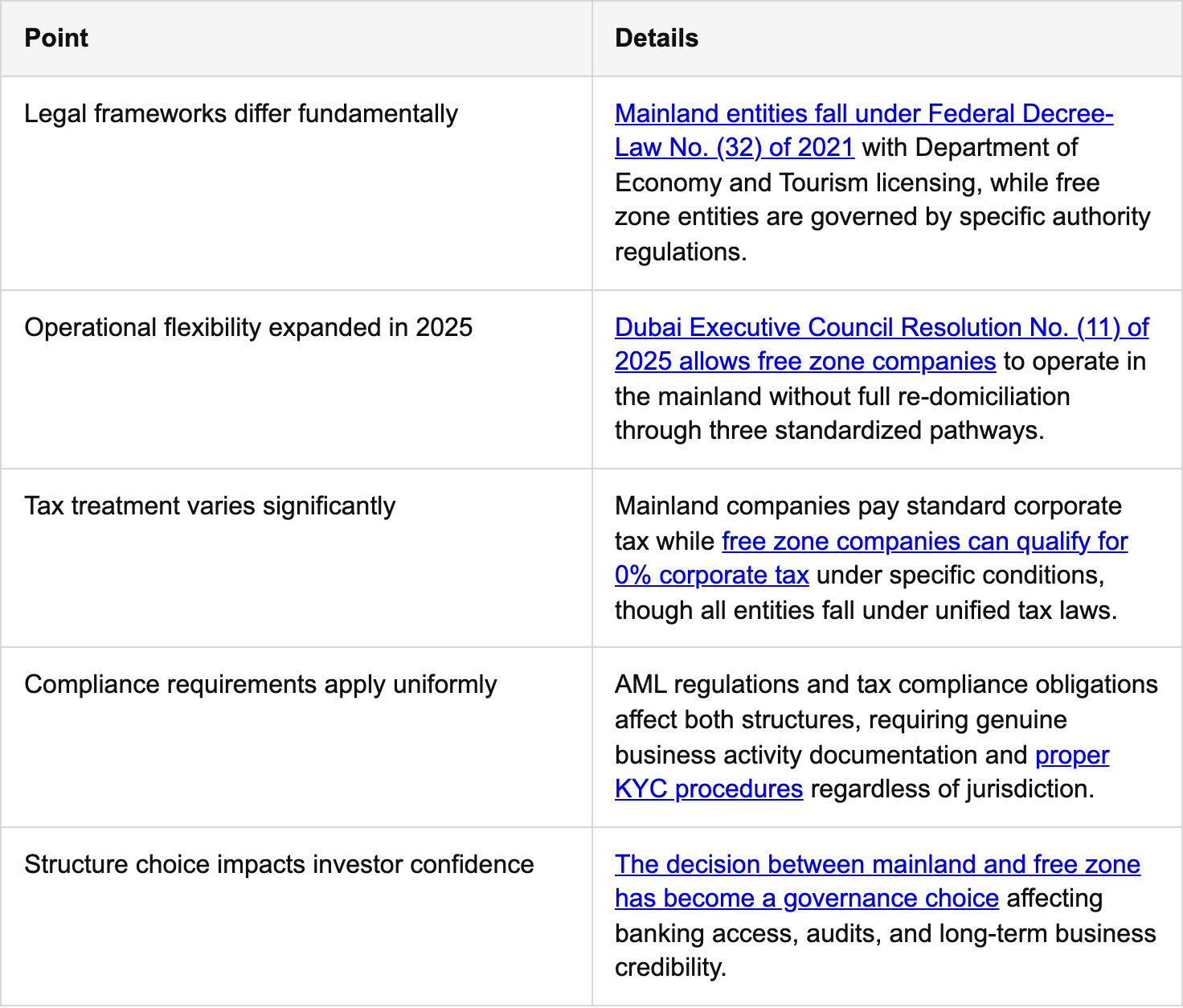
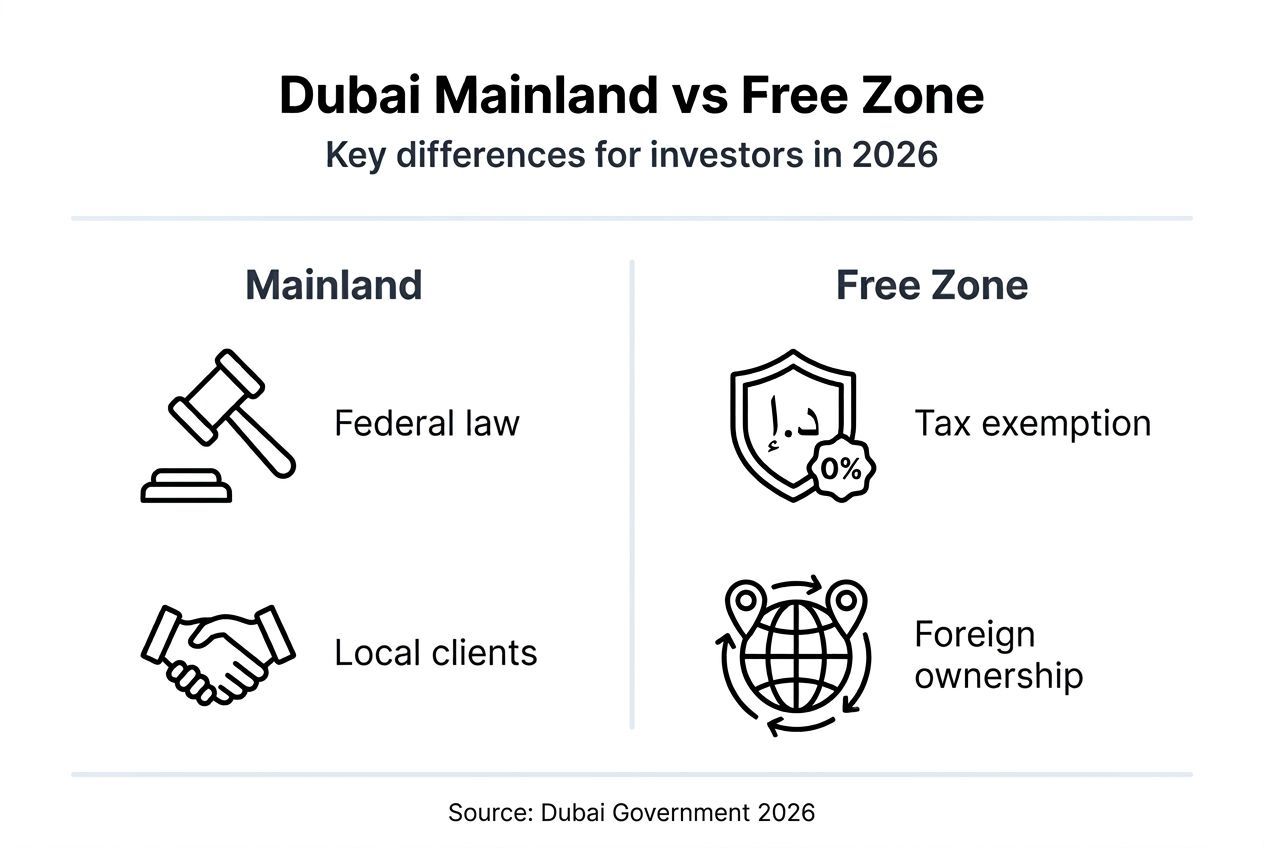
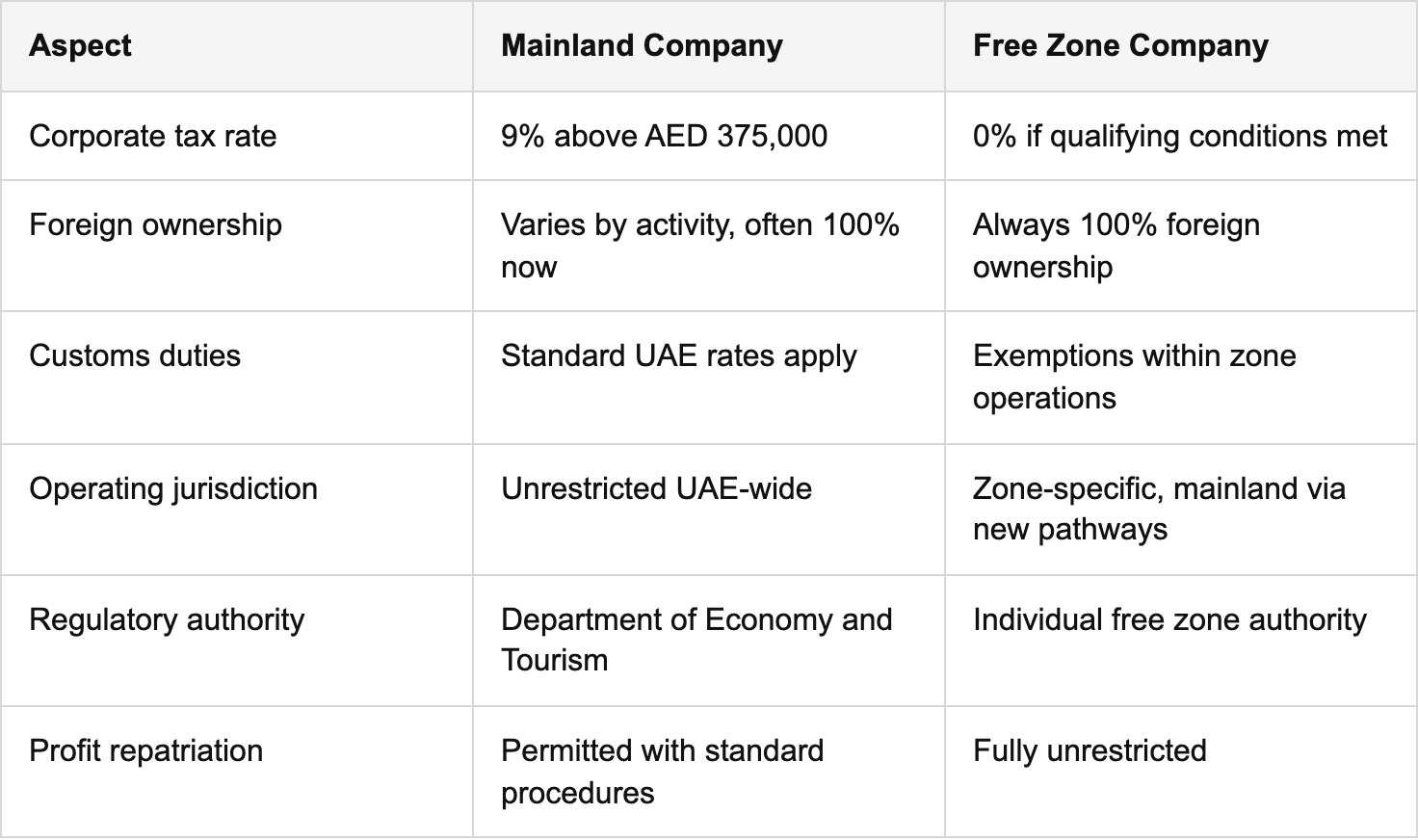
The legal foundation of your Dubai business begins with understanding two distinct regulatory environments. Mainland entities fall under Federal Decree-Law No. (32) of 2021 on Commercial Companies, licensed by the Department of Economy and Tourism, with unrestricted UAE operations. These companies can trade anywhere across the Emirates without geographic limitations.
Free zone entities are governed by regulations of specific authorities such as the Jebel Ali Free Zone Authority, Dubai Multi Commodities Centre, or Dubai International Financial Centre. Each free zone operates with independent regulatory frameworks tailored to specific industries and business models. Traditionally, free zone companies faced restrictions limiting commercial activities to their designated zones and international markets.
Mainland companies benefit from unrestricted market access throughout the UAE, enabling direct engagement with local consumers and government contracts. This flexibility comes with obligations including adherence to federal commercial laws and potential local partnership requirements depending on business activity. Understanding UAE real estate regulations becomes particularly relevant for investors planning property-related operations across emirates.
Free zones were designed to attract foreign investment by offering:
- 100% foreign ownership without local sponsor requirements
- Custom duty exemptions on imports and exports
- Tax incentives including corporate and personal income tax exemptions
- Simplified regulatory procedures and fast-track licensing
- Modern infrastructure and business support services
Each free zone targets specific sectors, from technology and media to logistics and finance. Choosing the appropriate zone requires matching your business activities to the zone’s permitted license categories and understanding how sector-specific regulations affect operations. The geographic and operational restrictions historically associated with free zones have recently evolved through significant regulatory updates.
New pathways for free zone companies to do business in the mainland
The regulatory landscape shifted dramatically when Dubai Executive Council Resolution No. (11) of 2025 allowed free zone companies to conduct business in the mainland without full re-domiciliation or establishing new onshore entities. This resolution addressed a longstanding limitation that forced businesses to choose between free zone benefits and mainland market access.
The resolution establishes three standardized pathways:
- Mainland branch of the free zone company
- Branch authorized specifically for onshore operations
- Temporary permit for limited mainland activities
Branches established under these pathways remain legally connected to the parent free zone entity. You avoid the complexity, cost, and time of creating separate legal structures while gaining mainland operational capabilities. This framework particularly benefits businesses seeking to scale operations, serve mainland clients directly, or diversify revenue streams without abandoning free zone company benefits.
Pro Tip: Evaluate your operational needs carefully before selecting a pathway. Mainland branches involve higher setup requirements but offer broader permissions, while temporary permits suit project-based or seasonal mainland activities with lower administrative burden.
Before this resolution, free zone companies wanting mainland access faced difficult choices. They either accepted limitations on direct mainland business, established costly separate mainland entities, or underwent complex re-domiciliation processes that eliminated free zone advantages. The new pathways preserve your free zone entity’s tax status and ownership structure while expanding commercial reach.
These pathways open strategic options for international investors. You can test mainland market demand before committing to full mainland operations. You maintain flexibility to adjust business models as market conditions evolve. The regulatory framework recognizes that modern businesses require operational agility that rigid jurisdictional boundaries cannot accommodate.
Taxation and compliance differences between mainland and free zones
Taxation represents one of the most significant distinctions between mainland and free zone structures. Federal Decree Law No. 47 of 2022 established a unified corporate tax regime, with 0% tax up to AED 375,000 and 9% thereafter. Mainland companies operating standard commercial activities fall under this standard rate structure without exemptions.

Free zones in Dubai offer 100% foreign ownership, exemptions from taxes and customs duties, and full profit repatriation, unlike mainland companies. However, qualifying for 0% corporate tax requires meeting specific conditions. Free zone companies must maintain adequate substance, conduct qualifying activities, and avoid earning excluded income to preserve preferential tax treatment.
The substance requirements demand genuine business operations within the free zone. Regulators examine whether companies have real offices, employees, and business activities or merely hold licenses for tax optimization. Shell companies without legitimate operations face tax exposure and potential penalties. This scrutiny applies across all UAE jurisdictions but affects free zone entities particularly given their tax advantages.
AML regulations apply uniformly across Dubai’s business landscape. Both mainland and free zone companies must implement proper AML/KYC compliance procedures regardless of structure. Financial institutions, real estate firms, and professional service providers face enhanced due diligence requirements. Non-compliance risks include operational disruptions, banking difficulties, regulatory penalties, and reputational damage.
Compliance extends beyond AML to include accurate financial reporting, timely tax filings, and transparent beneficial ownership disclosure. The UAE has strengthened enforcement mechanisms, conducting audits and imposing penalties on companies that fail compliance standards. International investors must recognize that UAE corporate tax 2026 obligations require proactive planning and ongoing management.
Pro Tip: Budget for professional compliance support from establishment. The cost of proper tax planning, legal advice, and regulatory compliance is substantially lower than penalties, operational disruptions, or structural changes required after setup.
Choosing the right structure for your Dubai investment in 2026
The choice between mainland and free zone structures has become a long-term governance decision that directly affects taxation, banking access, inspections, and investor confidence. Your decision shapes operational capabilities, compliance obligations, and growth potential for years. International entrepreneurs must evaluate multiple factors rather than defaulting to conventional wisdom.
Critical considerations include:
- Ownership preferences and whether local partnership is acceptable
- Primary operating locations and customer base geography
- Tax optimization opportunities versus compliance complexity
- Industry-specific licensing requirements and regulatory oversight
- Banking relationships and financial institution requirements
- Long-term scalability and expansion plans across UAE
Assess your business model against these factors systematically. Companies serving primarily mainland consumers or requiring extensive UAE-wide operations benefit from mainland structures despite higher tax rates. Businesses focused on international trade, specific sectors concentrated in free zones, or seeking maximum tax efficiency often find free zone structures advantageous.
Underestimating structural impact on investor confidence represents a common mistake. Sophisticated investors and financial institutions evaluate your corporate structure as an indicator of governance quality and long-term viability. Choosing structures purely for short-term tax savings without considering operational fit raises red flags during due diligence. Your structure signals your commitment to sustainable, compliant business practices.
The real estate dimension adds another layer of complexity. Different structures affect your ability to invest in various property categories and locations. Mainland companies access broader real estate opportunities across emirates while free zone structures may face limitations. Understanding how your business setup aligns with real estate investment goals matters for investors planning diversified portfolios. Exploring business insights specific to Dubai’s market helps inform strategic decisions.
Key questions to ask yourself:
- Where will my primary revenue come from geographically?
- Do I need physical presence outside a specific free zone?
- What are my three to five year expansion plans?
- How important is 0% corporate tax versus operational flexibility?
- What compliance resources can I dedicate long-term?
- How will my structure affect relationships with banks, investors, and partners?
Consult specialists who understand both regulatory frameworks and practical business realities in Dubai. Generic advice rarely accounts for your specific circumstances, industry nuances, or strategic objectives. Professional guidance helps align your corporate structure with business goals while ensuring compliance and optimizing tax efficiency within legal boundaries.
Explore expert business setup guidance and investment solutions
Navigating the complexities of Dubai’s mainland and free zone options requires specialized knowledge of current regulations, tax implications, and strategic considerations. We provide comprehensive consultancy for company formation across both jurisdictions, ensuring your structure aligns with operational needs and compliance requirements.

Our services include regulatory compliance support, licensing assistance, and tax-efficient structure design tailored to international investors and entrepreneurs. Whether you’re establishing your first UAE presence or optimizing existing operations, we guide you through every decision point. Beyond company formation, we offer expertise in Dubai real estate investment strategies that complement your business objectives. Contact our team at expert Dubai business setup for personalized guidance that transforms regulatory complexity into strategic advantage.
FAQ
What is the main difference between mainland and free zone companies in Dubai?
Mainland companies operate under federal commercial law with unrestricted access to conduct business anywhere in the UAE. Free zone companies are licensed by specific zone authorities with operations traditionally limited to their zones and international markets, though recent reforms now permit mainland operations through designated pathways.
Can free zone companies do business in the mainland without forming a new entity?
Yes, through Dubai Executive Council Resolution No. (11) of 2025, free zone companies can operate onshore via mainland branches, authorized branches, or temporary permits. This expansion occurs without re-domiciliation or creating separate legal entities, maintaining the parent free zone structure.
How does corporate tax differ between mainland and free zone companies in 2026?
Mainland companies pay 9% corporate tax on taxable income above AED 375,000 under the unified regime. Free zone companies can qualify for 0% tax rates by meeting specific conditions including adequate substance requirements and conducting qualifying activities.
What are the key compliance requirements for both structures?
Both mainland and free zone companies must comply with AML regulations, maintain accurate financial records, file tax returns, and disclose beneficial ownership. Compliance intensity varies by industry and business activities, but regulatory oversight applies uniformly across jurisdictions with enforcement focused on genuine business substance.
Which structure offers better ownership flexibility for foreign investors?
Free zones consistently provide 100% foreign ownership without local sponsor requirements across all business activities. Mainland companies now offer 100% foreign ownership for many sectors following regulatory reforms, but some activities still require Emirati partnership or specific ownership structures depending on the commercial license type.


