

What Is Escrow Account in Dubai Real Estate?
Many international investors mistakenly assume escrow accounts are optional in Dubai property transactions. The reality is that 100% of developer sales of off-plan properties must use escrow accounts according to RERA law. Understanding how escrow accounts work in 2026 is critical to safe Dubai real estate investment. This guide clarifies escrow mandates, protections, and practical steps to secure your investment confidently.
Table of Contents
- Understanding Escrow Accounts In Dubai Real Estate
- Legal Framework Governing Escrow Accounts In Dubai
- How Escrow Accounts Work: Process And Fund Flow
- Protections And Risk Mitigation Offered By Escrow Accounts
- Differences Between Off-Plan And Ready Property Escrow Use
- Common Misconceptions About Escrow Accounts
- Practical Steps To Use Escrow Accounts For International Investors
- Secure Your Dubai Real Estate Investment With Expert Support
- Frequently Asked Questions About Escrow Accounts In Dubai
Key takeaways
Understanding escrow accounts in Dubai real estate
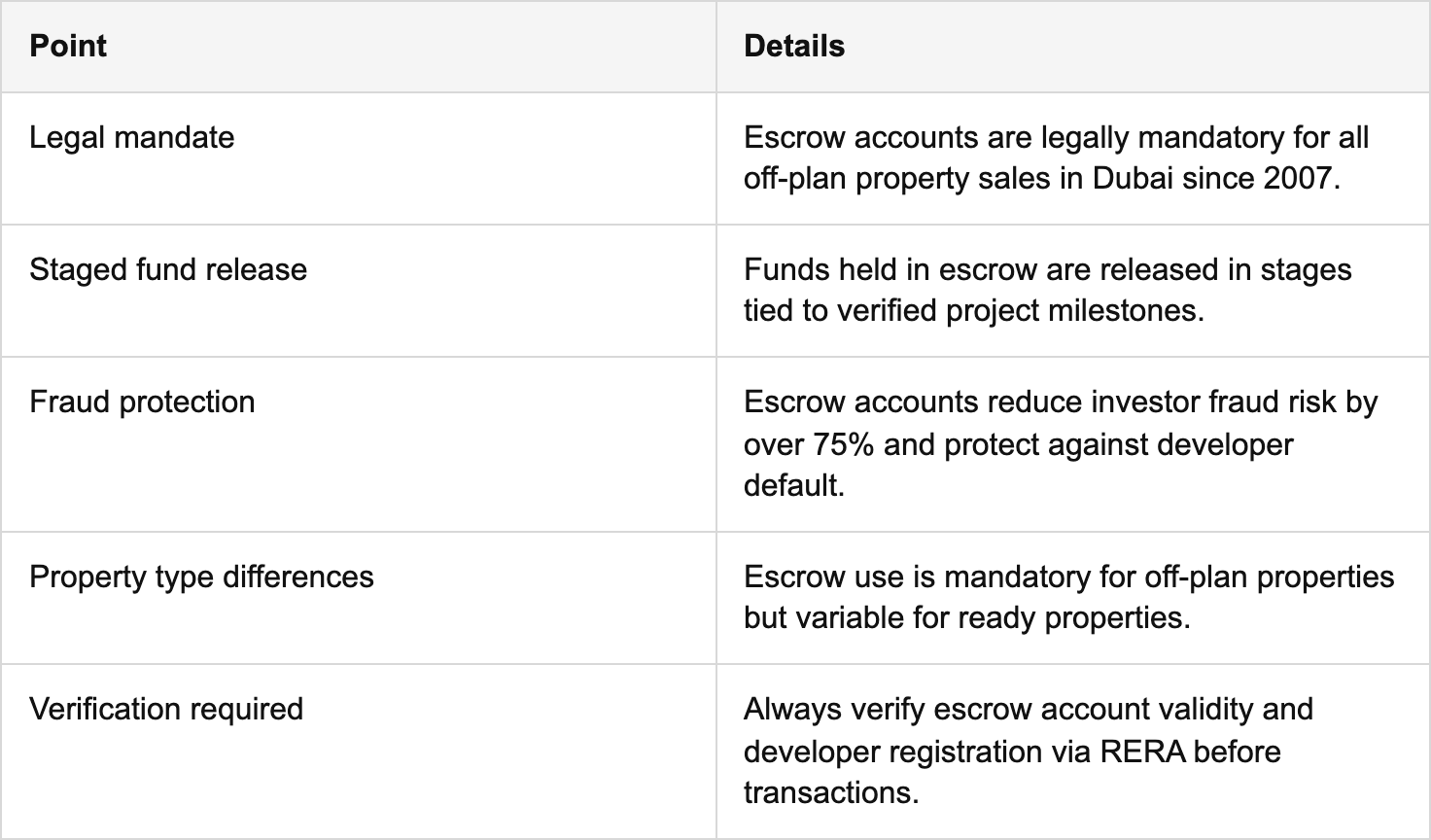
An escrow account is a third-party managed account holding buyer funds securely until specified conditions are met. In Dubai real estate, these accounts protect both buyer and seller according to Dubai law, especially for off-plan properties. They act as a legal safety net preventing developers from accessing funds prematurely.
Since 2007, escrow accounts have been mandatory for off-plan sales to comply with RERA regulations. This mandate emerged after investor protection concerns during earlier real estate booms. The escrow system ensures developers cannot misuse funds before completing construction milestones.
Escrow accounts deliver significant fraud risk reduction in Dubai real estate transactions. Research shows escrow accounts reduce investor fraud risk by over 75%. This protection gives international investors confidence when entering Dubai’s property market.
Key benefits of escrow accounts include:
- Secure fund holding by RERA-approved banks and agents
- Milestone-based release preventing premature developer access
- Legal recourse if developers fail to meet obligations
- Transparency in fund management and project progress
- Regulatory oversight ensuring compliance
For investors new to Dubai real estate terms explained, escrow accounts represent one of the most important protective mechanisms in the market. Understanding them is essential before committing funds.
Legal framework governing escrow accounts in Dubai
The Dubai Real Estate Regulatory Agency mandates escrow accounts for all off-plan projects under UAE law. RERA established mandatory escrow use for all off-plan sales ensuring developer accountability starting in 2007. This legal framework fundamentally changed how property transactions work in the emirate.
Developers must register their escrow accounts with RERA and approved banks before selling any off-plan units. This registration requirement creates a transparent system where authorities can monitor fund flows. The legal framework ensures funds are safeguarded and released only after milestone verification.
RERA’s regulatory oversight provides legal protection and transparency for international investors. The agency maintains a public registry of approved developers and their escrow account details. Investors can verify legitimacy before transferring funds.
Non-compliance by developers leads to serious consequences:
- Fines and penalties from RERA
- Suspension of sales permits
- Legal action and potential criminal charges
- Reputation damage in the market
- Loss of developer license
This strict legal environment creates a secure framework for property investment. Following Dubai real estate investment tips includes understanding these legal protections. The regulatory system in 2026 continues to evolve, strengthening investor safeguards.
How escrow accounts work: process and fund flow
The escrow process follows a structured sequence from developer registration to final ownership transfer. Understanding each step helps investors recognize when their funds are properly protected.
Here’s how the escrow process works:
- Developer registers escrow account with RERA-approved bank and agent
- Buyer and developer sign sales agreement specifying payment milestones
- Buyer transfers funds into registered escrow account, never directly to developer
- Escrow agent holds funds until regulatory authorities verify milestone completion
- Upon verification, escrow agent releases specified percentage to developer
- Process repeats for each construction milestone until project completion
- Final payment releases after transfer of property title to buyer
Funds paid by buyers go into escrow with RERA-approved banks and agents. Escrow agents and banks hold funds and release them only upon regulatory milestone confirmations. This creates accountability at every stage.
Escrow agents are licensed entities managing funds under strict legal protocols. They cannot release funds without proper documentation and regulatory approval. This system mirrors regulated procedural workflows in Dubai across various sectors.
The Dubai commercial property process follows similar escrow principles. Final payment releases only after title transfer confirms buyer ownership.
Pro Tip: Always confirm the developer’s escrow account is registered with RERA and milestone terms are clearly defined before making any payments. Request written confirmation and verify account details independently.
Protections and risk mitigation offered by escrow accounts
Escrow accounts deliver significant protection by reducing developer default and investor losses. The milestone-based system ensures developers cannot access funds without demonstrating progress. This accountability mechanism fundamentally changes risk dynamics.

Fund release occurs only after regulatory confirmation of project progress. RERA or appointed consultants inspect construction sites and verify completion stages. Without verified progress, funds remain secured. This process prevents scenarios where developers collect money but fail to build.
Escrow accounts ensure transparency preventing misuse or premature developer access. Every transaction leaves an audit trail that regulators can review. This visibility deters fraudulent activity and creates trust in the market.
Key protections include:
- Financial security for buyer funds until project completion
- Legal recourse if developers fail contractual obligations
- Reduced risk of developer insolvency affecting buyer funds
- Clear documentation trail for dispute resolution
- Regulatory oversight ensuring proper fund management
Escrow accounts reduce international investor fraud risk by over 75% and ensure milestone-based fund release. This statistic reflects the dramatic improvement in investor protection since escrow mandates began.
They build trust enabling international investors to transact with confidence. Investors from markets without similar protections find Dubai’s system reassuring. The escrow framework demonstrates the emirate’s commitment to legitimate, transparent real estate transactions.
Protections also benefit sellers by ensuring buyer funds are verified and held securely until conditions are met. Developers receive guaranteed payment upon meeting milestones. This certainty helps with project financing and planning. Understanding real estate negotiation tips includes recognizing these mutual protections.
Differences between off-plan and ready property escrow use
Escrow account requirements differ significantly between off-plan and ready properties. Understanding these distinctions helps investors apply appropriate diligence for each transaction type.
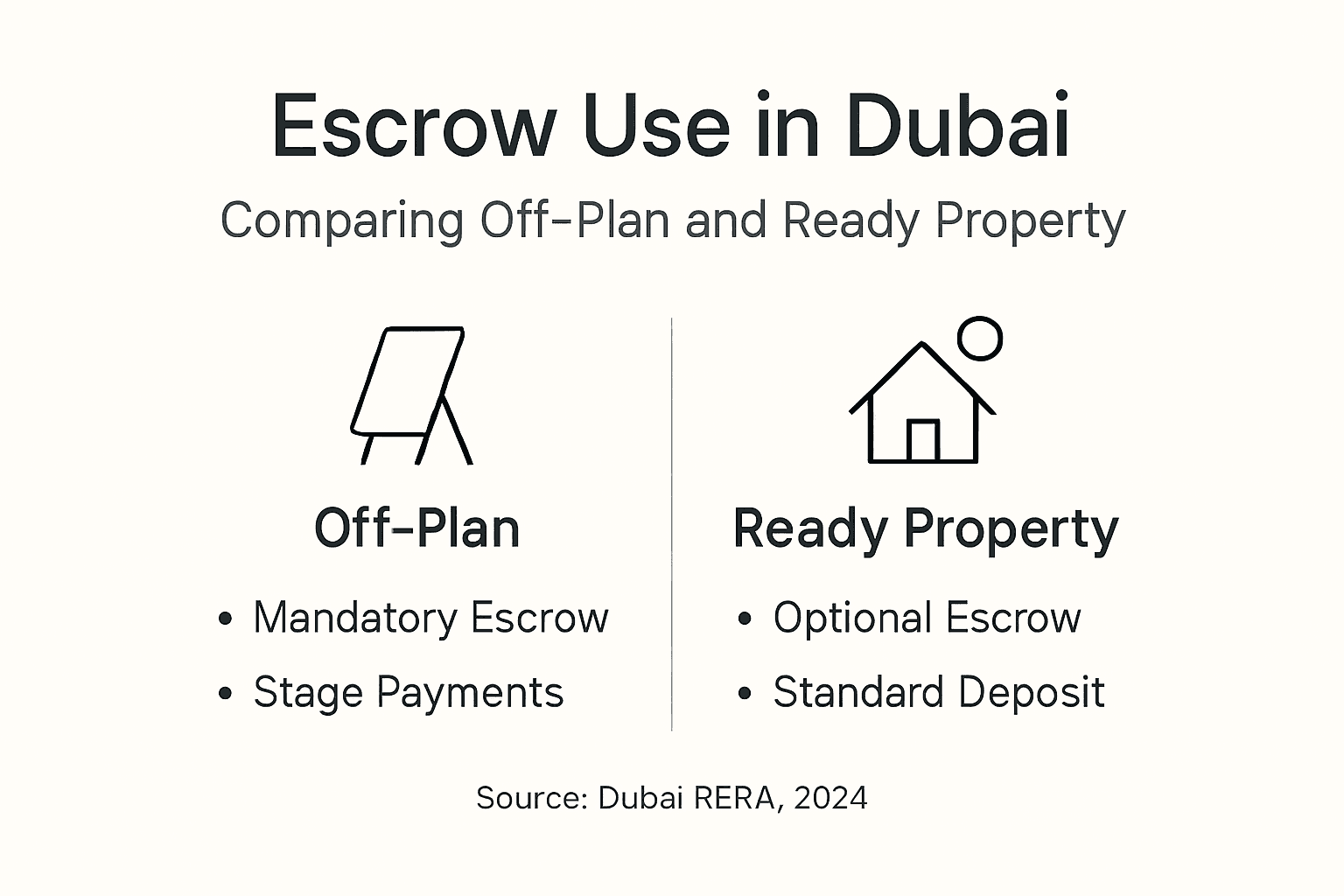
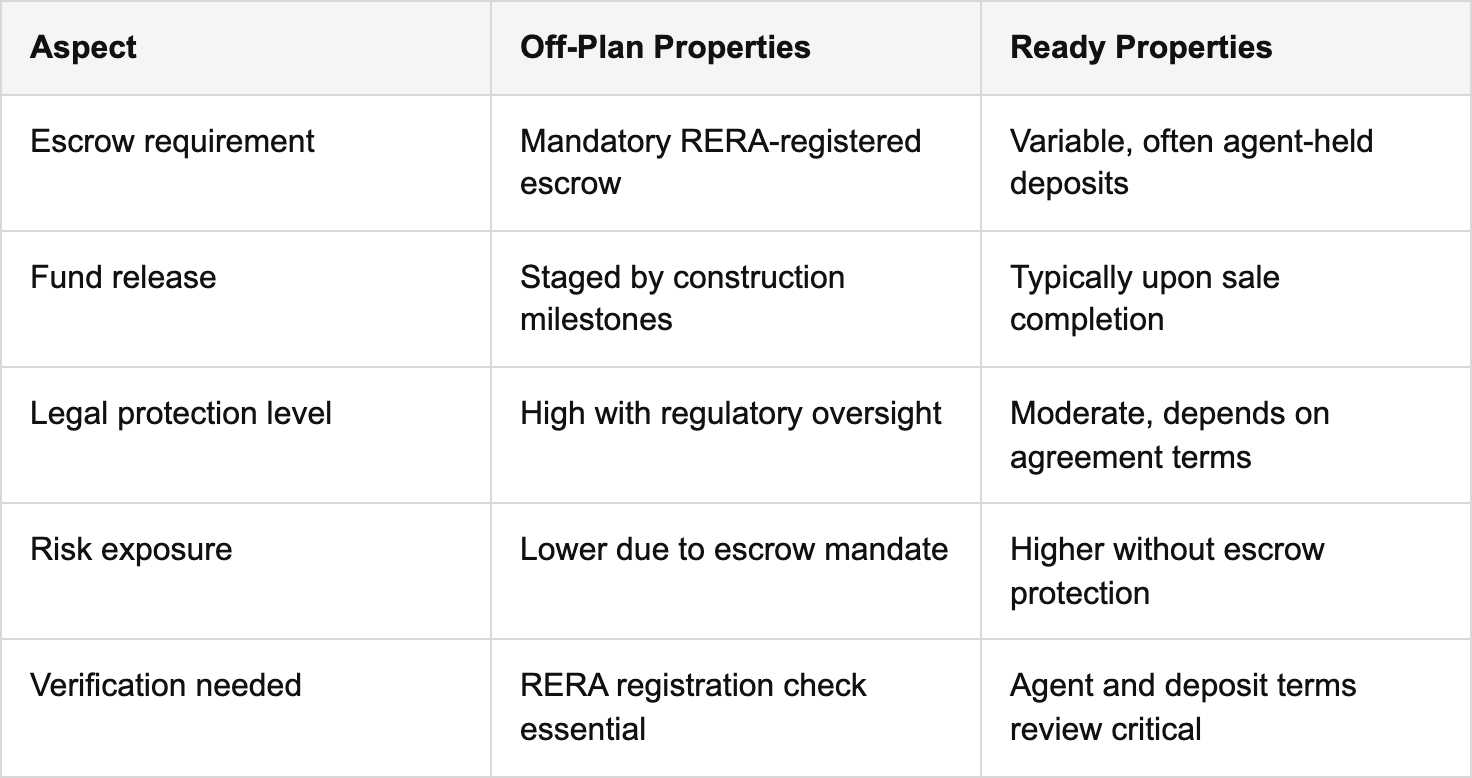
Escrow accounts are mandatory for off-plan properties, but ready properties often use alternate deposit holding instruments. Ready property transactions frequently involve deposits held by real estate agents or third parties without full escrow protection.
Off-plan purchases require RERA-registered escrow accounts with staged fund release. Each payment ties to a specific construction milestone verified by authorities. This structure protects buyers throughout the development period.
Ready properties often involve deposits held by agents or third parties without escrow protection. While some ready property transactions use escrow-like arrangements, they are not legally mandated. Buyers must negotiate these protections individually.
Legal protections and risk levels are greater for off-plan use of escrow accounts. The regulatory framework specifically addresses off-plan risks. Ready property buyers should:
- Request escrow-style arrangements even when not mandatory
- Verify deposit holder credentials and insurance
- Review contract terms for fund protection clauses
- Consider legal counsel for large transactions
Investors should adapt diligence depending on property type to mitigate risks. Off-plan property investment benefits from built-in protections. Ready property purchases require more active protection measures.
Common misconceptions about escrow accounts
Several widespread false beliefs about escrow accounts lead investors to make costly mistakes. Clearing these misconceptions prevents exposure to unnecessary risks.
Misconception one: escrow accounts are optional in Dubai. Escrow accounts are legally mandatory for all off-plan property sales. There are no exceptions. Any developer claiming escrow is unnecessary is operating illegally.
Misconception two: escrow agents are passive holders with no active role. Escrow agents actively manage funds and their protection varies by property type. They verify milestone completion, coordinate with regulators, and ensure proper fund release protocols.
Misconception three: all property types in Dubai require escrow accounts. Protection scope differs by property type. Escrow is mandatory for off-plan but variable for ready properties. Investors must understand which rules apply to their specific transaction.
Misconception four: escrow accounts guarantee project completion. While escrow protects funds, it doesn’t guarantee developers will complete projects on time or at all. Other due diligence remains essential.
Common false beliefs include:
- Any bank account can serve as escrow
- Developers can choose whether to use escrow
- Escrow protects against all investment risks
- Ready properties always have escrow protection
- Escrow agents work for developers
Misunderstanding escrow roles leads to investment risk and fraud exposure. Scammers exploit confusion by directing funds to unauthorized accounts. Some claim special arrangements exempt them from escrow requirements.
Pro Tip: Verify escrow registration directly with RERA using their official channels to avoid scams and unauthorized accounts. Never rely solely on documentation provided by developers or agents. Independent verification is essential.
Understanding Dubai escrow misconceptions protects your investment capital. Education remains the best defense against fraud.
Practical steps to use escrow accounts for international investors
International investors should follow systematic steps to safely use escrow accounts and comply with Dubai regulations. These actions ensure proper protection throughout the transaction.
Follow this process for secure escrow use:
- Verify the developer’s RERA registration before engaging in any purchase discussions or commitments
- Confirm the escrow account is registered with a RERA-approved bank and escrow agent
- Request written escrow account details including account number and bank name
- Review the sales agreement carefully, noting milestone terms and corresponding fund release conditions
- Make payments only into verified escrow accounts, never directly to developers or their representatives
- Obtain and retain receipts for all payments showing escrow account deposits
- Keep complete records of payments, escrow agreements, and all transaction documentation
- Monitor project progress and verify milestones before additional payments
Developers must register escrow accounts with RERA and banks for legal compliance. Buyers should verify these registrations before making purchase commitments. RERA provides online verification tools for checking developer and escrow account status.
Review sales agreement milestone terms carefully. Ensure they specify clear, measurable construction stages tied to payment percentages. Vague milestone definitions create disputes. The agreement should detail what triggers each fund release.
Make payments only into verified escrow accounts. Never transfer funds directly to developers regardless of explanations or pressure. Legitimate developers expect and respect proper escrow procedures. Any resistance to escrow use signals potential fraud.
Keep records of payments and escrow agreement details. Documentation proves compliance and supports any future disputes. Store copies electronically and physically in secure locations.
Pro Tip: Use legal counsel familiar with Dubai real estate laws for extra security, especially for high-value transactions. Local expertise helps navigate regulations and identifies red flags. The cost of legal review is minimal compared to investment protection value.
Following how to buy property in Dubai processes ensures compliance. These Dubai real estate investment tips reflect best practices developed through years of market experience. Understanding Dubai’s legal role in transactions across sectors helps appreciate the importance of proper procedures.
Secure your Dubai real estate investment with expert support
Navigating Dubai’s real estate market requires current knowledge and strategic guidance. Understanding escrow accounts is just one piece of successful property investment in 2026.

Explore our complete real estate investment guide covering everything from market entry to portfolio growth. Stay informed about Dubai real estate trends 2026 to make data-driven investment decisions. Master Dubai real estate terms explained to negotiate confidently with developers and agents. Our resources help international investors understand regulations, identify opportunities, and execute secure transactions backed by proper escrow protections.
Frequently asked questions about escrow accounts in Dubai
What is an escrow account in Dubai real estate?
An escrow account is a third-party managed account where buyer funds are held securely until specified conditions are met. In Dubai, RERA-approved banks and agents manage these accounts for off-plan property transactions.
Is escrow mandatory for all Dubai property purchases?
Escrow is legally mandatory for all off-plan property sales in Dubai. Ready properties do not have the same legal requirement, though buyers can negotiate similar protections.
How can I verify if an escrow account is legitimate?
Verify escrow accounts by checking RERA’s official registry of approved developers and their registered accounts. Contact RERA directly or use their online verification tools rather than relying solely on developer-provided documentation.
What protections does escrow provide to buyers and sellers?
Escrow protects buyers by holding funds until project milestones are verified, reducing fraud risk by over 75%. Sellers benefit from guaranteed payment upon meeting contractual obligations and milestone completations.
Are escrow accounts used for ready properties in Dubai?
Escrow accounts are not legally required for ready properties in Dubai. However, buyers can request similar protective arrangements, and some agents offer deposit holding services that function like escrow.
What happens if a developer fails to complete a project?
If a developer fails to meet milestones, funds remain in escrow and can be returned to buyers according to contract terms. RERA intervenes in cases of developer default to protect investor interests.


