

What is commercial leasing in Dubai? 2026 investor guide
Many investors assume commercial leasing in Dubai works like residential rentals or follows universal global standards. This misconception leads to costly mistakes and missed opportunities. Dubai’s commercial leasing landscape operates under unique regulatory frameworks, financial structures, and contractual requirements that demand specialized knowledge. This guide breaks down everything international investors need to know about commercial leasing in Dubai for 2026, from legal protections to practical execution strategies that maximize investment returns.
Table of Contents
- Understanding Commercial Leasing: Definition And Scope
- Key Legal And Regulatory Aspects Of Commercial Leasing In Dubai
- Typical Commercial Lease Terms And Financial Considerations
- Pros, Cons, And Practical Steps To Secure A Commercial Lease In Dubai
- Discover Expert Support For Dubai Commercial Leasing
Key takeaways
Understanding commercial leasing: definition and scope
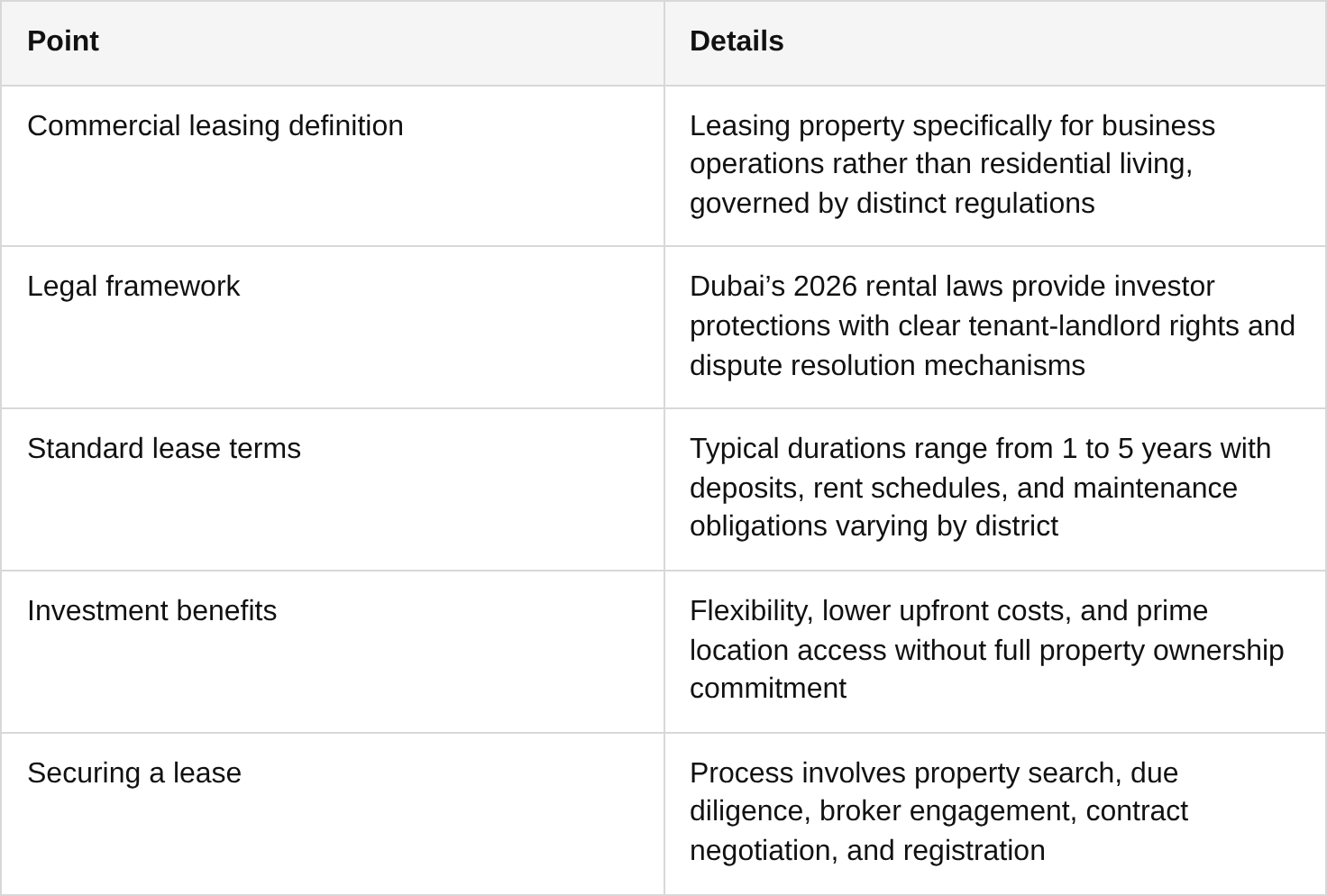
Commercial leasing involves leasing properties for business activities and differs significantly from residential leasing in purpose and regulations. When you lease commercial space in Dubai, you’re entering a contractual agreement to use property exclusively for business operations like retail stores, office headquarters, warehouses, or industrial facilities. The fundamental distinction lies in intent: residential leases provide living spaces while commercial leases enable revenue-generating business activities.
Dubai’s commercial property market offers diverse options across multiple categories. Office spaces dominate business districts like Downtown Dubai and DIFC, providing corporate headquarters and professional service locations. Retail properties line shopping destinations from traditional souks to ultra-modern malls, offering consumer-facing business opportunities. Industrial and warehouse facilities concentrate in areas like Jebel Ali and Dubai Industrial City, serving logistics and manufacturing operations. Each property type carries specific zoning requirements, lease structures, and regulatory oversight that investors must navigate.
The regulatory framework governing commercial leases differs substantially from residential rules. Commercial contracts typically allow more negotiation flexibility on terms, renewal conditions, and rent escalation clauses. Dubai’s Real Estate Regulatory Agency (RERA) oversees commercial transactions but grants parties greater contractual freedom compared to residential protections. Understanding these distinctions prevents confusion and helps you structure deals that align with business objectives rather than residential tenant expectations.
Commercial leasing plays a critical role in Dubai’s investment landscape because it provides market entry without massive capital commitment. Instead of purchasing property outright, you access prime locations through manageable lease payments that preserve capital for business operations and growth. This approach particularly benefits international investors testing Dubai markets before making permanent property investments. The leasing model also offers exit flexibility, allowing you to relocate or expand as business needs evolve without the complications of property sales.
Pro Tip: Always verify that your intended business activity aligns with the property’s designated use category and free zone or mainland regulations before signing any commercial lease in Dubai.
Key commercial property categories in Dubai include:
- Office spaces in central business districts and free zones
- Retail units in malls, street-front locations, and mixed-use developments
- Industrial facilities for manufacturing and production operations
- Warehouse and logistics centers near ports and transportation hubs
- Specialized spaces like medical clinics, educational facilities, and hospitality venues
Key legal and regulatory aspects of commercial leasing in Dubai
Dubai’s rental laws are designed to safeguard investments with clear procedures and tenant-landlord rights under the Dubai Rental Law 2026 updates. The legal framework establishes mandatory contract elements, dispute resolution pathways, and protections that apply differently to commercial versus residential leases. Understanding these regulations prevents legal complications and ensures your lease agreement provides enforceable protections for your business investment.
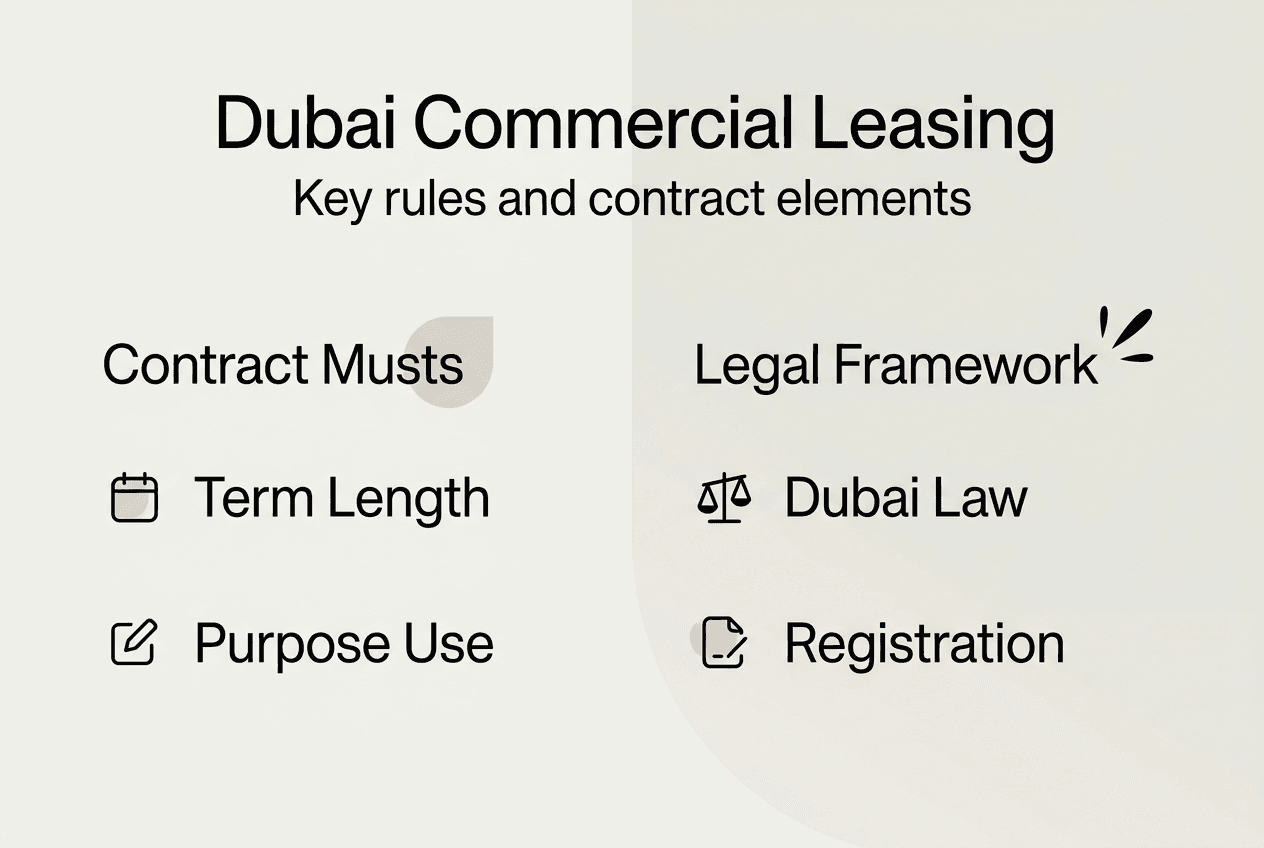
Every commercial lease contract in Dubai must contain specific mandatory elements to achieve legal validity. These include precise property descriptions with plot numbers and addresses, clearly defined lease duration with start and end dates, explicit rent amounts and payment schedules, and detailed maintenance responsibility allocations. The contract must identify all parties with valid identification, specify permitted business activities, and outline renewal terms if applicable. Missing any mandatory element can render portions of your agreement unenforceable or create disputes during the lease term.
Rent regulation in commercial leasing offers more flexibility than residential caps but still operates within legal boundaries. While Dubai’s rent increase calculator primarily governs residential properties, commercial leases typically negotiate rent escalation clauses directly in contracts. Common structures include fixed annual increases of 3% to 5%, market rate adjustments tied to comparable properties, or stepped increases over multi-year terms. The 2026 regulatory environment emphasizes transparency in rent calculations and requires written justification for any increases exceeding agreed contractual terms.
Compliance requirements vary significantly between mainland Dubai and free zone locations. Mainland commercial leases fall under RERA jurisdiction and Dubai Municipality regulations, requiring specific approvals and trade license alignment. Free zones like DMCC, JAFZA, and Dubai Airport Freezone Authority maintain independent regulatory frameworks with distinct leasing rules, often providing simplified processes for international investors. Understanding which regulatory body governs your target property prevents approval delays and ensures proper licensing coordination.
Dispute resolution mechanisms provide structured pathways when lease conflicts arise. The Dubai Rental Dispute Center handles commercial lease disagreements through mediation and arbitration before cases reach courts. This system offers faster resolution than traditional litigation, typically concluding disputes within 3 to 6 months. Both landlords and tenants can file complaints regarding contract breaches, maintenance failures, or payment disputes. The center’s decisions carry legal weight and can include eviction orders, compensation awards, or contract modifications.
Critical legal considerations for commercial leasing include:
- Mandatory registration of lease contracts with Ejari or relevant free zone authority
- Alignment of business activities with trade license and property zoning
- Security deposit limits and refund conditions specified in writing
- Termination clauses outlining notice periods and penalty structures
- Force majeure provisions addressing extraordinary circumstances
- Subleasing permissions and restrictions clearly documented
Typical commercial lease terms and financial considerations
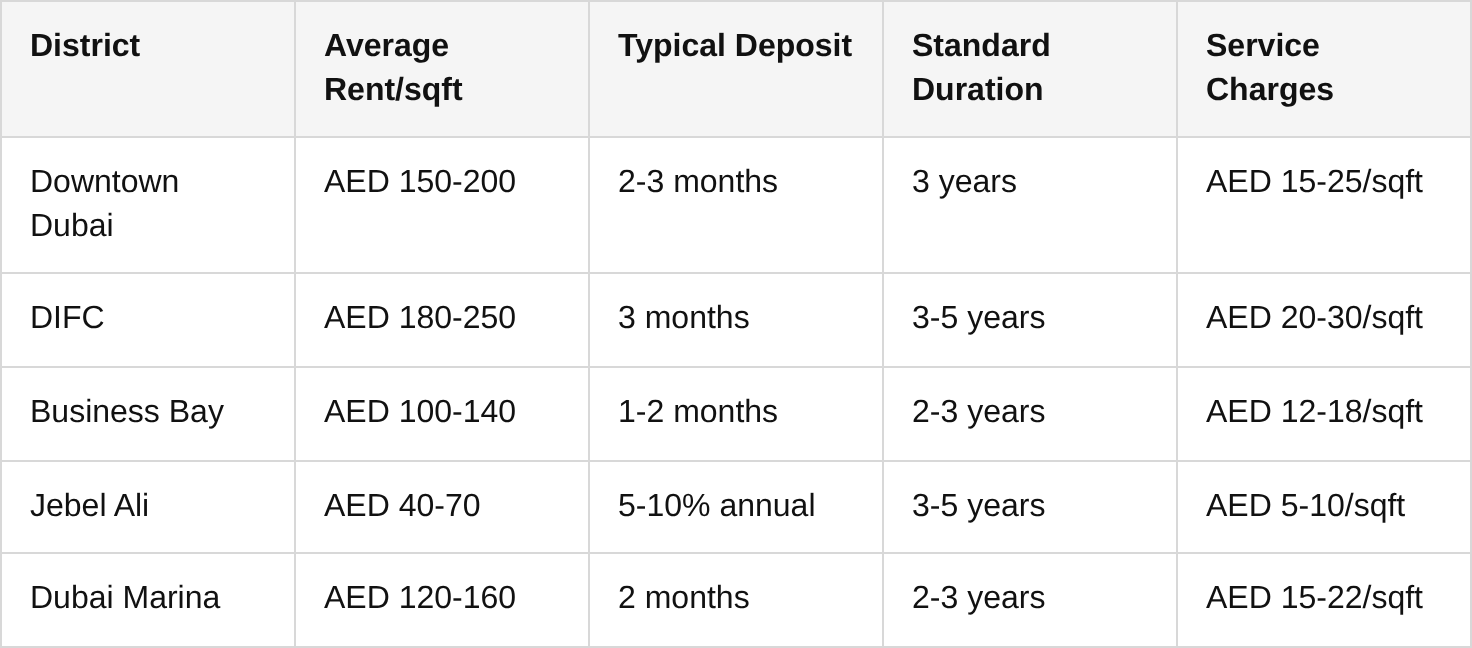
Standard lease lengths in Dubai’s commercial market typically range from 1 to 5 years, with 3-year terms representing the most common duration. Shorter leases of 1 to 2 years suit businesses testing market viability or requiring operational flexibility, while longer 5-year agreements often secure better rental rates and stability for established operations. Renewal options frequently appear in initial contracts, granting tenants first right to extend under predefined conditions. Some agreements include break clauses allowing early termination after minimum periods, usually with 3 to 6 months’ notice and potential penalties.
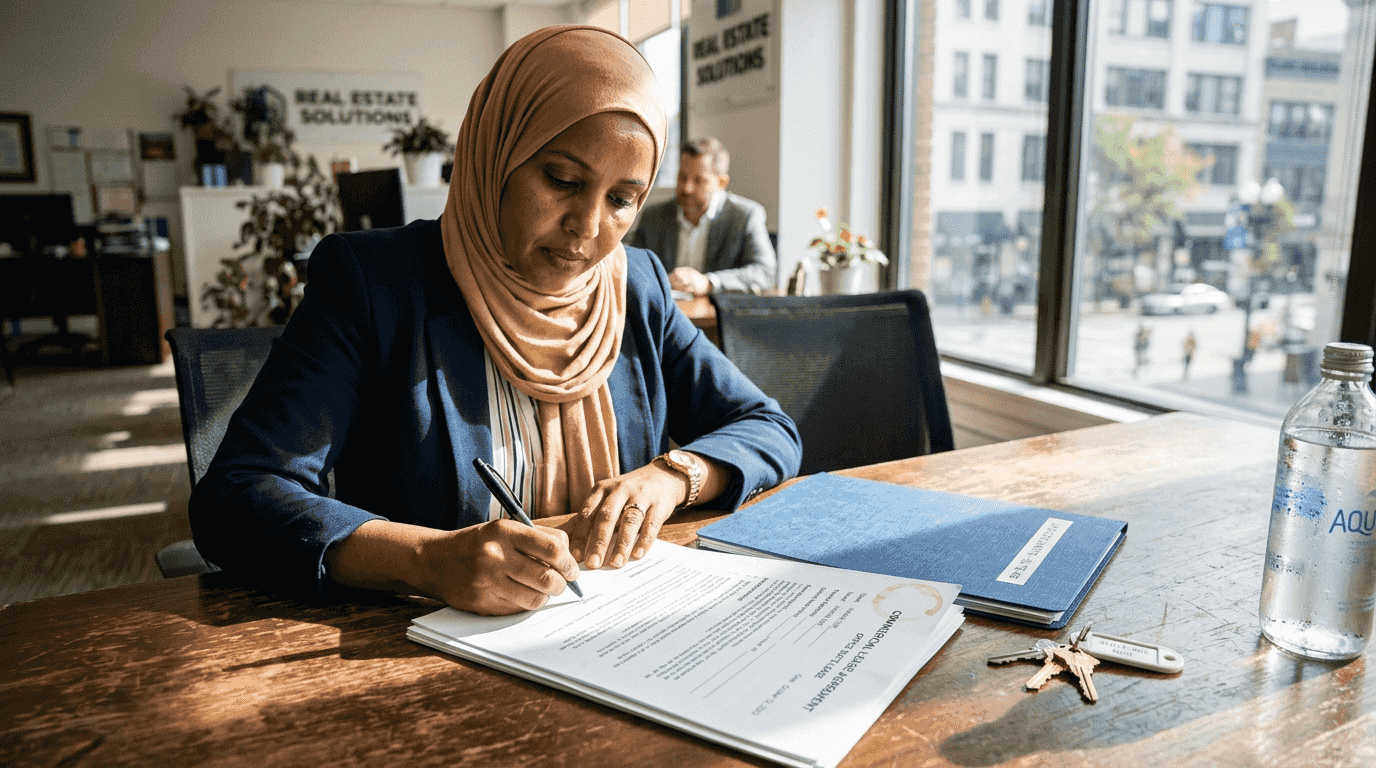
Deposit requirements for commercial properties generally demand higher amounts than residential leases. Landlords typically require security deposits equivalent to 5% to 10% of annual rent, though prime locations and new developments may demand up to 3 months’ rent as security. These deposits protect against property damage, unpaid utilities, and lease violations. Refund conditions should specify inspection procedures, deduction allowances, and timelines for returning deposits after lease termination. Understanding common commercial lease clauses helps investors negotiate better terms and avoid costly mistakes.
Rent payment structures in commercial leases vary based on property type and landlord preferences. Annual payments in 1 to 4 checks remain standard, with many landlords preferring fewer, larger payments to minimize administrative overhead. Payment timing often requires the first check upon signing, with subsequent payments spread quarterly or semi-annually throughout the year. Some agreements allow monthly payments but may include slight premiums for this convenience. Post-dated checks remain common practice in Dubai, though bank transfers and electronic payment systems gain increasing acceptance in 2026.
Maintenance obligations divide between landlords and tenants based on structural versus operational responsibility. Landlords typically handle major structural repairs, building systems like HVAC and elevators, and common area maintenance in multi-tenant properties. Tenants assume responsibility for interior maintenance, minor repairs, fixture replacements, and utilities. Service charges cover shared building costs like security, cleaning, and facility management, usually calculated per square foot and billed separately from rent. Clarifying these divisions in your lease prevents disputes over unexpected repair costs.
Pro Tip: Negotiate rent-free periods for fit-out work when leasing raw commercial spaces, as renovation timelines can extend 2 to 4 months before your business becomes operational.
Comparison of lease terms across Dubai commercial districts:
Additional financial considerations include:
- Municipality fees and housing fees that may apply to commercial properties
- Chiller charges in developments with district cooling systems
- Parking allocation costs if spaces aren’t included in base rent
- Fit-out deposits required by some landlords to ensure proper restoration
- Early termination penalties ranging from 2 to 6 months’ rent
Pros, cons, and practical steps to secure a commercial lease in Dubai
Commercial leasing offers substantial advantages for international investors entering Dubai’s market. Capital preservation ranks among the top benefits, as leasing requires significantly lower upfront investment compared to property purchase. You avoid massive down payments, mortgage commitments, and property maintenance capital expenditures while accessing the same prime business locations. Flexibility provides another critical advantage, enabling you to relocate as your business grows, test multiple locations, or exit the market without property sale complications. Location diversity expands your options, granting access to prestigious addresses that might prove unaffordable for outright purchase.
Operational benefits extend beyond financial considerations. Leasing simplifies business setup by eliminating property acquisition timelines, allowing faster market entry and revenue generation. Many commercial spaces come partially fitted or offer landlord contributions toward customization, reducing your renovation burden. Lease expenses also provide tax advantages as fully deductible business costs, improving your overall financial efficiency. The predictable payment structure aids cash flow planning and budgeting compared to ownership’s variable maintenance and appreciation uncertainties.
However, commercial leasing carries inherent limitations and risks. Lack of asset ownership means you build no equity and miss potential property appreciation that Dubai’s market often delivers. Rent escalation clauses can significantly increase occupancy costs over time, particularly in high-demand districts where landlords leverage market conditions. Contractual constraints limit your ability to modify spaces, sublease portions, or exit agreements without penalties. Long-term leasing may ultimately cost more than purchasing if you occupy the same space for extended periods exceeding 7 to 10 years.
Market volatility introduces additional considerations. Investors must weigh pros and cons of leasing commercial property versus owning to align with business and investment goals. Economic downturns can leave you locked into leases for spaces your business no longer needs, while booming markets may trigger aggressive rent increases at renewal. Landlord dependency creates operational risks, as property sales, financial difficulties, or management changes can disrupt your business continuity.
Due diligence in Dubai’s rapidly evolving commercial real estate market isn’t optional, it’s the difference between profitable operations and costly mistakes that undermine your entire business model.
Securing a commercial lease in Dubai follows a systematic process:
- Define your requirements including location, size, budget, and business activity specifications
- Engage a qualified commercial real estate broker familiar with your target districts and property types
- Conduct property tours and evaluate multiple options against your criteria
- Verify property credentials including ownership documentation, RERA registration, and zoning approvals
- Review comparable market rates to ensure proposed rent aligns with current valuations
- Negotiate lease terms covering rent, duration, deposits, maintenance, and renewal conditions
- Conduct property inspections documenting existing conditions with photographs and written reports
- Finalize contract terms and ensure all mandatory elements appear in writing
- Register the lease agreement with Ejari or the relevant free zone authority
- Complete payment of deposits and initial rent as specified in the contract
- Obtain property access and document the handover process thoroughly
Working with experienced brokers provides market insights, negotiation leverage, and access to off-market opportunities. Verify broker credentials through RERA registration and request references from previous commercial clients. Professional brokers understand Dubai commercial property process investment guide nuances and can identify red flags in contracts or properties that inexperienced investors might miss.
Key advantages of commercial leasing:
- Lower capital requirements compared to property purchase
- Operational flexibility to relocate or expand as business needs change
- Access to premium locations that might be unaffordable to buy
- Simplified business setup without property acquisition delays
- Tax-deductible lease payments improving financial efficiency
Potential disadvantages to consider:
- No equity building or property appreciation benefits
- Exposure to rent increases and market-driven cost escalation
- Contractual limitations on space modifications and subleasing
- Dependency on landlord performance and property management quality
- Possible long-term costs exceeding purchase economics
Discover expert support for Dubai commercial leasing
Navigating Dubai’s commercial leasing landscape requires specialized knowledge of legal frameworks, market dynamics, and negotiation strategies that protect your investment. Professional guidance helps you identify optimal properties, structure favorable lease terms, and avoid common pitfalls that cost international investors time and money. Whether you’re establishing your first Dubai operation or expanding existing business footprint, expert support accelerates your success.

Explore comprehensive commercial leasing resources and professional consultation to make informed decisions backed by deep market expertise and proven investment strategies tailored to international investors.
FAQ
What is the typical duration of a commercial lease in Dubai?
Commercial lease terms in Dubai typically range from 1 to 5 years, with 3-year agreements representing the most common duration. Shorter leases offer flexibility for businesses testing market viability, while longer terms often secure better rental rates and operational stability. Many contracts include renewal options granting tenants first right to extend under predefined conditions.
Can international investors sign commercial leases in Dubai without a local sponsor?
International investors can lease commercial properties in Dubai’s free zones without local sponsors or UAE national partners. Free zones like DMCC, JAFZA, and Dubai Silicon Oasis allow 100% foreign ownership and independent leasing. Some mainland areas may require local partnerships or specific approvals depending on business activity and licensing requirements. Always verify sponsorship requirements for your specific location and business type before committing to lease agreements.
What happens if a tenant violates a commercial lease agreement in Dubai?
Lease violations can lead to penalties, eviction proceedings, or legal disputes under Dubai Rental Law and contract terms. Common violations include unpaid rent, unauthorized subleasing, property damage, or conducting prohibited business activities. Landlords may issue formal notices demanding compliance or termination, potentially filing cases with the Dubai Rental Dispute Center. Both parties have defined rights and remedies to resolve conflicts through mediation, arbitration, or court proceedings if necessary.
How much security deposit do commercial leases in Dubai typically require?
Commercial property security deposits in Dubai generally range from 5% to 10% of annual rent, though prime locations may demand up to 3 months’ rent as security. Deposit amounts vary based on property type, location prestige, and landlord policies. Contracts should clearly specify refund conditions, inspection procedures, allowable deductions, and timelines for returning deposits after lease termination. Always document property conditions thoroughly at move-in to protect your deposit during move-out.
Are commercial lease agreements in Dubai registered with government authorities?
All commercial lease agreements in Dubai must be registered with the appropriate authority to achieve legal validity. Mainland properties require Ejari registration through Dubai Land Department, while free zone properties register with their respective free zone authorities. Registration creates official records, enables utility connections, supports trade license applications, and provides legal protections for both landlords and tenants. Unregistered leases may face enforcement challenges and prevent essential business operations.


