
Real Estate Brokerage Explained
Choosing the right brokerage in Dubai often feels more complex than first expected. High-net-worth investors must look beyond simple property listings to find professionals who act as strategic advisors through legal, financial, and market challenges. Understanding the multifaceted role of real estate brokerage gives you an advantage, helping to clarify the difference between brokers and agents while exposing common misconceptions that could impact your investment decisions.
Table of Contents
Defining Real Estate Brokerage and Common Misconceptions
Real estate brokerage serves as a critical intermediary function in property transactions, coordinating complex market interactions between buyers and sellers. These professionals provide essential services that extend far beyond simple property listings, acting as strategic advisors who navigate legal, financial, and market complexities.
At its core, real estate brokerage involves several key functions:
Providing detailed market information and pricing analysis
Facilitating property negotiations
Managing legal documentation and transaction processes
Offering professional guidance on investment potential
Connecting buyers with suitable properties
Many investors misunderstand the nuanced role of brokers, often reducing their function to mere salespeople. However, professional brokers actively manage multiple transaction phases, including mortgage coordination, property inspections, and strategic pricing recommendations.
The distinction between real estate brokers and real estate agents frequently creates confusion. Brokers typically hold advanced certifications and can operate independently, while agents work under a broker’s supervision. This hierarchical structure ensures professional accountability and maintains high industry standards.
Pro tip: Always verify a broker’s professional credentials and track record before engaging their services in any real estate transaction.
Types of Brokerages and Their Key Differences
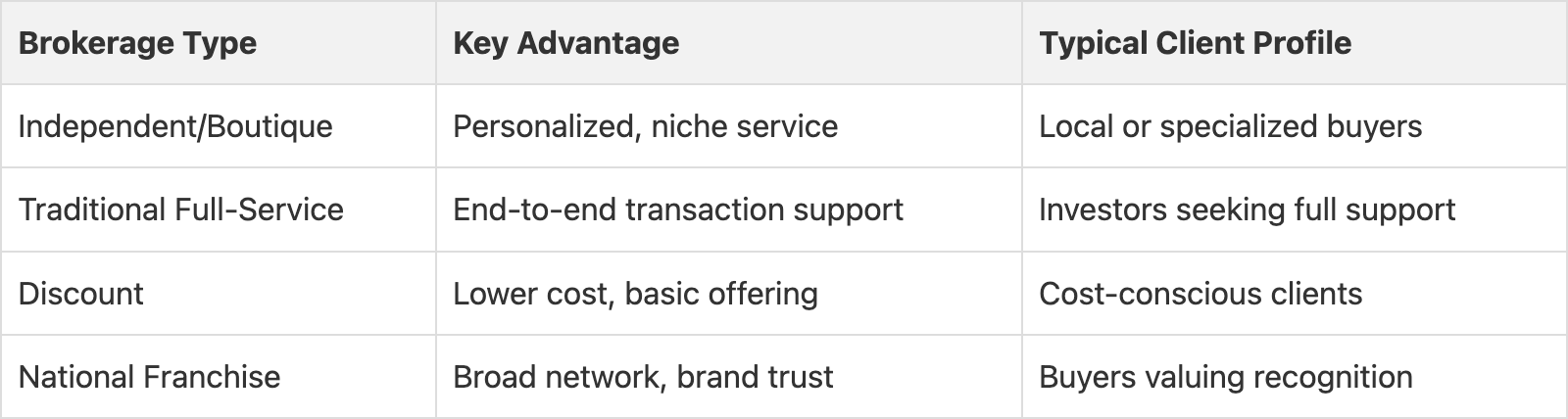
Real estate brokerages are not one-size-fits-all operations, but rather diverse business models with unique characteristics. Understanding these variations helps investors and property professionals select the most appropriate brokerage for their specific needs and objectives.
The primary types of real estate brokerages include:
Independent Brokerages: Small, locally-focused firms offering personalized service
Traditional Full-Service Brokerages: Comprehensive support with comprehensive fee structures
Discount Brokerages: Reduced service levels at lower cost points
National Franchise Brokerages: Extensive network and brand recognition
Independent or boutique brokerages typically specialize in niche markets, providing deeply personalized experiences. These smaller firms often excel in specific geographic regions or property types, offering tailored insights that larger organizations might miss. Their intimate market knowledge can be particularly valuable for investors seeking specialized guidance.
Traditional full-service brokerages represent the most comprehensive option, providing end-to-end support throughout property transactions. These organizations typically employ multiple specialists who manage everything from market research and property valuation to legal documentation and negotiation strategies. While their services come at a premium, they offer extensive professional infrastructure and risk mitigation.
Pro tip: Evaluate a brokerage’s specialization, fee structure, and track record before committing to ensure alignment with your specific investment objectives.
Here’s a quick comparison of the main types of real estate brokerages in Dubai:
How Brokerages Function in Property Transactions
Real estate brokerages serve as critical intermediaries managing complex property transactions, orchestrating a sophisticated process that extends far beyond simple property matching. Their comprehensive approach involves multiple strategic stages designed to protect and optimize investor interests.
Key functional responsibilities of brokerages include:
Market research and property valuation
Strategic property marketing
Client representation and negotiation
Transaction risk management
Legal compliance oversight
Contractual documentation preparation
Mortgage and financing coordination
Brokers play a multifaceted role in transaction management, acting simultaneously as advisors, negotiators, and legal guardians. They leverage deep market insights to help clients make informed decisions, carefully analyzing property potential, market trends, and investment viability. Their expertise allows them to identify opportunities and potential risks that individual investors might overlook.

The transaction process typically involves intricate steps where brokers coordinate multiple professional services, including coordinating with lawyers, mortgage providers, inspectors, and other critical stakeholders. By managing these complex interactions, brokers ensure smooth, legally compliant transactions that protect their clients’ financial interests and minimize potential complications.
Pro tip: Request a comprehensive transaction timeline and detailed service breakdown from your chosen brokerage to understand exactly how they will manage your specific property investment.
Legal Framework and Licensing in Dubai
Dubai’s real estate brokerage sector operates under stringent regulatory frameworks designed to protect investor interests and maintain market integrity. These comprehensive legal structures establish clear guidelines for professional conduct, licensing requirements, and ethical standards that all real estate brokers must strictly adhere to.
Key licensing and regulatory requirements include:
Mandatory registration with Dubai Land Department
Obtaining official brokerage permits
Passing professional competency examinations
Maintaining continuous professional development
Adhering to strict ethical conduct standards
Implementing transparent transaction practices
Demonstrating financial and professional reliability
The legal framework enforces rigorous compliance mechanisms that prohibit unauthorized brokerage activities. Brokers must navigate complex regulatory landscapes, including UAE bylaw No. 85 of 2006, which mandates comprehensive licensing procedures and professional standards. These regulations ensure that only qualified professionals can operate in Dubai’s dynamic real estate market.
Licensing involves a comprehensive evaluation process that assesses a broker’s professional qualifications, financial standing, and ethical background. Regulatory bodies conduct thorough background checks and require brokers to demonstrate extensive knowledge of local real estate laws, market dynamics, and transaction protocols. This multilayered approach guarantees that investors work with highly competent and legally compliant professionals.
Pro tip: Always verify a broker’s current licensing status and registration with the Dubai Land Department before engaging their services to ensure legal compliance and professional credibility.
Commission Structures, Fees, and Financial Liabilities
Dubai’s real estate brokerage market features complex commission models that significantly impact transaction dynamics. These financial arrangements determine how brokers are compensated and create incentive structures that directly influence their professional behavior and client interactions.
Typical commission structures in Dubai include:
Percentage-based commissions (most common)
Flat fee arrangements
Hybrid commission models
Performance-based compensation
Tiered commission rates
Upfront fee structures
Shared commission agreements
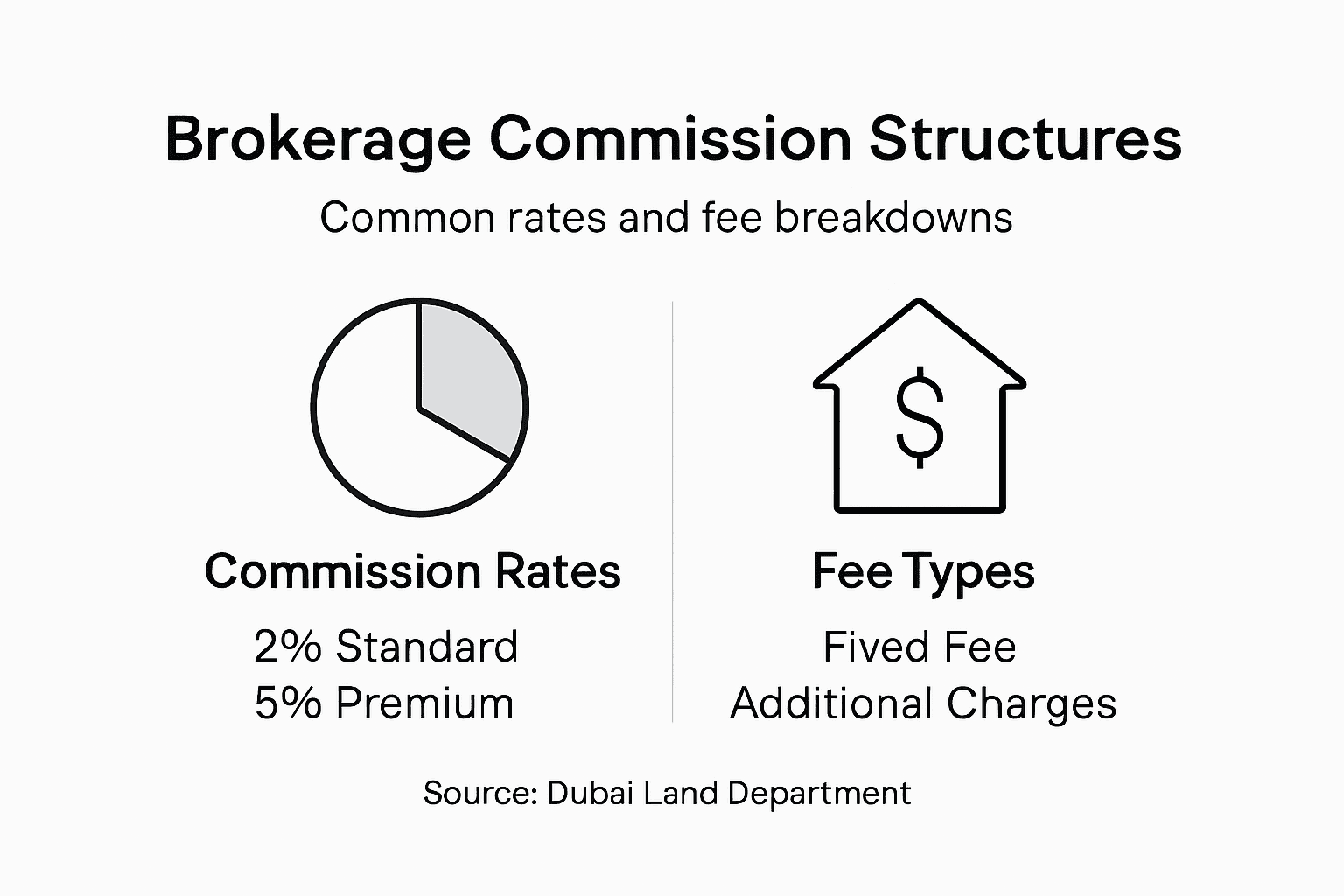
Commission rates typically range between 2% and 5% of the property’s total transaction value, with specific percentages negotiated based on property type, market segment, and individual brokerage policies. Broker fees are legally structured to ensure fair compensation while maintaining transparency and professional accountability.
Financial liabilities in brokerage transactions extend beyond simple commission calculations. Brokers must maintain professional liability insurance, demonstrate financial stability, and ensure complete transparency in all monetary transactions. These requirements protect both investors and brokers by establishing clear expectations and legal safeguards against potential disputes or financial misconduct.
Pro tip: Always request a detailed, written breakdown of commission structures and potential additional fees before finalizing any real estate transaction.
Risks, Compliance, and What to Avoid
Dubai’s real estate market demands rigorous risk management and compliance protocols to protect investors from potential financial and legal vulnerabilities. Understanding and navigating these complex regulatory landscapes is crucial for maintaining transaction integrity and minimizing potential risks.
Key compliance and risk mitigation strategies include:
Comprehensive due diligence on all transaction parties
Thorough background verification of clients
Implementing robust anti-money laundering procedures
Maintaining transparent financial documentation
Regular risk assessments and internal audits
Continuous professional training on regulatory changes
Strict adherence to data protection standards
Corporate governance frameworks play a critical role in minimizing institutional risks. Brokerages must establish clear internal policies that anticipate potential compliance challenges, create accountability mechanisms, and develop proactive risk management strategies that protect both the organization and its clients.
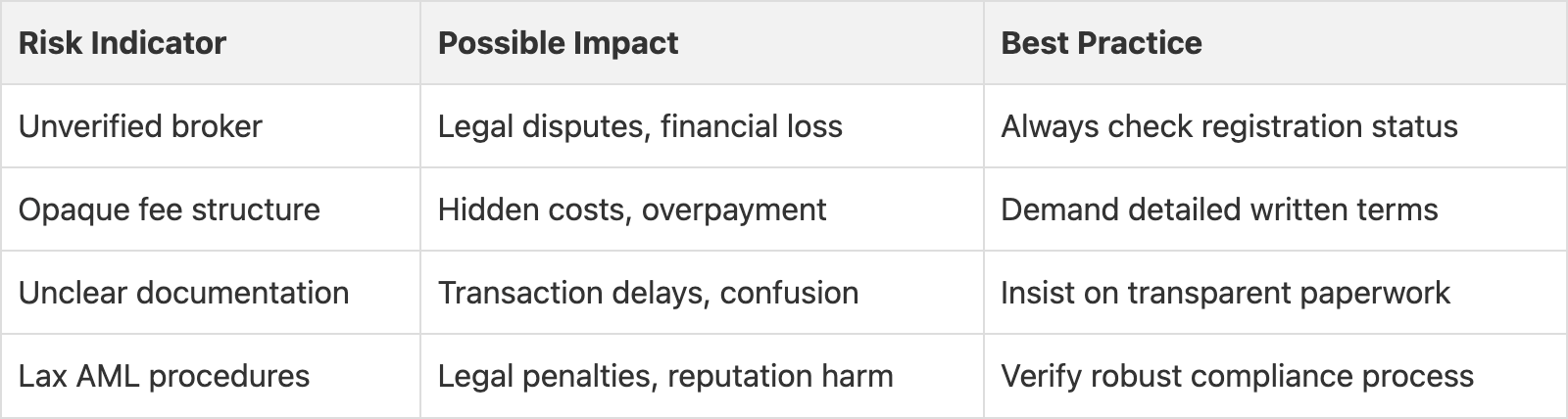
Investors should be particularly cautious of red flags such as unverified brokers, opaque transaction processes, unusual payment structures, and brokers unwilling to provide comprehensive documentation. These warning signs can indicate potential fraudulent activities or systemic compliance failures that could compromise investment security.
The following table summarizes major compliance risks and recommended precautions for Dubai property investors:
Pro tip: Request comprehensive compliance documentation and independently verify a broker’s regulatory credentials before initiating any real estate transaction.
Unlock the Full Potential of Dubai Real Estate with Expert Brokerage Guidance
Navigating Dubai’s complex real estate brokerage landscape requires more than just basic knowledge. This article highlights critical challenges investors face such as understanding commission structures, ensuring legal compliance, and managing transaction risks. Without expert support, investors may feel overwhelmed by opaque fee arrangements and regulatory requirements. If you value clarity and confidence in every step of your property investment journey, partnering with a seasoned professional is essential.
Anthony Joseph stands out as a highly awarded Dubai-based broker offering tailored solutions that address these exact pain points. From personalized property sales and off-plan investments to comprehensive transaction management and company formation, his expertise transforms complex brokerage concepts into smooth, transparent processes you can trust. Benefit from Anthony’s proven track record, deep local market insights, and commitment to legal compliance to protect and grow your investment.
Take control of your investment success today

Explore how Anthony Joseph’s comprehensive real estate services can turn potential risks into strategic advantages. Visit Anthony Joseph’s official site to get expert guidance on Dubai property transactions, verify brokerage credentials, and access all-encompassing investment solutions. Your next smart investment move begins here at https://anthonyjosephaj.com.
Frequently Asked Questions
What is the role of a real estate broker in property transactions?
Real estate brokers act as intermediaries who manage complex property transactions, providing market insights, negotiating deals, and overseeing legal documentation to ensure a smooth process for buyers and sellers.
How do I distinguish between a real estate broker and a real estate agent?
A real estate broker typically holds advanced certifications and can operate independently, while real estate agents work under the supervision of a broker. This structure ensures accountability and high industry standards.
What should I consider when choosing a real estate brokerage?
It’s important to evaluate factors such as the brokerage’s specialization, fee structure, and track record to ensure they align with your specific investment objectives and needs.
What are the common commission structures in real estate brokerage?
Common commission structures include percentage-based commissions, flat fee arrangements, and hybrid models, typically ranging from 2% to 5% of the property’s total transaction value.


