

Dubai Commercial Property: What Investors Must Know
The search for secure, high-yield investments often leads global investors to consider Dubai’s vibrant commercial real estate market. With options spanning office spaces, retail units, warehouses, and industrial sites, Dubai presents a versatile array of opportunities, all backed by transparent regulations and strong government oversight. For those ready to navigate both lucrative property prospects and strategic visa pathways, this guide highlights essential insights into the unique commercial property segments, investment rules, and residency advantages that set Dubai apart from other international investment hubs.
Table of Contents
Defining Dubai Commercial Property Investments
Dubai commercial property investments represent sophisticated real estate opportunities in one of the world’s most dynamic urban markets. These investments typically encompass office spaces, retail locations, warehouses, and specialized commercial complexes that offer investors strategic asset appreciation and potential rental income streams. Unlike residential properties, commercial real estate in Dubai requires a nuanced understanding of market dynamics, legal frameworks, and economic ecosystems.
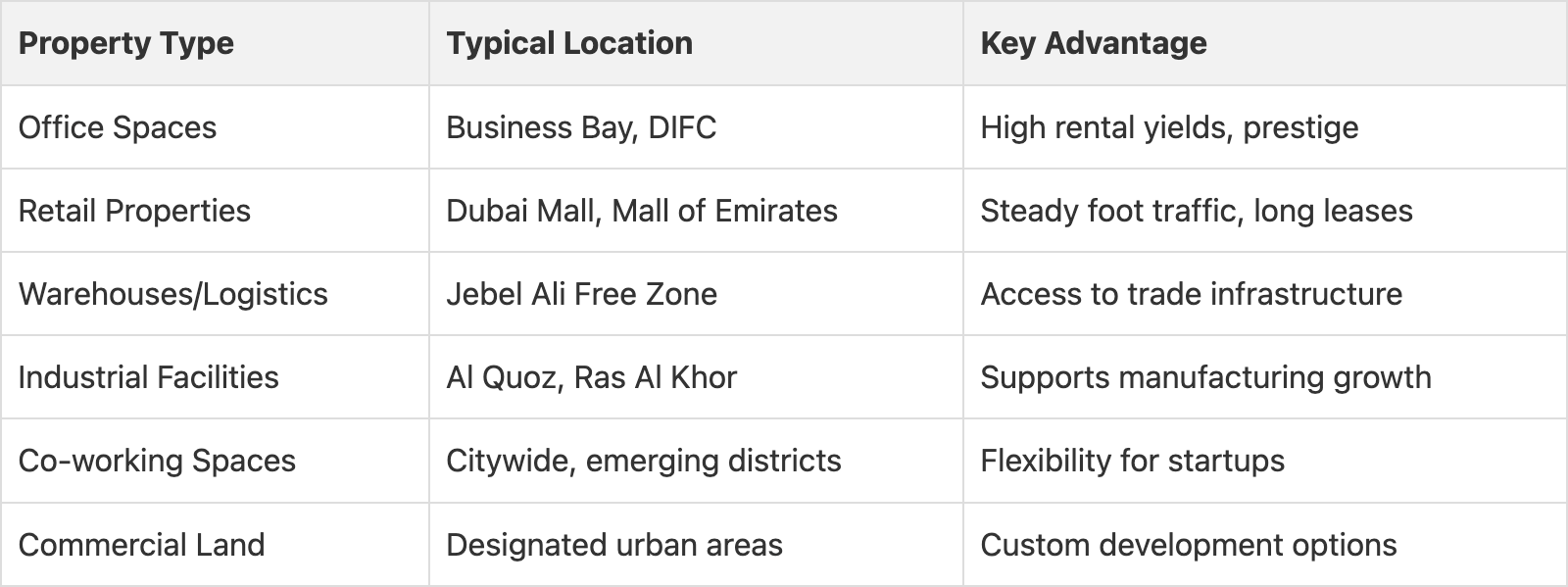
The Dubai commercial property landscape is characterized by several unique investment segments. Office spaces in premium business districts like Dubai International Financial Centre (DIFC) provide high-yielding opportunities for institutional and private investors. Retail properties in prime locations such as Dubai Mall or Mall of the Emirates represent another robust investment category with consistent foot traffic and potential long-term lease agreements. Industrial and logistics properties near strategic transport corridors like Jebel Ali Free Zone offer investors exposure to Dubai’s robust global trade infrastructure.
Investors must recognize that Dubai’s commercial property market differs significantly from traditional real estate markets. The emirate’s tax-free environment, strategic global positioning, and business-friendly regulations create a uniquely attractive investment ecosystem. Foreign investors can own commercial properties outright in designated free zones, which provides additional flexibility and potential for capital appreciation. Rental yields in premium commercial districts can range between 5% to 8% annually, making Dubai an compelling destination for real estate investment portfolios.
Pro tip: Conduct comprehensive due diligence on specific commercial property submarkets and understand the precise zoning regulations before committing significant investment capital.
Types of Commercial Properties in Dubai
Dubai’s commercial property landscape offers a diverse range of investment opportunities spanning multiple sectors and property types. Commercial real estate in Dubai encompasses a comprehensive array of property classifications designed to meet the sophisticated needs of global businesses and investors. These property types are strategically developed to support Dubai’s robust economic infrastructure and attract international commercial activities.
The primary categories of commercial properties in Dubai include several specialized segments. Office spaces represent a critical investment category, ranging from compact professional units to expansive corporate headquarters in prominent business districts like Business Bay and Jumeirah Lake Towers. Retail properties offer another lucrative segment, including standalone shops, mall-based retail spaces, and street-front commercial units catering to diverse consumer markets. Warehouses and logistics facilities provide essential infrastructure for trading and manufacturing businesses, particularly in strategic locations near transportation corridors and free zones.
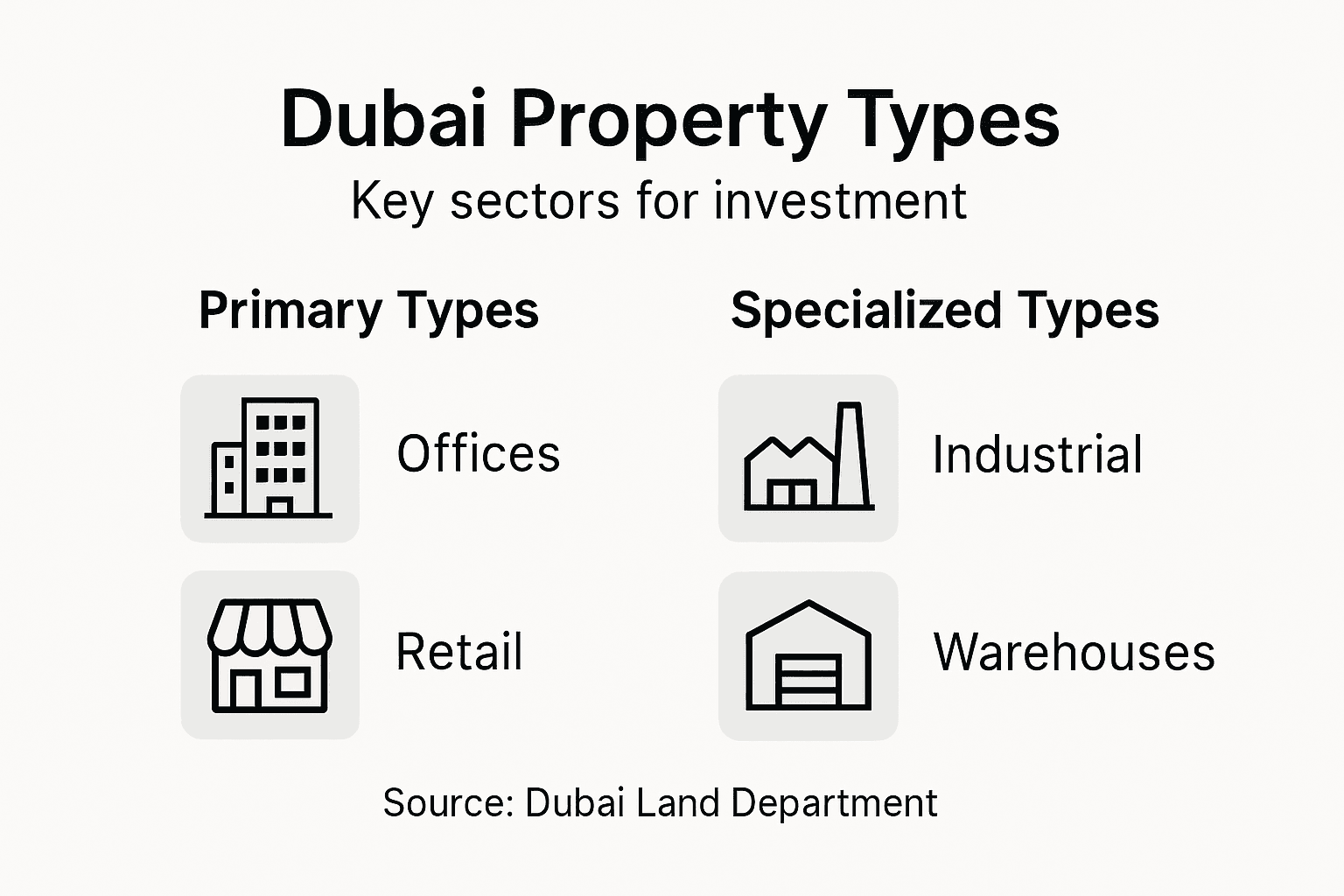
Additional specialized commercial property types further enhance Dubai’s real estate ecosystem. Industrial properties, including manufacturing facilities and showrooms, support the emirate’s growing industrial sector. Co-working spaces have emerged as a dynamic segment, reflecting the evolving nature of modern business environments. Commercial land plots represent another investment opportunity, allowing developers and businesses to create custom commercial developments tailored to specific operational requirements. Each property type offers unique investment characteristics, rental potential, and capital appreciation prospects.
Here’s a summary of the main commercial property types in Dubai and their distinct advantages:
Pro tip: Conduct thorough market research on specific commercial property submarkets and understand the precise zoning regulations and potential usage restrictions before making investment decisions.
Navigating Dubai’s Regulatory Framework
Dubai’s commercial real estate investment landscape is underpinned by a sophisticated and transparent legal infrastructure designed to protect international investors. Real estate investment regulations in Dubai are administered by key governmental bodies like the Dubai Land Department and Real Estate Regulatory Agency (RERA), which establish comprehensive guidelines to ensure market integrity and investor confidence. These regulatory frameworks create a structured environment that balances investor protection with business-friendly policies.
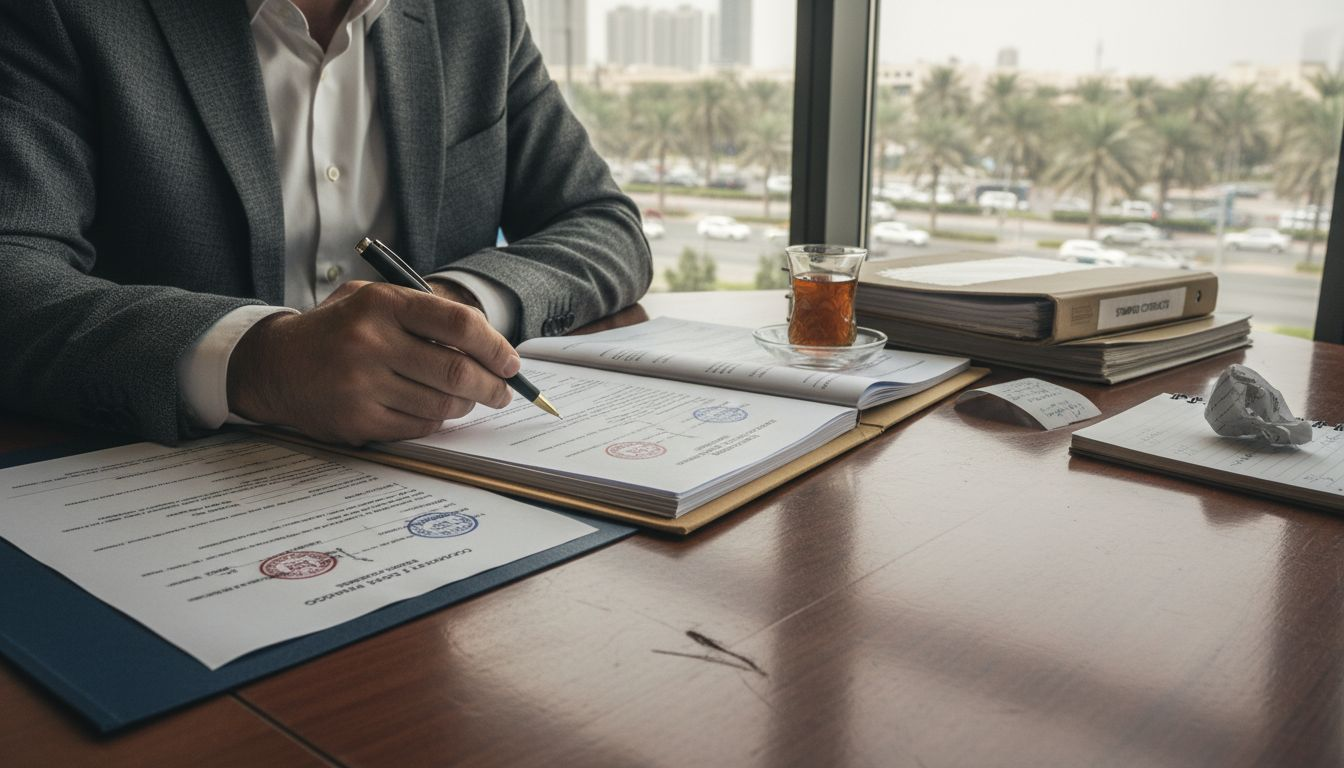
The regulatory system provides critical safeguards for commercial property investments through multiple mechanisms. Ownership regulations allow non-UAE nationals to acquire freehold properties in designated areas, a significant advantage for international investors. Strict licensing requirements for real estate agents and developers help mitigate potential fraud risks and ensure transaction transparency. The legal framework mandates comprehensive documentation, clear title transfers, and standardized processes that reduce uncertainties typically associated with international property investments. Investors must register properties with official authorities, undergo thorough due diligence checks, and comply with specific zoning and usage regulations specific to different commercial property types.
Beyond basic transactional regulations, Dubai’s investment framework includes sophisticated investor protection measures. The regulatory bodies enforce performance guarantees for developers, mandate escrow account requirements for off-plan properties, and implement robust dispute resolution mechanisms. Foreign investors benefit from a legal system that provides clear pathways for property acquisition, transfer, and potential resale. Specialized free zone regulations offer additional flexibility, allowing 100% foreign ownership in designated commercial zones and providing tax advantages that enhance the overall investment attractiveness of Dubai’s commercial real estate market.
Pro tip: Engage a local legal professional specializing in Dubai real estate regulations to conduct a comprehensive review of your specific investment parameters and ensure full compliance with current regulatory requirements.
Key Costs, Taxes, and Financial Factors
Investing in Dubai’s commercial real estate requires a comprehensive understanding of the unique financial landscape that distinguishes this market from other global investment destinations. The emirate offers a remarkably attractive financial environment characterized by zero personal income tax, no capital gains tax, and minimal transaction costs that significantly enhance overall investment returns. Acquisition costs typically range between 3% to 4% of the property value, including registration fees, transfer charges, and mandatory real estate transaction documentation.
Commercial property investments in Dubai involve several critical financial considerations beyond the initial purchase price. Rental yields for premium commercial properties can range from 5% to 8% annually, depending on location and property type. Investors should budget for additional expenses including maintenance fees, service charges, and potential renovation costs. Free zone properties offer unique financial advantages, including 100% foreign ownership, zero corporate taxes, and the ability to repatriate 100% of investment profits. These financial incentives make Dubai an exceptionally compelling destination for international commercial real estate investors seeking optimal returns with minimal fiscal complexity.
Financial strategies for Dubai commercial property investments require careful planning and sophisticated understanding of local market dynamics. Investors can leverage various financing options, including local bank mortgages, developer financing plans, and international investment structures. Transaction costs are relatively transparent, with most expenses clearly outlined during the property acquisition process. Foreign investors should anticipate additional costs such as legal fees, broker commissions, and mandatory insurance requirements. Strategic investors often utilize Dubai’s robust financial ecosystem, which includes advanced banking systems, multiple currency transaction capabilities, and streamlined investment protocols that minimize financial friction.
Compare key financial factors for Dubai commercial property investments:

Pro tip: Consult a specialized tax advisor familiar with Dubai’s real estate investment landscape to develop a comprehensive financial strategy that maximizes your investment potential and minimizes unexpected expenses.
Risks, Pitfalls, and Compliance Challenges
Commercial property investments in Dubai, while attractive, require sophisticated navigation of complex regulatory and market risks that can challenge unprepared investors. Market volatility remains a significant consideration, with property values potentially fluctuating based on global economic conditions, regional geopolitical dynamics, and local market sentiment. Investors must develop comprehensive risk mitigation strategies that account for potential economic shifts, understanding that Dubai’s real estate market can experience rapid transformations driven by international investment trends and local policy changes.
Compliance challenges represent another critical dimension of Dubai commercial property investments. Regulatory requirements demand meticulous attention to detail, with investors needing to understand nuanced legal frameworks governing property ownership, business licenses, and operational permissions. Foreign investors must navigate complex documentation processes, including obtaining appropriate visas, maintaining proper corporate structures, and ensuring ongoing compliance with local regulations. Potential risks include unexpected regulatory changes, complex bureaucratic procedures, and the potential for misinterpreting local business protocols that could compromise investment stability.
Financial and operational risks require sophisticated strategic planning. Investment vulnerabilities can emerge from multiple sources, including market oversupply, potential economic downturns, and unexpected shifts in local business ecosystems. Investors should conduct thorough due diligence, including comprehensive property inspections, detailed financial modeling, and extensive market research. Critical risk factors include potential changes in free zone regulations, unexpected maintenance costs, potential challenges with property management, and the potential for shifts in tenant demographics or commercial property demand. Strategic investors mitigate these risks through diversified investment approaches, maintaining financial flexibility, and developing robust contingency planning.
Pro tip: Engage a local legal and financial expert who specializes in Dubai commercial real estate to conduct a comprehensive risk assessment and develop a tailored risk management strategy specific to your investment objectives.
Business Setup and Visa Considerations
Navigating the business setup and visa landscape in Dubai requires strategic planning and comprehensive understanding of the emirate’s sophisticated regulatory framework. Residence visa options for commercial property investors present multiple pathways to establishing a robust business presence, with the Green Visa offering particularly attractive opportunities for entrepreneurs and investors seeking long-term residency.
Business incorporation in Dubai involves multiple strategic considerations, with investors having several options for establishing their commercial entities. Free zones provide 100% foreign ownership, tax exemptions, and streamlined corporate registration processes. Investors can choose between mainland companies, free zone establishments, and offshore corporate structures, each offering distinct advantages depending on business objectives. Visa eligibility typically requires demonstrating significant investment capital, maintaining appropriate corporate documentation, and meeting specific regulatory requirements set by local authorities.
Commercial property ownership can serve as a strategic pathway to long-term residency permits. The investment criteria generally mandate a minimum property investment around AED 2 million, with the property registered directly under the investor’s name. Strategic investors can leverage these investment-based visa programs to secure multi-year renewable residency permits, creating a comprehensive approach that combines real estate investment with personal and business immigration strategies. Additional requirements include maintaining valid health insurance, passing background checks, and demonstrating financial stability.
Pro tip: Consult a specialized Dubai business setup consultant who can provide personalized guidance on selecting the most appropriate business structure and visa pathway aligned with your specific investment goals and operational requirements.
Unlock the Full Potential of Dubai Commercial Property Investments
Investing in Dubai’s commercial real estate market comes with unique challenges including understanding regulatory frameworks, navigating business setup and visa requirements, and managing financial risks. If you want to avoid costly pitfalls and position yourself for maximum returns, you need expert guidance that covers every aspect from strategic property selection to compliance and financing. This article highlights key investment pain points such as market volatility, complex legal requirements, and the critical importance of detailed due diligence. With concepts like free zone ownership, rental yields, and multi-year residency visas playing a pivotal role, staying informed is just the starting point.

Take control of your investment journey today by working with Anthony Joseph a highly awarded Dubai real estate broker and business mentor. Explore comprehensive solutions tailored to your needs including property sales and rentals, off-plan investments, and expert business setup services to secure your foothold in Dubai’s dynamic market. Visit https://anthonyjosephaj.com to gain exclusive access to trusted advice and actionable strategies that will keep your investment protected and poised for growth.
Frequently Asked Questions
What types of commercial properties are available for investment in Dubai?
Dubai offers a variety of commercial properties, including office spaces, retail properties, warehouses, industrial facilities, co-working spaces, and commercial land. Each type has its unique investment characteristics and potential for rental income.
What are the typical rental yields for commercial properties in Dubai?
Rental yields for premium commercial properties in Dubai typically range from 5% to 8% annually, depending on the property’s location and type. This makes the market attractive for investors seeking steady returns.
What legal considerations should investors keep in mind when purchasing commercial property in Dubai?
Investors must understand ownership regulations, zoning laws, and licensing requirements. Typically, non-UAE nationals can acquire freehold properties in designated areas, but strict documentation and legal compliance are necessary.
What are the major costs associated with investing in commercial real estate in Dubai?
Key costs include acquisition fees (typically 3% to 4% of the property value), ongoing maintenance fees, service charges, and potential renovation expenses. There are also no corporate taxes in free zones, making the financial environment favorable for investors.


