
How to close property deals in Dubai: A complete guide
TL;DR:
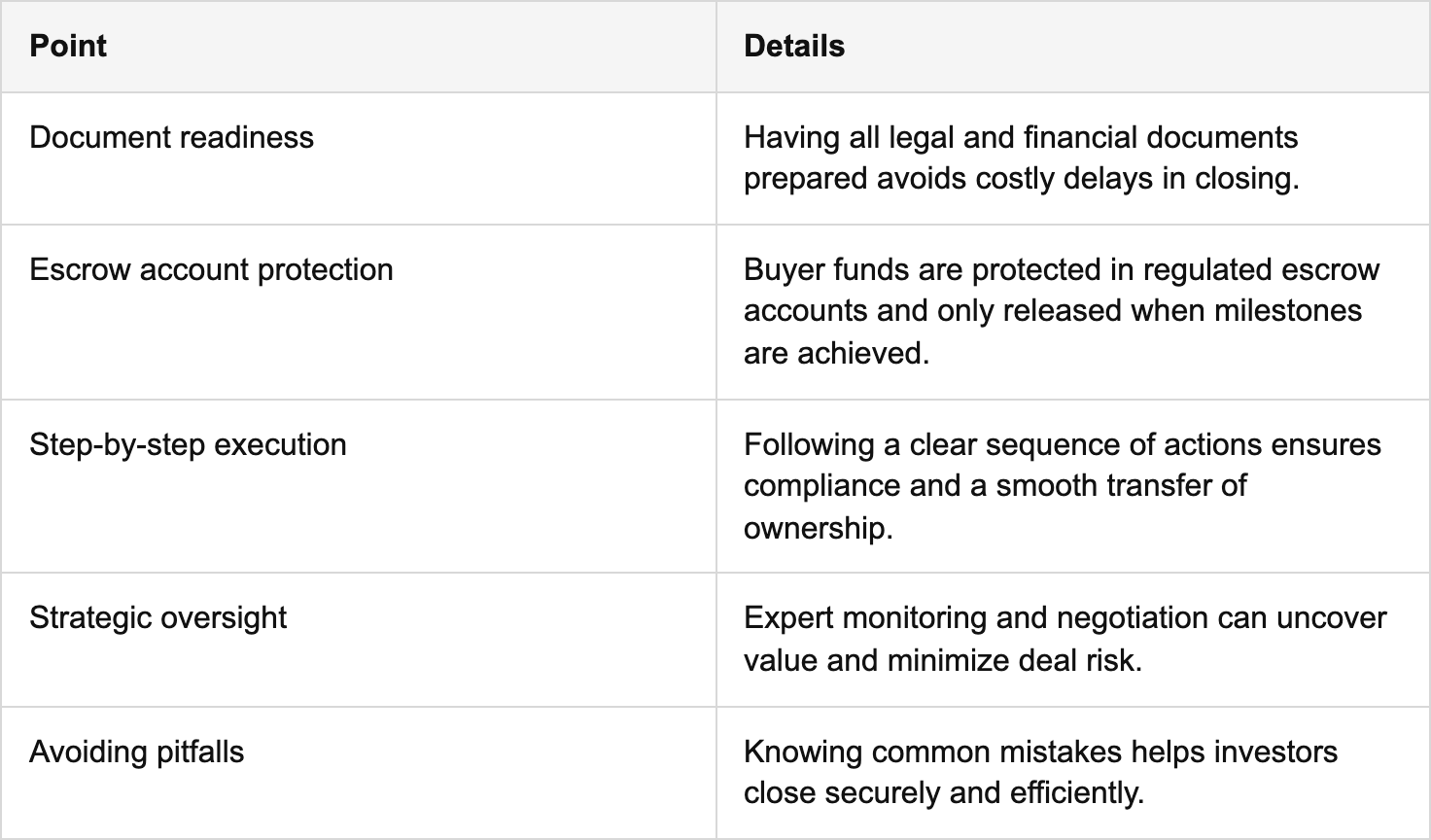
- Closing a property deal in Dubai requires meticulous preparation, including key documents, escrow verification, and understanding the transaction stages.
- The process involves generating and signing a legally binding SPA, transferring funds into regulated escrow accounts, and conducting thorough snagging and registration to secure ownership legally.
Closing a property deal in Dubai carries real financial weight. One missed document, an unverified escrow account, or a skipped snagging inspection can delay your transaction by weeks, expose you to legal liability, or cost you hundreds of thousands of dirhams. Dubai’s property market moves fast, and its regulatory framework, overseen by the Dubai Land Department (DLD), demands precision at every stage. This guide walks you through every requirement, step, and safeguard so you can close your next deal with confidence, speed, and full legal protection.
Table of Contents
- What you need before closing: Key requirements for Dubai deals
- Step-by-step deal closing process in Dubai
- How escrow protection works in Dubai real estate
- Common pitfalls and expert strategies: Make closing seamless
- Our perspective: Why mastering the process is your true competitive edge
- Get expert help for your Dubai deal closing
- Frequently asked questions
Key Takeaways
What you need before closing: Key requirements for Dubai deals
Before diving into the step-by-step process, make sure you have these essentials in place to set the stage for a smooth closing.
Preparation is not optional in Dubai’s market. The DLD has strict documentation and registration requirements, and missing even one item can halt your deal mid-process. If you are unfamiliar with the full steps to buying in Dubai, reviewing them before you begin will save you significant time.
Core documents you need as a buyer
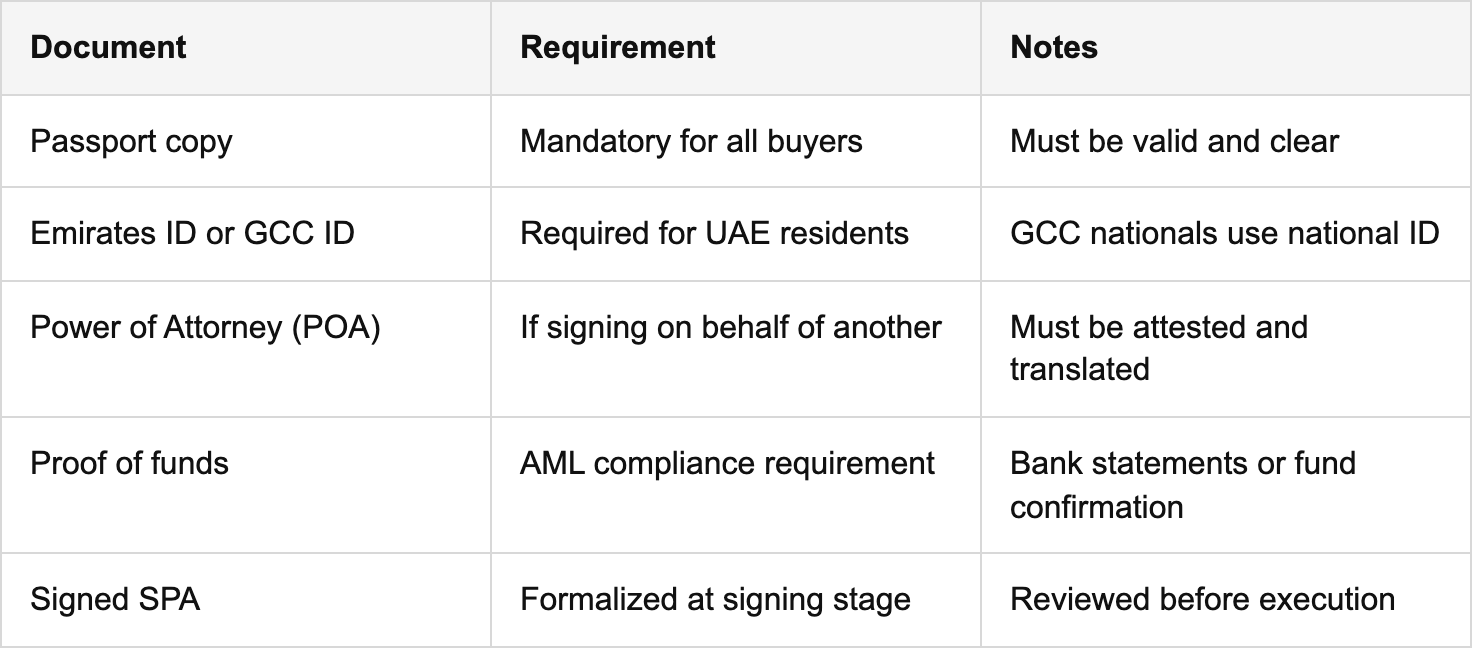
Anti-money laundering (AML) regulations in Dubai require buyers to demonstrate the lawful source of their purchase funds. This is not a formality. The DLD, financial institutions, and developers all verify this documentation, and gaps in your proof of funds can trigger compliance holds.

For off-plan purchases specifically, you must also confirm the developer’s registration with the Real Estate Regulatory Agency (RERA) and verify the project’s dedicated escrow account. As the Dubai Land Department FAQ clarifies, off-plan deal closing is effectively split into two stages: contract and registration with payment during construction via a Sale and Purchase Agreement (SPA) and DLD-regulated escrow protection, and then final handover and title deed registration after construction completion, snagging and inspection, and clearance of all outstanding amounts. Understanding this split from the outset prevents confusion about when you actually take ownership.
You should also establish your DLD account and complete registration on the DLD’s digital platforms before proceeding. This account is your gateway to all eServices, including SPA generation and title deed viewing. Running through a thorough due diligence checklist at this stage, covering developer reputation, property title status, and project completion timeline, will protect your capital before a single dirham changes hands.
Pro Tip: Always request the project’s RERA-issued escrow account number and cross-check it against the DLD’s official registry before signing anything. Fraudulent escrow account details have been used in real estate scams, and verification takes less than five minutes online.
Step-by-step deal closing process in Dubai
With the prerequisites ready, let’s walk through the essential steps for closing a property deal, whether off-plan or completed, in Dubai.
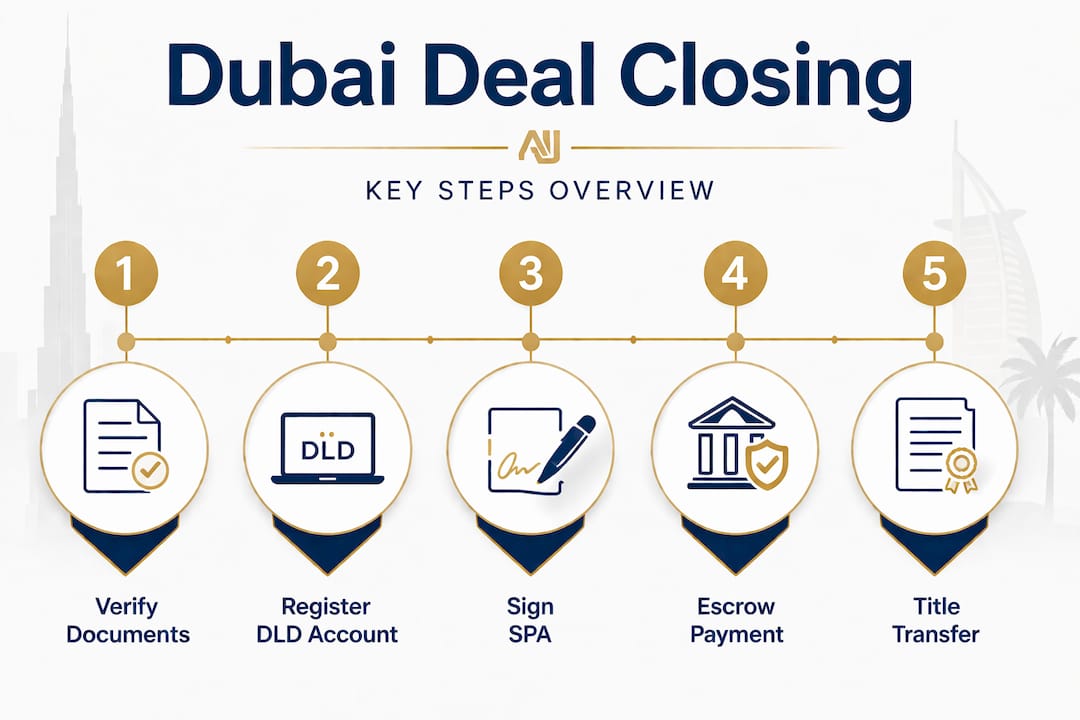
Dubai’s DLD has digitized much of this process through its “Dubai Now” platform. The DLD’s digital transaction flow documents a clear closing sequence: generate the SPA via a sale request, sign the SPA with both parties present or through an attested POA, transfer the purchase amount and service fees to the escrow account, then view the title deed and receipt. Here is that sequence in full detail.
The six core closing steps
-
Generate and review the Sale and Purchase Agreement (SPA). The SPA is the legally binding contract between buyer and seller. It details the purchase price, payment schedule, handover date, penalty clauses, and the obligations of both parties. Review every clause carefully, particularly payment milestone schedules for off-plan properties, before anything is signed.
-
Sign the SPA. Both buyer and seller must execute the SPA, either in person or through an attested Power of Attorney. For international investors closing remotely, the POA must be notarized in the country of origin and attested by the UAE embassy. Any error here can invalidate the agreement.
-
Transfer the purchase amount and service fees to the escrow account. Funds move into the DLD-regulated project escrow account, not directly to the developer. DLD service fees (currently 4% of the property value) are paid at this stage. Ensure wire transfer references match the SPA details exactly.
-
Monitor construction milestones (off-plan buyers). During the construction period, payment tranches are released from escrow only after RERA certifies that the corresponding build milestone has been reached. As a buyer, you have the right to request milestone completion certificates before authorizing any payment release.
-
Conduct handover and snagging inspection upon completion. When the developer issues a completion notice, you have the right to inspect the property. Snagging, which means identifying and documenting defects before final acceptance, is a critical step that many buyers rush or skip entirely. Do not sign any handover certificate until every defect has been recorded and a remediation timeline is confirmed in writing.
-
Register the title deed with the DLD. Once handover is accepted and all outstanding balances are cleared, you apply for title deed registration at a DLD service center or through the online portal. Keys are released, and the final receipt is issued. You are now the registered owner.
Off-plan vs. completed property: Key differences
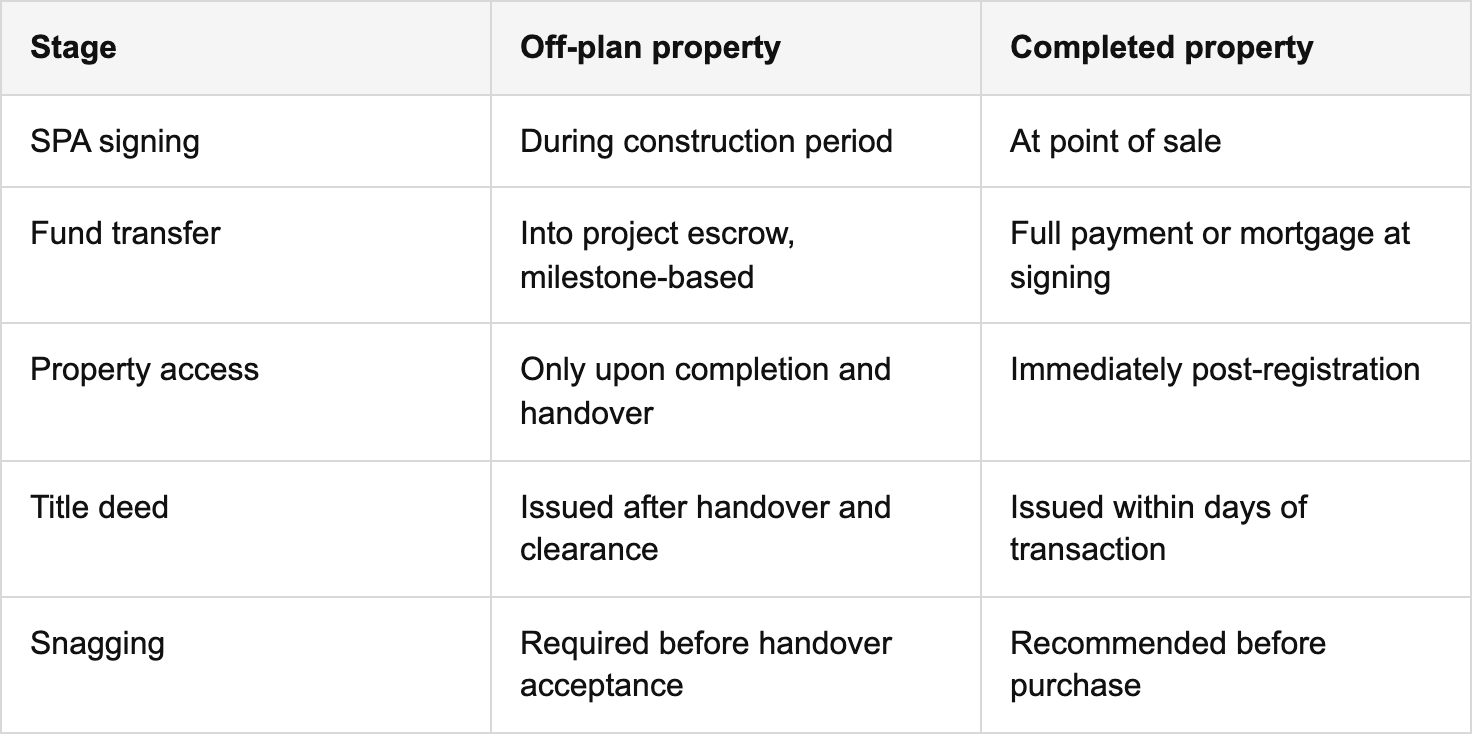
Reviewing the full property sales workflow in Dubai will help you map each of these steps onto your specific transaction type. For investors with complex deal structures, advanced property sales strategies can also provide tactical insights for negotiating terms at the SPA stage.
Pro Tip: Request a detailed payment schedule from your developer and cross-reference it with the RERA-approved construction milestone plan. Discrepancies between the two are a red flag that warrants legal review before you commit funds.
How escrow protection works in Dubai real estate
A crucial safeguard for property buyers, the escrow process in Dubai creates additional protections. Here is how it works, and what you need to check.
Dubai’s escrow framework is one of the strongest regulatory protections available to off-plan buyers anywhere in the region. The DLD escrow system requires that buyer funds for off-plan units are deposited into project-specific escrow accounts, and that construction milestones are verified before any funds are released to the developer. This means your capital is not accessible to the developer on demand. It is held and released by a regulated escrow agent only after independent verification.
“Escrow protection in Dubai means your investment is tied to physical progress, not developer promises. Each dirham released corresponds to certified construction advancement.”
Here is what the escrow framework covers and what you as a buyer must independently verify:
- Verify the escrow account number against the DLD’s official database before transferring any funds. Every legitimate off-plan project in Dubai has a registered escrow account on the DLD platform.
- Confirm the escrow agent’s authorization. Escrow agents must be licensed by the DLD. Unlicensed agents are a serious fraud risk.
- Track milestone certifications. RERA issues milestone completion certificates based on physical inspections. You should request copies of these certificates each time a payment tranche is triggered.
- Understand the scope of protection. Escrow protects your funds during construction. It does not cover disputes over SPA terms, finish quality, or post-handover defects. These require separate legal remedies.
- Know what happens if a project stalls. If a developer fails to meet milestones, DLD has the authority to intervene. Buyers may be able to reclaim funds or have the project transferred to a new developer, though this process takes time and legal navigation.
For a detailed explanation of how these accounts function and the rights they confer, the guide on escrow accounts in Dubai real estate provides in-depth coverage. If you want a broader view of how escrow fits into the investment landscape, the Dubai property investment guide is a strong reference point.
Common pitfalls and expert strategies: Make closing seamless
Now that you understand the formal process, avoid these common missteps and apply expert tips for a smoother, more secure transaction.
Even experienced investors make predictable errors in Dubai’s deal closing process. These mistakes are avoidable when you know where they occur and why they happen.
Most common mistakes investors make
- Skipping or rushing due diligence. Buyers eager to secure a property sometimes skip verification of the developer’s RERA registration or the escrow account status. This is among the costliest errors possible.
- Unclear understanding of developer obligations. Not every payment milestone clause in an SPA is standard. Some developers include terms that shift significant obligations or liability to the buyer. Always have the SPA reviewed by a qualified real estate lawyer before signing.
- Failing to verify escrow compliance. Transferring funds to an unverified or incorrectly referenced account is irreversible in many cases. Triple-check bank and account details against official DLD records.
- Payment delays triggering penalty clauses. Most SPAs include late payment penalties, sometimes up to 1% per month on outstanding balances. Missing a milestone payment deadline, even by a few days, can trigger automatic charges.
- Accepting handover without a full snagging report. Signing the handover certificate before documenting all defects surrenders your legal right to remediation at the developer’s cost.
As the Dubai Land Department FAQ confirms, off-plan investors should distinguish contract execution from handover: you can be fully committed contractually during construction, but you do not get possession or keys and final registration milestones until the completion notice is issued, inspections and snagging are completed, and all outstanding payments are cleared. Many investors assume being “under contract” means they have access to the property. They do not, until all those conditions are met.
Expert strategies that protect your position
- Commission a professional snagging company before accepting handover. Independent inspectors identify defects that untrained eyes miss, from plumbing pressure issues to electrical faults to structural cracks.
- Negotiate defect resolution in writing before signing handover. Get written confirmation from the developer outlining remediation timelines for every snagging item.
- Use a real estate lawyer for SPA review on any transaction above AED 1 million. Legal fees are a fraction of what a poorly structured SPA can cost you.
- Document every communication with the developer. Email trails, payment confirmations, and milestone certificates form a legal record that protects you in any dispute.
For sharper negotiation positioning at the SPA stage, real estate negotiation tips offers practical tactics. If you are thinking beyond a single asset to a broader investment strategy, building your real estate portfolio in Dubai outlines how deal closing efficiency compounds across multiple holdings.
Pro Tip: Before your final handover walkthrough, hire a licensed snagging company that uses thermal imaging and pressure testing. Structural and concealed defects discovered after you sign the handover certificate become your responsibility to fix at your own cost.
Our perspective: Why mastering the process is your true competitive edge
Most investors treat deal closing as the administrative tail end of an investment decision. They do the hard thinking on location, price, and rental yield, then hand the closing process to someone else. That is a strategic mistake, and it is one we see consistently among mid-market investors who plateau while top performers keep scaling.
The deal closing process is not paperwork. It is where risk is eliminated or embedded. Every stage, from SPA negotiation to escrow verification to snagging, is an opportunity to improve your position, protect your capital, or identify problems before they become expensive. Investors who treat closing as a checkbox exercise are the ones who end up in disputes, tied up in remediation battles, or locked into unfavorable SPA terms they did not fully read.
Seasoned professionals in Dubai’s market use each closing stage strategically. The SPA review is a negotiation. The snagging inspection is leverage. The escrow milestone verification is proof of delivery. When you understand each of these levers, you close faster, pay less in disputes, and build a portfolio with cleaner legal titles. Those interested in expanding into profitable commercial deals will find that this same process discipline translates directly into higher-value transactions with more complex structures.
The investors who consistently outperform in Dubai are not the ones with the most capital. They are the ones with the clearest process.
Get expert help for your Dubai deal closing
If you want personalized guidance for your next deal or to maximize your Dubai investments, our team is ready to help.
Closing deals in Dubai’s market requires more than a checklist. It requires the kind of judgment that comes from closing hundreds of transactions across different property types, developer relationships, and legal structures. At anthonyjosephaj.com, you get direct access to Anthony Joseph’s expertise as a highly awarded Dubai-based real estate broker with a track record of guiding investors through off-plan purchases, completed property acquisitions, and complex portfolio transactions.

Whether you need support with SPA review, escrow verification, snagging coordination, or full transaction management from listing to title deed, the team offers hands-on, tailored service for investors who take their capital seriously. Reach out today to discuss your next deal and ensure every step of your closing is handled with precision and full compliance.
Frequently asked questions
What is a SPA in Dubai real estate transactions?
SPA stands for Sale and Purchase Agreement, which legally binds both parties and establishes the purchase price, payment schedule, and obligations for the property deal. Under the DLD’s closing sequence, generating and signing the SPA is the first formal step before any funds are transferred.
How does escrow protect buyers in Dubai?
Dubai property purchase funds are deposited in a DLD-regulated escrow account and released only when milestones are verified, protecting buyers from project defaults or developer insolvency during construction.
When do I get my title deed in an off-plan Dubai property purchase?
You receive the title deed after handover, meaning after construction is complete, you have finished snagging, and you have cleared all outstanding amounts as required by the DLD.
What documents are needed to close a deal in Dubai?
You need a valid passport copy, Emirates or GCC ID, proof of funds for AML compliance, a signed SPA, and full compliance with DLD regulations. For off-plan purchases, the two-stage closing requirement means additional documentation is needed at both the registration and handover stages.


