
7 Key Legal Requirements for Dubai Expats Explained
Moving to Dubai as an expatriate can feel overwhelming when every step comes with its own rules and procedures. Whether you want to secure legal residency, open a bank account, or start a business, the legal requirements can trip you up if you are not prepared. Missing a single step could lead to delays or even put your new life in Dubai on pause.
This list breaks down the most important legal requirements you must follow as an expat, from understanding residence visas to registering your address with local authorities. Each tip gives you clear, actionable guidance so you can avoid legal troubles and build a solid foundation for your life in Dubai. Get ready to discover practical solutions and expert strategies that will help you meet every requirement with confidence.
Table of Contents
1. Understand Dubai Residency Visas and Permits
Navigating Dubai’s residency visa system is crucial for expatriates planning to live and work in this dynamic city. The General Directorate of Residency and Foreigners Affairs manages all visa and permit services, creating a structured pathway for legal residency.
Dubai offers several types of residence visas tailored to different expatriate needs:
Work Visas: Linked to employment contracts
Investment Visas: For entrepreneurs and business owners
Family Sponsorship Visas: Allowing residents to bring dependents
Student Visas: For educational purposes
Retirement and Golden Visas: For long-term residents
To obtain a residence visa, you must complete a comprehensive process that includes:
Securing an entry permit
Passing a medical fitness examination
Registering for an Emirates ID
Completing visa stamping procedures
Successful visa applicants must demonstrate medical fitness and pass security background checks to ensure legal residency.
Expats should be aware that each visa category has specific requirements and documentation. The process typically involves collaboration between your employer or sponsor and the immigration authorities.
Pro tip: Always maintain updated documentation and start your visa application process well in advance to avoid potential legal complications.
2. Register Your Address with Local Authorities
Registering your address is a critical legal requirement for expatriates in Dubai. The Ejari system serves as the official platform for tenancy contract registration and legal address recognition.
Every expat must complete address registration through a structured process that involves several key steps:
Secure a valid residence visa
Sign a tenancy contract
Register the contract through Ejari within 30 days
Update Emirates ID with registered address
The registration process provides multiple important benefits:
Legal recognition of your residential status
Access to government services
Utility setup permissions
Protection for both tenants and landlords
Address registration is not optional but a mandatory requirement for all UAE residents.
Documentation needed for address registration typically includes your tenancy contract, passport, residence visa, and Emirates ID. The process can be completed online through official government portals or at authorized typing centers.
Pro tip: Keep digital and physical copies of all address registration documents and ensure timely renewal to maintain continuous legal residency status.
3. Open a Dubai Bank Account Legally
Opening a bank account in Dubai requires navigating specific legal requirements for expatriates. Understanding the banking regulations for non-residents is crucial for successful financial integration.
To legally open a bank account in Dubai, expatriates must prepare a comprehensive documentation package:
Valid passport
Residence visa
Emirates ID
Proof of address
Salary certificate or employment letter
Minimum initial deposit
Bank account options vary based on your residency status:
Residents can open current and savings accounts
Non-residents typically have limited savings account access
Digital banking platforms offer streamlined application processes
Popular banks for expatriates include Emirates NBD, Mashreq, and ADCB. Each institution has unique requirements and documentation protocols.
Compliance with Anti-Money Laundering regulations is mandatory during the entire banking process.
Key requirements include maintaining proper documentation and understanding each bank’s specific eligibility criteria. Some banks provide online application options to simplify the process.
Pro tip: Always contact multiple banks to compare account opening requirements and choose the option that best matches your financial profile and residency status.
4. Follow Rules for Property Ownership
Navigating property ownership in Dubai requires understanding specific legal frameworks designed for expatriates. Property ownership rules vary significantly from other international real estate markets.
Expatriates can purchase property in designated freehold zones with several important considerations:
Ownership duration limited to 99-year leases
Specific geographical restrictions apply
Investment thresholds determine visa eligibility
Different rules exist across various emirates
Key ownership structures include:
Full freehold ownership
Usufruct rights
Long-term leasehold agreements
Restricted ownership in certain zones
Expatriate property investors must comply with Dubai Land Department regulations for legal acquisition.
Important documentation includes ownership deeds, registration certificates, and proof of investment. Your property purchase can potentially link directly to residency permit eligibility depending on investment value.
Registration requirements demand careful attention to legal protocols and precise documentation submission to ensure smooth property transfer.
Pro tip: Consult specialized real estate legal experts to navigate complex ownership regulations and verify your specific eligibility before making any property investment.
5. Know Business Setup Licenses and Approvals
Establishing a business in Dubai requires navigating a complex landscape of legal business structures and regulatory requirements. Understanding the licensing process is crucial for successful entrepreneurial ventures.
Business license types in Dubai encompass multiple categories:
Commercial licenses
Industrial licenses
Professional licenses
Tourism licenses
Agricultural licenses
Key steps for business setup involve:
Select appropriate business legal structure
Register a unique trade name
Obtain initial government approvals
Apply for specific industry license
Complete digital registration processes
Recent regulatory changes now allow 100% foreign ownership for most business sectors.
Licensing requirements vary significantly based on business activity and sector. Digital platforms have streamlined application processes making registration more accessible for international entrepreneurs.
Documentation and approvals differ depending on your specific business model. Some sectors may require additional specialized permissions beyond standard commercial licensing.
Pro tip: Consult with a local business setup expert to navigate sector-specific requirements and ensure complete compliance with Dubai’s evolving regulatory landscape.
6. Comply with Tax and Financial Reporting
The UAE’s evolving tax landscape requires expatriate businesses to navigate complex corporate tax regulations with precision and strategic planning. Understanding these requirements is crucial for maintaining legal and financial compliance.
Key tax considerations for expatriate businesses include:
Corporate tax rate of 9% on annual profits
VAT registration requirements
Mandatory tax return filing
Maintaining comprehensive financial records
Obtaining Tax Residency Certificates
Critical tax compliance steps involve:
Register with Federal Tax Authority
Track annual profit thresholds
File tax returns within nine months
Maintain accurate financial documentation
Understand sector-specific tax exemptions
Proper tax planning can significantly impact your business financial strategy.
Taxation thresholds are specific. Corporate tax applies to profits exceeding AED 375,000 annually, with nuanced regulations for free zone businesses. VAT remains consistently set at 5% for most goods and services.
Business owners must remain vigilant about changing regulations and maintain meticulous financial records to ensure smooth tax reporting and compliance.
Pro tip: Engage a local tax consultant specializing in UAE regulations to navigate complex tax requirements and maximize potential exemptions.
7. Respect Employment and Labor Laws
Navigating the complex landscape of employment regulations in Dubai requires understanding the comprehensive legal framework designed to protect both employers and employees.
Key aspects of UAE labor laws for expatriates include:
Mandatory fixed-term employment contracts
Regulated working hours (8 hours daily, 48 hours weekly)
Minimum annual leave entitlements
Wage Protection System compliance
Anti-discrimination provisions
Critical employment compliance steps involve:
Understand work permit requirements
Verify employment contract terms
Know overtime and leave regulations
Register with Ministry of Human Resources
Maintain transparent workplace practices
Employers must adhere to strict guidelines protecting workers’ fundamental rights.
Employment contract requirements mandate clear documentation of job responsibilities, compensation, and terms of employment. The law provides robust mechanisms for dispute resolution and workplace protections.
Expats should familiarize themselves with nuanced regulations around remote work, part-time employment, and termination procedures to ensure full legal compliance.
Pro tip: Always retain a copy of your employment contract and understand your rights under UAE labor law before accepting any job offer.
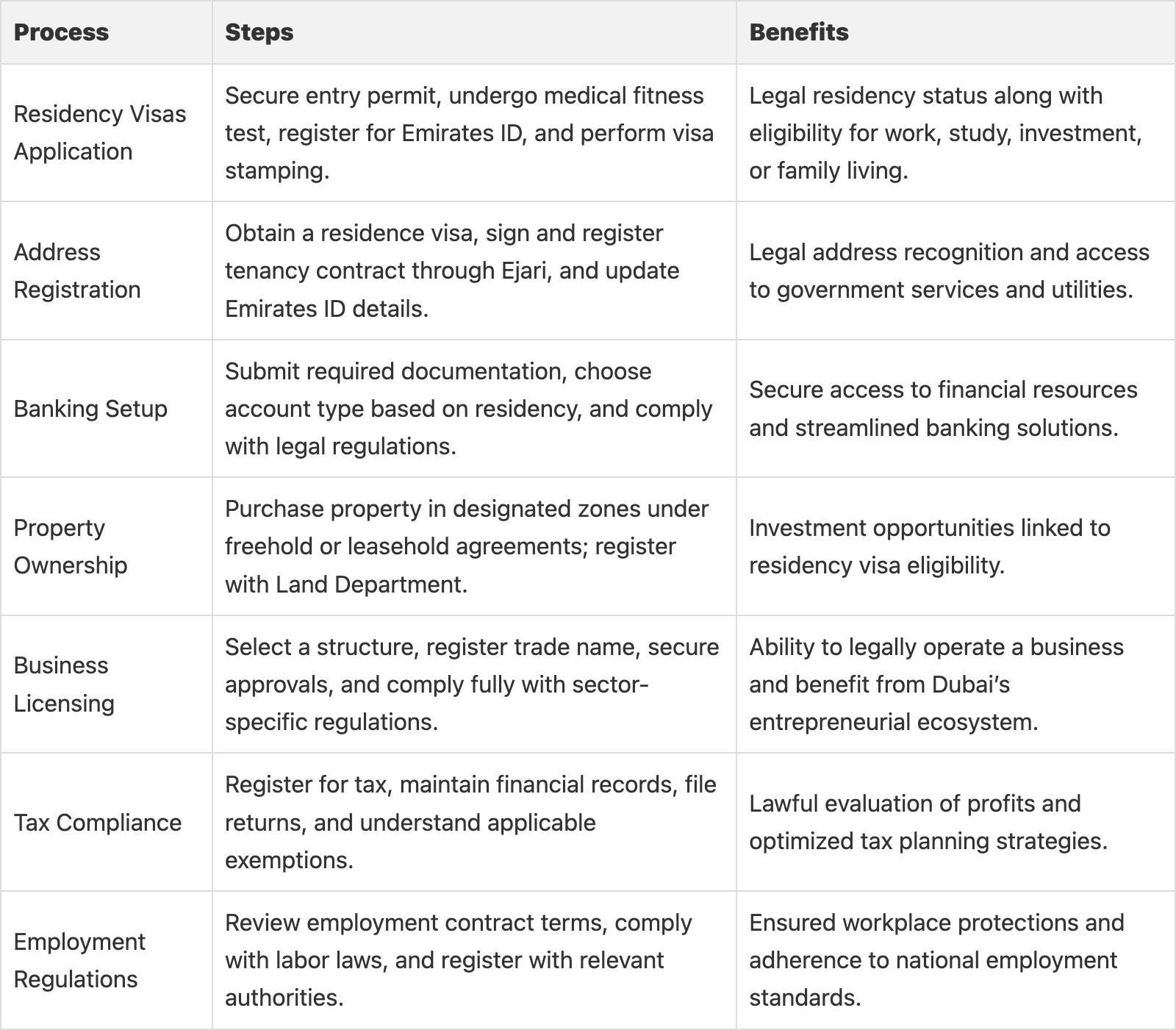
Below is a comprehensive table summarizing the key guidance and steps outlined in the article regarding navigating Dubai’s residency, legal, and financial systems for expatriates.
Master Dubai Residency and Real Estate with Anthony Joseph
Navigating the complex legal requirements for Dubai expats can feel overwhelming. From understanding residency visas and address registration to property ownership and business setup, the challenges are real. Key issues like visa compliance, property purchase regulations, and employment laws demand expert guidance to avoid costly mistakes and ensure a smooth transition.

Unlock your peace of mind by partnering with Anthony Joseph, a highly awarded Dubai-based real estate broker and business mentor. With deep expertise in property sales, rentals, off-plan investments, and company formation, Anthony offers tailored solutions that simplify every step of your Dubai journey. Visit Anthony Joseph AJ to explore comprehensive services designed for expatriates seeking legal compliance and smart investment opportunities. Start securing your future in Dubai today by getting professional advice that aligns with your residency and real estate goals.
Frequently Asked Questions
What types of residence visas are available for expats in Dubai?
Dubai offers several types of residence visas, including work visas, investment visas, family sponsorship visas, student visas, and retirement visas. To apply, determine which visa category fits your situation and prepare the necessary documentation.
What is the process for registering my address in Dubai?
To register your address in Dubai, you must secure a valid residence visa, sign a tenancy contract, and register the contract through the Ejari system within 30 days. Follow these steps promptly to ensure legal recognition of your residency status.
How can I legally open a bank account in Dubai as an expatriate?
To legally open a bank account in Dubai, you need to gather a valid passport, residence visa, Emirates ID, proof of address, and employment letter. Once you have the necessary documents, contact your chosen bank to start the application process.
What are the legal requirements for property ownership as an expat in Dubai?
As an expat, you can purchase property in designated freehold zones in Dubai. Be aware that ownership options may include long-term leases or usufruct rights, and you will need to comply with local regulations and documentation requirements when acquiring property.
What are the key steps for getting a business license in Dubai?
To obtain a business license in Dubai, select your business structure, register a unique trade name, and apply for the necessary industry-specific license. Complete these steps and submit your application to ensure your business is legally recognized within the required timeframe.
How do I stay compliant with tax regulations as an expatriate business owner in Dubai?
To comply with tax regulations, register with the Federal Tax Authority and keep accurate financial records. Aim to file your tax returns within nine months after the end of your financial year to avoid penalties and ensure compliance.


