

How to Rent Property in Dubai for Luxury Living
Searching for luxury rentals in Dubai as a European or North American expatriate quickly reveals how much the right guidance matters. Defining what you truly need among dazzling options is just the start, especially with Dubai’s new Smart Rental Index offering a detailed look at property quality and amenities. From choosing the ideal neighborhood to understanding legal rules and securing your residency, this guide helps high-net-worth expatriates confidently navigate Dubai’s upscale rental market and avoid costly mistakes.
Table of Contents
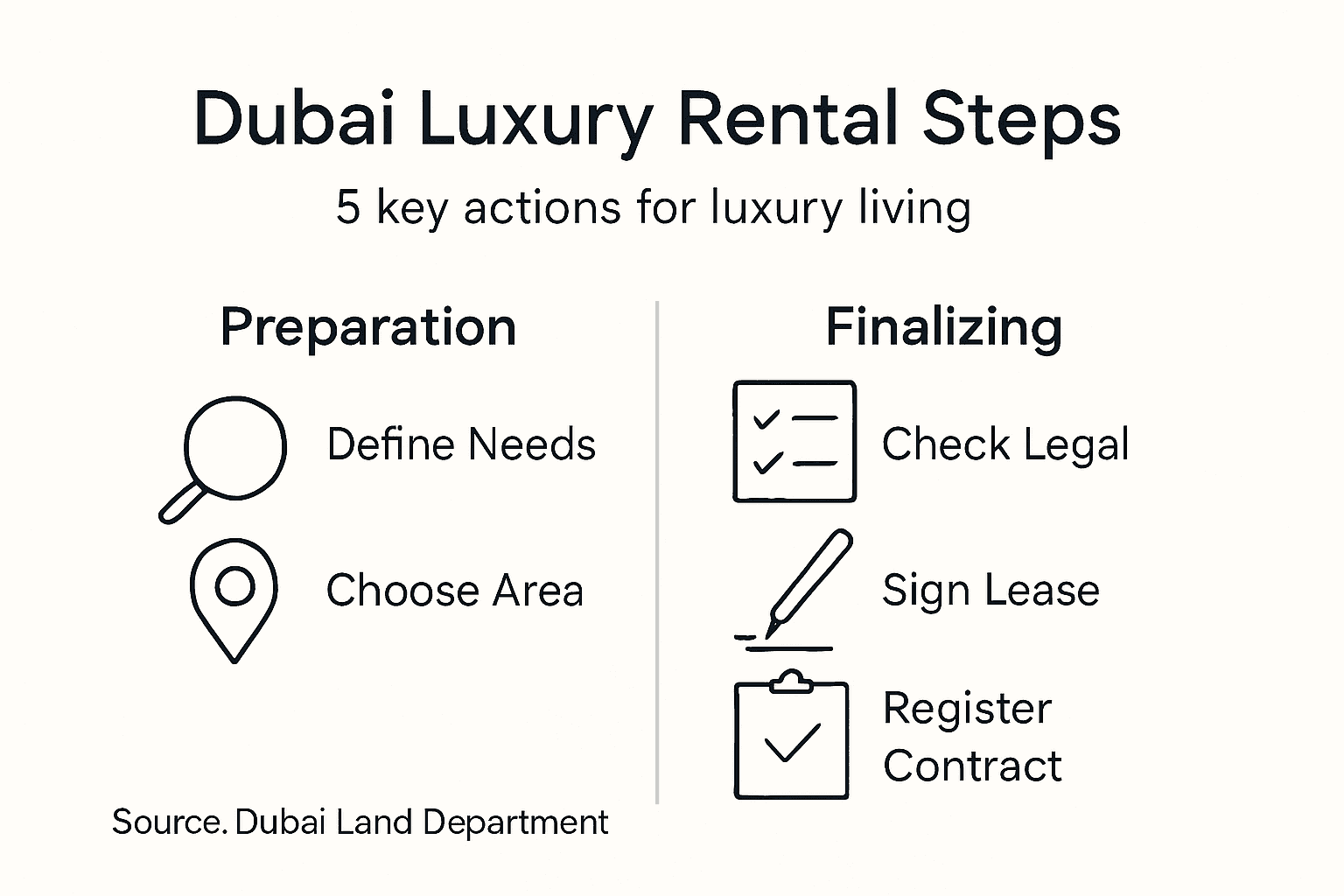
Step 1: Define rental needs and preferences
Before you start scrolling through luxury listings, take time to understand what you actually need versus what you think you want. This distinction matters because Dubai’s rental market offers endless options, and without clear priorities, you’ll waste time chasing properties that don’t align with your lifestyle. Spend an hour identifying your non-negotiables versus your nice-to-haves.
Start by considering your daily routines and work commitments. Are you commuting to an office in Downtown Dubai or the Business Bay area? Do you need proximity to international schools for your children? Will you be hosting business associates or entertaining frequently? Your answers shape everything from location preferences to floor plan requirements. A penthouse in Downtown Dubai offers prestige and walkability, while a villa in Arabian Ranches provides privacy and space. Neither is objectively better, but one fits your life better than the other.
Location fundamentally affects your experience. Consider which neighborhoods align with your lifestyle. Palm Jumeirah appeals to those seeking beachfront glamor and established expatriate communities. Downtown Dubai offers urban convenience and proximity to restaurants, galleries, and business hubs. Emirates Hills attracts families wanting villa living with top-rated schools nearby. The Creek Harbour area appeals to those seeking contemporary development with waterfront appeal. Each delivers a completely different Dubai experience, so choose based on how you actually spend your time.
Evaluate the specific amenities and property features that matter to you. Dubai’s Smart Rental Index provides a comprehensive framework for assessing rental quality by examining technical features, finishes, maintenance standards, location advantages, and available services. Does your property need a home gym, wine cellar, or cinema room? How important is building security and concierge service? Do you need a maid’s room, multiple ensuite bedrooms, or a dedicated office for remote work? Create a realistic list based on your actual needs, not Instagram aesthetics.
Budget serves as your ultimate boundary. High-net-worth expatriates often think about budget last, but defining your rental range first prevents you from falling in love with properties beyond your comfort zone. Dubai’s luxury rentals range from 8,000 AED monthly for exceptional one-bedroom apartments to 50,000 AED or higher for premium villas. Know your ceiling before you start viewing properties.
Pro tip: Document your preferences in writing with specific criteria (neighborhood, size, amenities, budget, lease term), then share this list with a qualified Dubai real estate broker who understands your background and requirements. This clarity saves months of browsing and positions you to act decisively when the right property appears.
Step 2: Research Dubai’s luxury neighborhoods
Now that you understand your preferences, it’s time to explore which neighborhoods actually match your lifestyle. Dubai’s luxury rental market spans several distinct communities, each with its own character, demographics, and appeal. Spending time researching these areas prevents expensive mistakes and helps you discover neighborhoods you hadn’t considered.
Start by visiting neighborhoods in person rather than relying solely on online photos. Walk through the communities during different times of day. Visit on a weekday morning to experience the weekday pace, then return on a Friday evening to feel the social energy. Stop at local cafes, visit the nearby shopping options, and talk to residents. You’ll quickly discover whether a neighborhood feels like home or simply looks good on a developer’s website.
Understand the practical realities of each area. Palm Jumeirah offers beachfront living and exclusive gated access, but traffic congestion during peak hours can be significant. Downtown Dubai provides urban walkability and world-class dining, but noise levels and parking can challenge some residents. Emirates Hills delivers villa living with school access and space, yet requires a car for most daily activities. The Marina attracts younger professionals with its energy and connectivity, while older families often prefer the quieter appeal of Arabian Ranches or Jumeirah Golf Estates. Know the trade-offs before committing.

Research neighborhood amenities and services that support your daily life. Check proximity to international schools, healthcare facilities, and gyms. Verify whether the area has the restaurants and retail experiences you actually use. Understand public transportation options if you don’t want to drive everywhere. Some luxury neighborhoods have excellent co-working spaces and business facilities for remote workers, while others cater primarily to families seeking residential peace. Match the neighborhood infrastructure to your actual needs.
Investigate the rental market dynamics and vacancy rates in each area. Some neighborhoods experience higher demand during specific seasons, affecting availability and pricing. Speak with local real estate professionals who can explain current market conditions and predict future trends. Building relationships with knowledgeable agents now saves you time when you’re ready to negotiate a lease.
Pro tip: Spend at least one week living temporarily in your top two neighborhoods before committing to a long-term lease. Staying in a short-term apartment or hotel in each area reveals daily inconveniences that research alone cannot uncover, from traffic patterns to noise levels to actual commute times.
Here’s a comparison of Dubai’s leading luxury neighborhoods to help guide your selection:

Step 3: Verify property and legal requirements
Before signing any lease agreement, you must verify that the property is legally legitimate and that you understand your rights as a tenant. This step protects you from fraudulent listings, undisclosed liabilities, and future disputes. Taking time to verify now prevents costly problems later.
Request the property’s title deed from the landlord or agent and verify it through official channels. The Dubai Land Department offers title deed verification services that confirm ownership legitimacy and legal validity. This official verification protects you from renting a property with disputed ownership or hidden liens. Never proceed without seeing the original title deed and confirming its authenticity through the government portal.
Understand Dubai’s rental laws and your rights as a tenant. The Rental Dispute Settlement Center (RDSC) governs landlord and tenant relationships. Key regulations include caps on annual rent increases, notice periods for lease termination, and rules about security deposits. As a high-net-worth expatriate, you should know that properties in certain developments like Downtown Dubai and The Residences operate under different rules than villa communities. Rent increases cannot exceed 5% annually under current regulations, and landlords must provide proper notice before non-renewal.
Confirm the property’s compliance with Dubai Municipality regulations. Verify that the property has valid occupancy permits and has passed all required inspections. Check whether utilities are properly registered and that water and electricity accounts can be transferred to your name. Ask about any outstanding municipal violations or pending compliance issues. Properties with regulatory violations may face restrictions that affect your residency or usage rights.
Review the lease agreement carefully before signing. Ensure it specifies the exact rental amount, payment schedule, lease duration, and renewal terms. Confirm that all promised amenities are documented in writing. Clarify your responsibilities for maintenance versus the landlord’s obligations. Request that the lease include standard protections for deposits and specify conditions for return. Consider hiring a legal consultant familiar with Dubai real estate to review complex agreements before you commit.
Pro tip: Request a Property Condition Report before signing, documenting the existing condition of all appliances, fixtures, and structural elements with photos and timestamps. This protects your deposit because it establishes baseline conditions and prevents disputes about damage claims.
The following table summarizes essential legal and property checks before signing a Dubai luxury lease:

Step 4: Negotiate terms and finalize agreement
Negotiation is where you secure favorable terms that protect your interests and ensure the rental aligns with your needs. Most landlords expect some level of discussion, and your position as a high-net-worth expatriate gives you legitimate leverage. Approach negotiations professionally but strategically.
Identify your negotiation priorities before entering discussions. Determine which elements matter most to you, whether that’s rental price, flexible payment terms, furnished versus unfurnished conditions, or specific amenities and services. Separate your must-haves from your nice-to-haves. If a property is perfect except for the price, you have room to negotiate. If you need immediate occupancy but the landlord prefers later availability, that’s a discussion point. Know your walk-away point before you start talking.
Research comparable rental rates in the same neighborhood and property type. Landlords often price properties higher initially, expecting negotiation. Understanding market rates gives you concrete talking points when discussing rental amounts. Properties identical in size and amenities typically rent within a predictable range. Use this information to propose fair counteroffer amounts rather than arbitrary numbers. Reasonable landlords respect market-based arguments more than emotional appeals.
Propose payment structures that benefit both parties. Many landlords prefer annual or semi-annual payments because it reduces administrative burden and provides payment security. If you prefer monthly payments, offer to pay a slight premium or provide a guarantor to offset the landlord’s risk. Explore whether the landlord will accept bank transfers, checks, or other arrangements that work for your financial situation. Flexible payment discussion often resolves quickly when both parties see mutual benefit.
Request specific lease amendments in writing before signing. Ask for clarity on furnished versus unfurnished specifications, maintenance responsibility clarification, renewal terms, and early termination conditions. Negotiate whether utilities are included, who handles repairs, and what constitutes normal wear versus damage requiring deposit deduction. Get everything documented in the final lease rather than relying on verbal agreements that disappear when disputes arise.
Obtain written confirmation of all agreements and keep copies. Once terms are settled, ensure the formal lease reflects every negotiated point. Review the final document carefully to confirm all amendments are included. Request copies for both parties and maintain organized records of all correspondence and agreements. Digital copies stored securely prevent document loss and provide evidence if disputes emerge later.
Pro tip: Negotiate a 30-day rent-free period for property inspections and minor repairs before occupancy begins, or request rent reduction for the first month to account for moving costs. Most landlords accept this compromise readily because it demonstrates your financial seriousness and commitment to the agreement.
Step 5: Complete registration and move in
You’re nearly at the finish line. Now you must register your tenancy contract officially with Dubai authorities and handle the practical logistics of moving into your new luxury home. This final step transforms you from a prospective tenant into a legally recognized resident.
Register your tenancy contract immediately after signing through the Dubai Land Department’s Ejari system. Ejari tenancy registration is mandatory and provides legal proof of your tenancy while enabling utilities activation and residency documentation. Both you and your landlord can initiate the registration process through the online portal using your Emirates ID or passport. The registration requires your signed lease, passport copies, property details, and a nominal fee. Processing typically takes one to two business days, after which you receive an electronic certificate that serves as official proof of your tenancy.
Activate utilities in your name before moving in. Contact Dubai Municipality and the utility providers to transfer or establish accounts for electricity and water. You’ll need your Ejari registration certificate to complete this process. Schedule meter readings with the previous tenant present to avoid disputes about consumption charges. Request that utilities be activated on your move-in date so you arrive to a functioning home. This process typically takes three to five business days, so initiate it as soon as your registration is complete.
Arrange your residency visa and Emirates ID if you haven’t already. Your Ejari certificate serves as proof of residence required for visa processing. As a high-net-worth expatriate, you may qualify for longer-term residency visas depending on your circumstances. Work with immigration specialists or your employer if they sponsor visas. Having your residency documents processed before moving in eliminates stress and ensures you’re legally established in Dubai.
Conduct a detailed move-in inspection with your landlord or property manager. Walk through every room, photograph the condition of all elements, and document any existing damage. Compare findings against the Property Condition Report completed earlier. Both parties should sign off on the inspection report. This protection prevents your landlord from later claiming you caused pre-existing damage and attempting to deduct from your security deposit.
Arrange for transfer of household services and subscriptions. Notify your previous landlord’s internet provider of your departure and arrange new service at your Dubai property. Update your address with banks, insurance providers, and any subscription services. Forward your mail address if needed. These logistical details ensure your transition is seamless and your communications reach you reliably.
Pro tip: Schedule your move-in inspection and utilities activation for a weekday morning when landlord, utility technicians, and building staff are available and responsive. This timing prevents weekend delays and ensures all services are activated while professional support is accessible to troubleshoot any issues immediately.
Unlock Your Dubai Luxury Rental Experience with Expert Guidance
Navigating Dubai’s luxury rental market can feel overwhelming as you balance location preferences, legal verifications, and negotiation strategies. You want a seamless process that aligns perfectly with your lifestyle priorities and protects your investment. This article highlights critical steps like understanding Dubai’s Smart Rental Index, verifying title deeds, and negotiating lease terms effectively. These challenges often leave high-net-worth expatriates longing for expert insight and personalized support.
That is where Anthony Joseph comes in. As a highly awarded Dubai-based real estate broker with unmatched local expertise, Anthony offers tailored solutions that simplify your journey. Whether you need professional assistance in selecting prime neighborhoods like Palm Jumeirah or Downtown Dubai, thorough legal and compliance checks, or strategic lease negotiations, Anthony’s services cover every step. Benefit from his deep market knowledge and trusted connections to secure your luxury home without the usual stress.

Ready to elevate your Dubai rental experience and avoid costly mistakes? Visit Anthony Joseph’s Website to access comprehensive real estate strategies, personalized consultations, and expert support. Discover how Anthony Joseph’s expertise transforms challenges into opportunities and ensures you enjoy Dubai’s luxury lifestyle with confidence. Take the first step now and turn your dream rental into reality.
Frequently Asked Questions
What should I consider first when renting property in Dubai for luxury living?
Before renting, define your essential needs, such as location, amenities, and budget. Spend an hour listing your non-negotiables versus nice-to-haves to streamline your search and focus on properties that align with your lifestyle.
How do I find the right luxury neighborhood in Dubai?
To find the best neighborhood, visit potential areas in person and explore during different times of day. Spend a week living short-term in your top choices to experience the local vibe, traffic patterns, and amenities firsthand.
What legal checks do I need to perform before signing a lease in Dubai?
Verify the property’s title deed through official channels to ensure legitimate ownership. Always confirm the compliance of the property with local regulations and thoroughly read the lease agreement for specific terms before committing.
How can I negotiate better rental terms for a luxury property in Dubai?
Enter negotiations with clear priorities about what matters most to you, whether it’s rental price or amenities. Research comparable rental rates and propose fair counteroffers based on market insights to strengthen your position.
What steps should I take after signing a lease for a luxury property in Dubai?
Immediately register your tenancy contract with Dubai authorities and activate utilities in your name. Schedule a move-in inspection with the landlord to document the property’s condition and ensure everything is ready for your arrival.
How long does it typically take to complete the registration of a tenancy contract in Dubai?
Registering your tenancy contract typically takes one to two business days once you’ve submitted the required documents. Promptly handle this registration to facilitate utility activation and residency documentation.


