
Dubai Business Licensing Step by Step Guide 2026
Starting a business in Dubai offers incredible opportunities, but navigating the licensing process can feel overwhelming. With multiple jurisdictions, varying regulations, and detailed documentation requirements, entrepreneurs often struggle to understand which license they need and how to obtain it efficiently. Getting it wrong leads to costly delays, fines, and operational restrictions. This comprehensive guide walks you through every step of securing your Dubai business license in 2026, helping you avoid common pitfalls and establish your venture with confidence.
Table of Contents
- Understanding Dubai’s Business Licensing Landscape
- Preparing To Apply: Essential Requirements And Choosing Your Business Activity
- Step By Step Process To Obtain Your Dubai Business License In 2026
- Common Challenges And How To Avoid Licensing Pitfalls In Dubai
- Get Expert Help With Your Dubai Business Licensing Today
- Frequently Asked Questions About Dubai Business Licensing
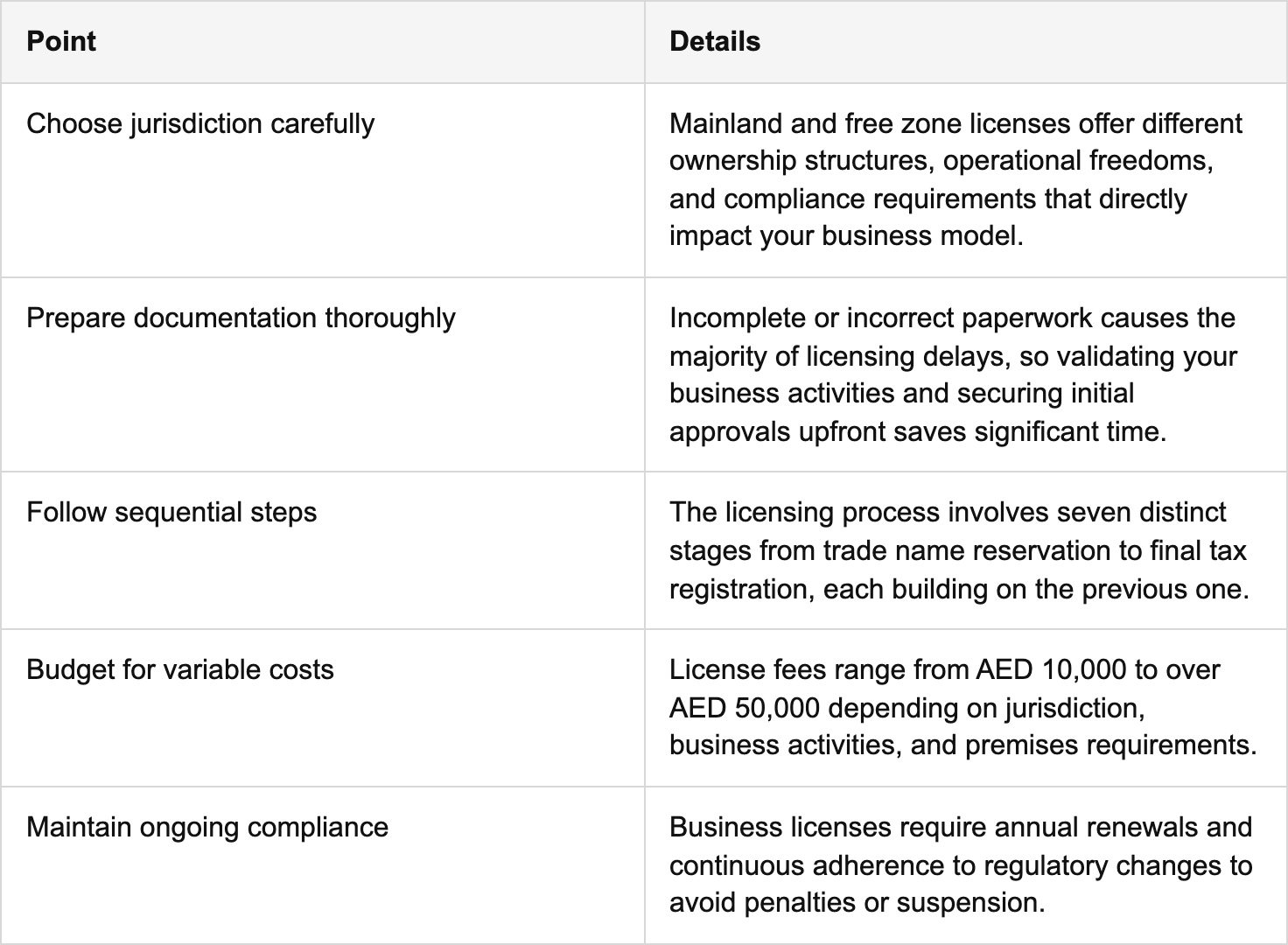
Key takeaways
Understanding Dubai’s business licensing landscape
Before diving into applications, you need to grasp how Dubai’s regulatory framework operates. The UAE has a mixed legal system rooted in civil law traditions and Islamic Sharia principles, which shapes business regulations and licensing requirements. This dual foundation means certain business activities face additional scrutiny or restrictions based on Sharia compliance.
The most critical decision you will make involves choosing between mainland and free zone jurisdictions. Mainland licenses, issued by the Department of Economy and Tourism, allow you to operate anywhere in the UAE and conduct business directly with local markets. Free zone licenses restrict your operations to that specific free zone and international markets, though recent reforms have expanded some trading capabilities. The UAE has over 40 economic free zones, each governed by its own authority with unique regulations and incentives.
Choosing between mainland and free zone affects legal capacity, regulatory oversight, tax treatment, and scalability. Mainland companies can sponsor more visas and access government contracts, while free zones offer 100% foreign ownership and simplified setup procedures. Understanding free zone company setup benefits helps you align your jurisdiction choice with long-term business goals.
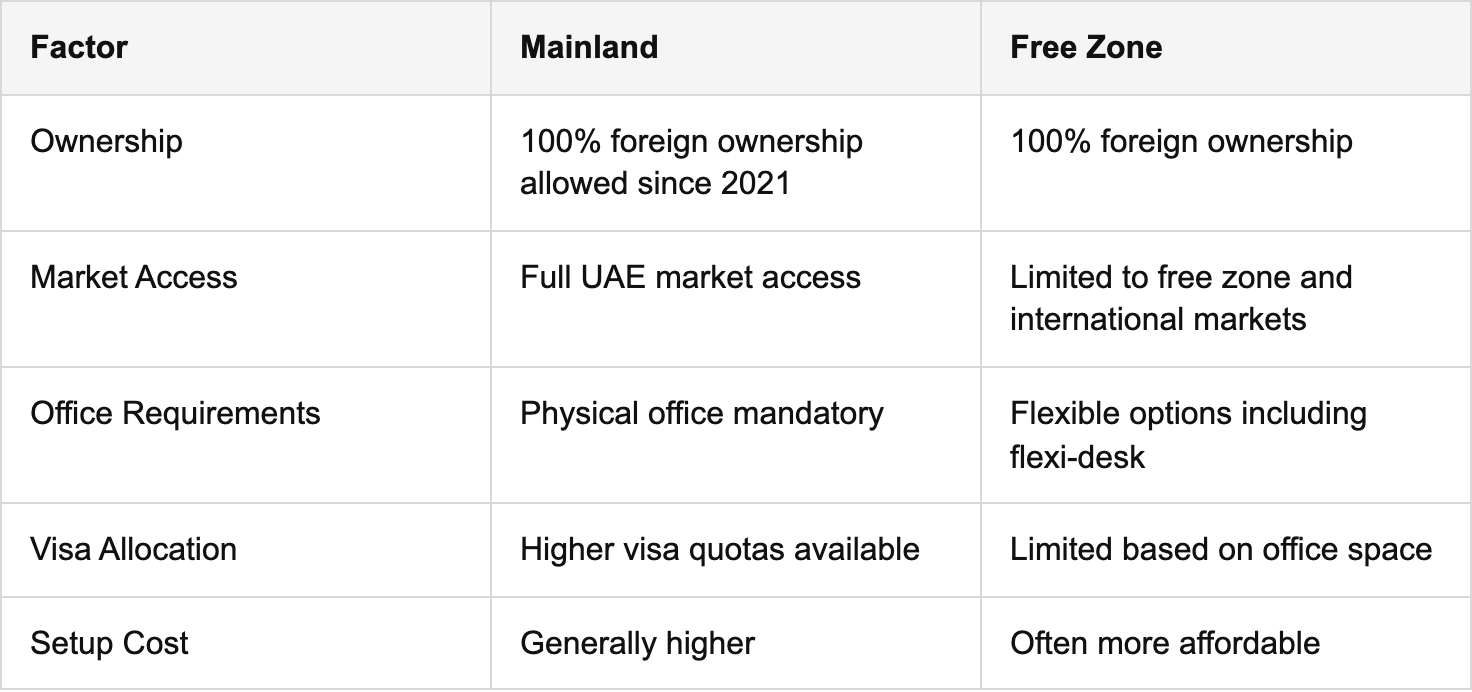
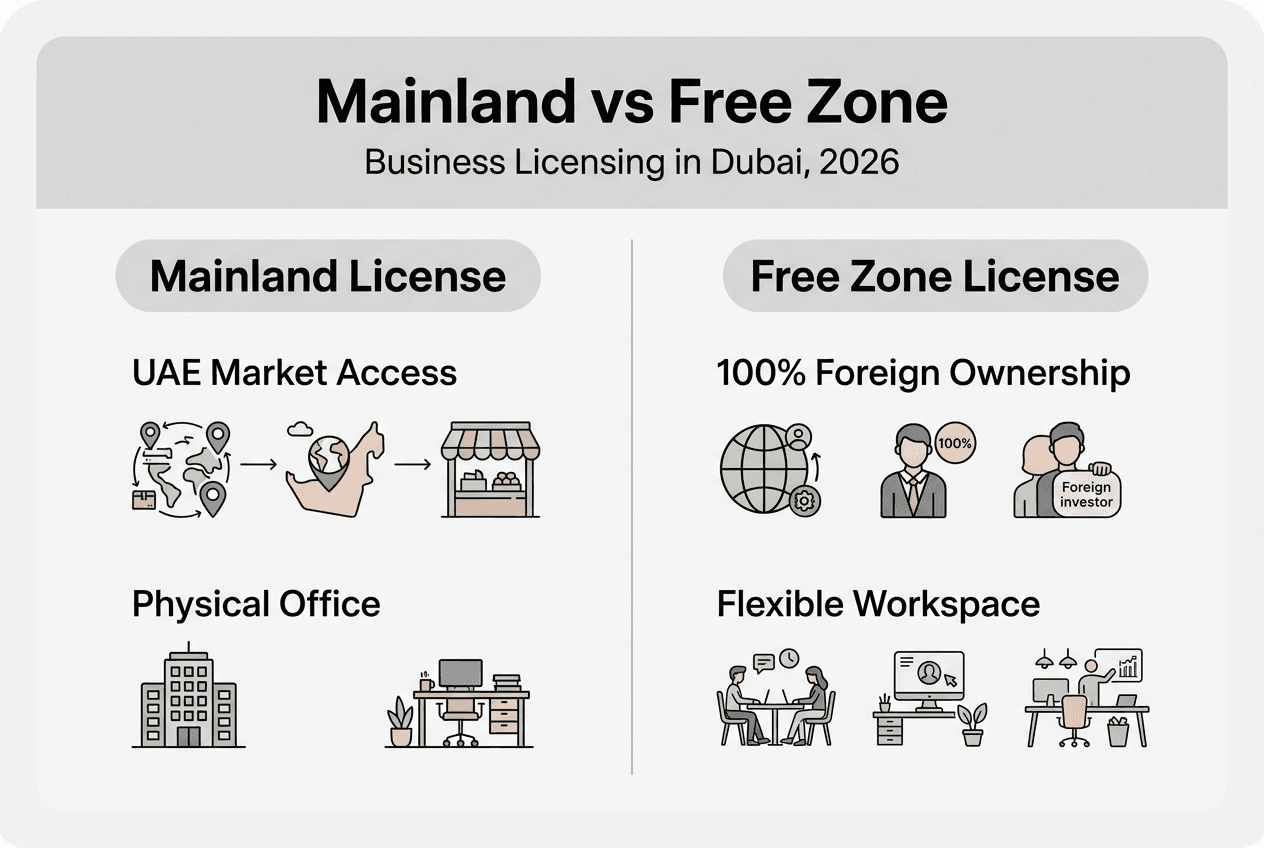
Mainland vs Free Zone Quick Comparison:
Different business activities require specific license types. Commercial licenses cover trading and distribution, professional licenses apply to service providers and consultants, industrial licenses govern manufacturing, and tourism licenses regulate hospitality businesses. Selecting the wrong category creates compliance headaches later.
Pro Tip: Research your target customers and supply chain before choosing jurisdiction. If you need to sell directly to UAE consumers or work with government entities, mainland is essential despite higher costs.
Preparing to apply: essential requirements and choosing your business activity
Successful licensing starts with thorough preparation. Your first task involves selecting precise business activities that match your actual operations. Dubai’s licensing authorities maintain detailed activity codes, and you must choose ones that accurately reflect what your company will do. Choosing the wrong business activity can lead to fines, delays, or legal blocks when authorities discover mismatches during inspections or renewals.

Start by researching activity codes relevant to your industry. Each jurisdiction publishes lists of permitted activities, and some require special approvals from regulatory bodies. For example, educational services need Ministry of Education approval, while food businesses require Dubai Municipality health permits. Identifying these requirements early prevents application rejections.
Next, reserve your trade name through the relevant authority. Your business name must comply with naming conventions, avoid prohibited words, and not conflict with existing trademarks. The Department of Economy and Tourism handles mainland name reservations, while each free zone manages its own process. Name approval typically takes one to three business days.
Essential preparation checklist:
- Finalize your business activities and verify approval requirements
- Reserve and approve your trade name
- Secure initial regulatory approvals if needed
- Identify and arrange suitable business premises
- Prepare passport copies and photographs for all shareholders and managers
- Draft Memorandum of Association outlining ownership structure
- Obtain Ejari tenancy contract registration for mainland applications
Understanding specific trade license requirements can prevent costly delays during the application phase. Many entrepreneurs underestimate documentation needs or submit incomplete files, extending timelines by weeks or months.
Pro Tip: Consult with business setup advisors before finalizing your activity selection. They can identify potential conflicts or suggest additional activities that expand your operational flexibility without complicating approvals.
Step by step process to obtain your Dubai business license in 2026
Now that you understand the landscape and have prepared your requirements, follow this sequential process to secure your license efficiently.
Step 1: Choose business activities and reserve trade name
Submit your preferred business name and selected activities to the licensing authority. For mainland, use the Department of Economy and Tourism portal. Free zones have dedicated platforms. Pay the name reservation fee, typically AED 200 to AED 600. Approval arrives within one to three business days. If rejected, modify your name and resubmit.
Step 2: Apply for initial approvals
Certain activities require pre-approvals from regulatory bodies before license issuance. Educational services need Ministry of Education clearance, healthcare requires Dubai Health Authority approval, and food businesses need Dubai Municipality permits. Submit required documentation to relevant authorities and wait for clearance, which can take one to four weeks depending on complexity.
Step 3: Secure premises and obtain Ejari
Mainland companies must have physical office space with an Ejari registered tenancy contract. Free zones offer flexible options from flexi-desks to dedicated offices. Sign your lease agreement and register it through Ejari if mainland. This step often takes longest due to property searches and lease negotiations, so start early.
Step 4: Submit final license application
Compile all documents including passport copies, photographs, Memorandum of Association, tenancy contract, initial approvals, and name reservation certificate. Submit through the authority’s portal along with license fees. The Dubai Unified License streamlines business data across mainland and free zone jurisdictions, making the process faster and more transparent. Processing takes three to ten business days for straightforward applications.
Step 5: Register with Ministry of Human Resources and Emiratisation
Once you receive license approval, register your company with MoHRE if you plan to hire employees. This establishes your labor file and enables work permit applications. Registration fees depend on company size and structure.
Step 6: Arrange investor and employee visas
Apply for residence visas for shareholders and key employees. This involves medical examinations, Emirates ID applications, and immigration processing. Visa quotas depend on your office space size and license type. Budget two to four weeks for complete visa processing.
Step 7: Complete tax registration
Register for corporate tax with the Federal Tax Authority if your revenue will exceed AED 1 million annually. Open a corporate bank account, which requires your license, Memorandum of Association, and shareholder documentation. Banking relationships often take longest to establish, with some banks requiring multiple meetings and extensive due diligence.
Mainland companies licensed by the Department of Economy and Tourism can operate throughout the UAE subject to approvals, giving you maximum market flexibility once setup completes. For specialized industries, explore Dubai freezone investment setup options that offer sector-specific advantages.
Pro Tip: Start your bank account applications immediately after license issuance. Banks conduct thorough due diligence that can extend timelines, so parallel processing saves weeks in your overall setup schedule.
Common challenges and how to avoid licensing pitfalls in Dubai
Even with careful planning, entrepreneurs encounter obstacles during licensing. Understanding common mistakes helps you navigate smoothly.
The most expensive error involves activity scope problems. A license that is too broad or too narrow will hurt you later. Too broad means paying for unnecessary activities and higher visa allocations you do not need. Too narrow restricts legitimate business operations, forcing costly amendments or preventing revenue opportunities. Authorities penalize businesses operating outside licensed activities with fines starting at AED 10,000.
Jurisdictional mistakes create severe limitations. Entrepreneurs sometimes choose free zones for cost savings without realizing market access restrictions. If your business model requires direct UAE customer sales, a free zone license blocks this entirely. Switching jurisdictions later means dissolving your company and restarting the entire process, losing time and money.
Documentation errors cause most application delays. Missing signatures, expired documents, incorrect translations, or incomplete forms trigger rejections. Each resubmission adds days or weeks to your timeline. Triple check every document before submission and use authorized translation services for non-English paperwork.
Common pitfalls to avoid:
- Underestimating total setup costs including security deposits, visa fees, and bank requirements
- Failing to maintain license validity through timely renewals
- Ignoring regulatory updates that affect your business activities
- Choosing the cheapest option without evaluating long-term operational needs
- Skipping professional guidance for complex business structures
“Many entrepreneurs focus solely on initial license costs without budgeting for ongoing compliance, visa renewals, office rent, and regulatory changes. This creates cash flow problems within the first year.”
Maintaining compliance requires active management. Business licenses need annual renewal with updated documentation. Regulatory authorities conduct periodic inspections to verify you are operating within licensed activities. Changes to your business structure, shareholders, or activities require formal amendments with associated fees and approvals.
Pro Tip: Establish a compliance calendar tracking license renewals, visa expirations, and regulatory filing deadlines. Missing deadlines triggers penalties and can suspend your license, halting all business operations until resolved.
Get expert help with your Dubai business licensing today
Navigating Dubai’s licensing landscape becomes significantly easier with experienced guidance. Professional advisors understand the nuances of different jurisdictions, maintain relationships with licensing authorities, and can expedite approvals through proper documentation and strategic planning.

Whether you are exploring mainland opportunities or evaluating free zone company setup services, expert consultation saves time and prevents costly mistakes. Advisors help you select optimal business activities, choose the right jurisdiction for your market strategy, and manage the entire licensing process from name reservation through final visa issuance. Their knowledge of Dubai freezone setup expertise ensures you leverage available incentives and structure your business for long-term success.
Get business licensing consulting services that simplify your entry into Dubai’s dynamic market, allowing you to focus on building your business while professionals handle regulatory complexities.
Frequently asked questions about Dubai business licensing
What is the difference between mainland and free zone licenses?
Mainland licenses allow full UAE market access and direct sales to local consumers, while free zone licenses restrict operations to the free zone and international markets. Mainland requires Ejari registered offices, whereas free zones offer flexible workspace options. Both now permit 100% foreign ownership.
How long does it take to get a business license in Dubai?
Straightforward applications take two to four weeks from submission to license issuance. Complex cases requiring multiple regulatory approvals can extend to six to eight weeks. Adding visa processing and bank account setup, expect eight to twelve weeks for complete business establishment.
Can I switch my business license type after setup?
Yes, but it requires formal amendments with associated fees and documentation. Minor activity additions cost AED 1,000 to AED 3,000. Switching jurisdictions from free zone to mainland or vice versa requires dissolving your existing company and establishing a new entity, which is time consuming and expensive.
What are the costs involved in business licensing?
Mainland licenses range from AED 15,000 to AED 50,000 depending on activities and office requirements. Free zone packages start at AED 10,000 for basic setups. Additional costs include visa fees at AED 3,000 to AED 5,000 per person, office rent, security deposits, and bank account minimums.
Is a physical office mandatory for all license types?
Mainland companies must have physical office space with Ejari registration. Free zones offer flexible options including flexi-desks, shared offices, or dedicated spaces. Virtual offices exist but have limitations on visa allocations and certain business activities. Your office size determines how many employee visas you can sponsor.


