
What is freehold ownership in Dubai: complete 2026 guide
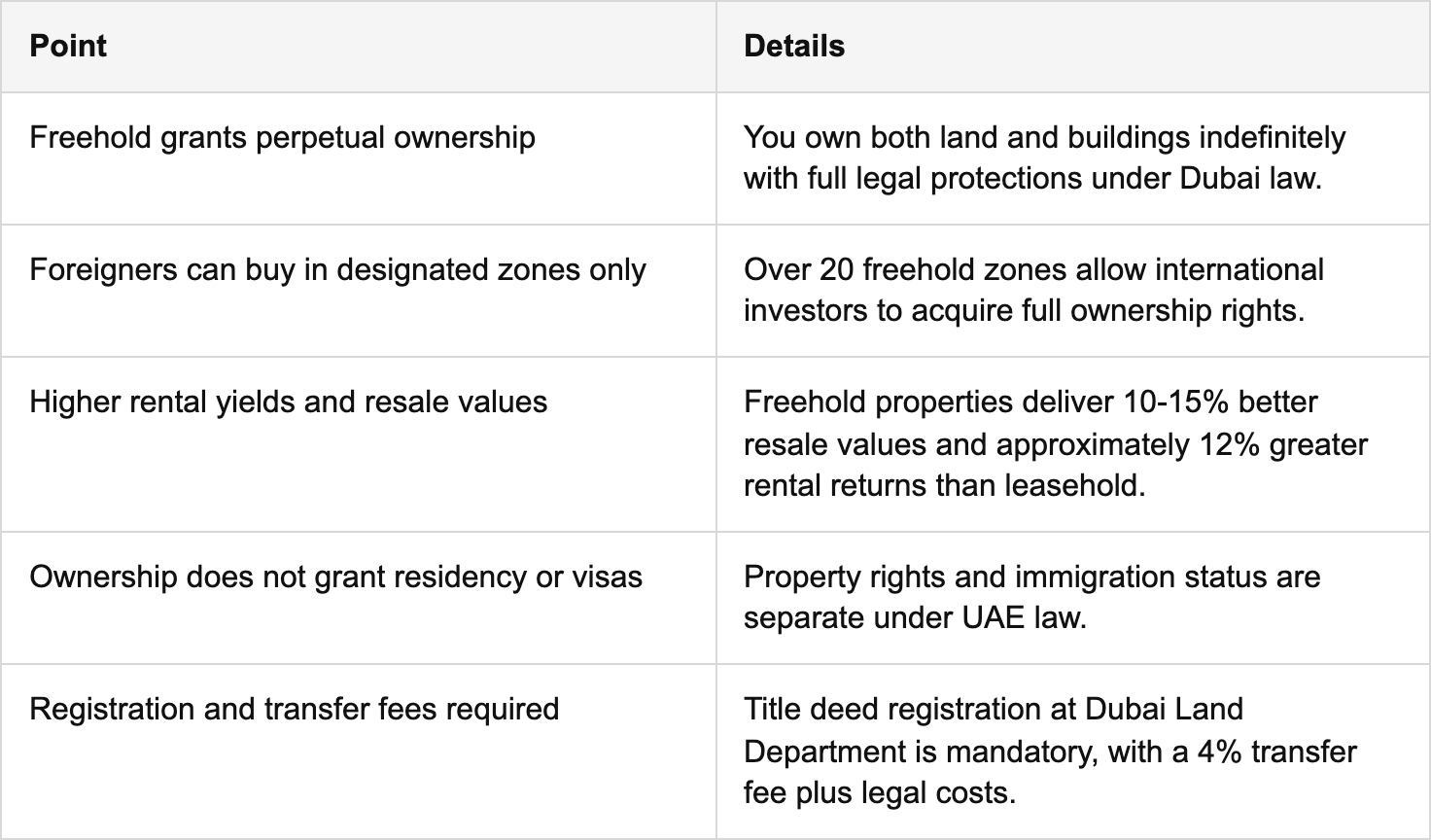
Many international investors believe freehold ownership in Dubai automatically grants residency or citizenship rights. This is false. Property ownership and residency rights are legally separate in the UAE. Freehold ownership confers perpetual property rights over land and buildings in designated zones, but it does not provide visa privileges. This guide clarifies what freehold ownership truly means, where you can buy, and how to navigate the investment process confidently.
Table of Contents
- Introduction To Freehold Ownership
- Legal Definition And Rights Of Freehold Ownership In Dubai
- Foreign Ownership Regulations And Eligibility In Dubai
- Comparison Between Freehold And Leasehold Ownership Models
- Investment Benefits And Risks Specific To Dubai’s Freehold Properties
- Common Misconceptions About Freehold Ownership In Dubai
- Process And Documentation For Acquiring Freehold Property In Dubai
- Summary And Strategic Takeaways For International Investors
- Discover Expert Guidance For Your Dubai Freehold Investment
Key takeaways
Introduction to freehold ownership
Freehold ownership means you hold permanent, absolute property rights without term limits. You own the land and any structures on it indefinitely. This contrasts sharply with leasehold, where ownership is for a fixed period, typically 99 years, and rights are more limited. Understanding these distinctions is critical before investing.
International investors seeking security and control in Dubai must grasp three core elements:
- Legal rights: What freehold ownership legally entitles you to under Dubai law
- Geographic eligibility: Where foreigners can buy freehold properties
- Investment dynamics: Financial benefits, risks, and market performance
This framework ensures you make informed decisions. Dubai’s freehold market offers unique opportunities, but only when you know the rules. Misunderstandings about residency rights or ownership zones can derail your investment. Clarifying these points now saves costly mistakes later.
Legal definition and rights of freehold ownership in Dubai
Freehold ownership grants absolute ownership rights over both land and buildings with perpetual duration under Dubai Law No. 7 of 2006. This law protects your investment and guarantees specific rights. You can transfer, mortgage, inherit, and resell your property without restrictions found in leasehold arrangements.
Registration of the title deed with Dubai Land Department is mandatory to secure ownership. Without proper registration, your ownership is not legally recognized. This process ensures transparency and protects against fraud.
Key rights include:
- Ownership of land and structures: You own everything on the plot indefinitely
- Transfer rights: You can sell or gift the property to anyone without approval
- Mortgage rights: You can use the property as collateral for financing
- Inheritance rights: The property passes to heirs according to your will or local law
- Resale rights: You can sell at market value without lease term limitations
These rights are protected by statute and enforceable in Dubai courts. Legal terms like “absolute ownership” and “perpetual duration” mean you face no expiration date or renewal requirements. This provides long-term security that leasehold cannot match. For more details, review Dubai property laws explained.
Foreign ownership regulations and eligibility in Dubai
Dubai designates more than 20 freehold zones where foreigners can acquire full ownership. These zones include high-demand areas like Dubai Marina, Downtown Dubai, Palm Jumeirah, Business Bay, and Jumeirah Lake Towers. Outside these zones, foreign ownership is restricted or prohibited.

Eligibility criteria are straightforward. Any foreign national or foreign-owned company can purchase freehold property in these designated zones. There are no nationality restrictions. However, you must verify the specific zone before purchasing to ensure it allows foreign freehold ownership.
Common misconceptions include:
- Ownership grants residency: False. Property ownership does not confer residency, citizenship, or visa rights. These are governed by separate immigration laws.
- Ownership applies everywhere: False. Freehold rights for foreigners are limited to designated zones only.
- Ownership guarantees usage rights: False. Usage is subject to local zoning and community regulations.
Government statements and regulations clarify these points repeatedly. Always verify location eligibility before signing contracts. Purchasing outside freehold zones can lead to legal complications and loss of investment. Consulting experienced legal advisors familiar with Dubai’s property laws is essential.
Comparison between freehold and leasehold ownership models
Freehold and leasehold ownership differ fundamentally in duration, rights, financing, and investment returns. Understanding these differences helps you choose the right property type for your goals.
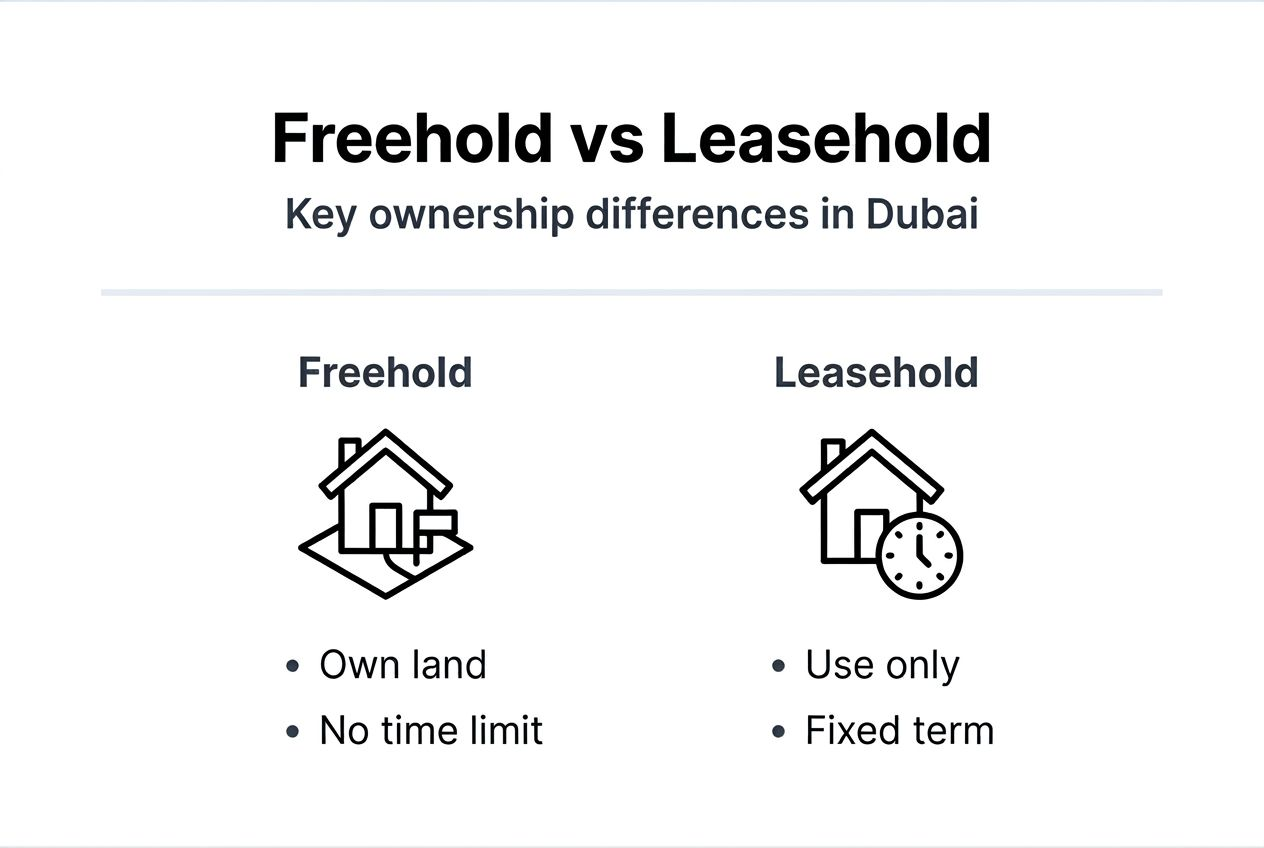
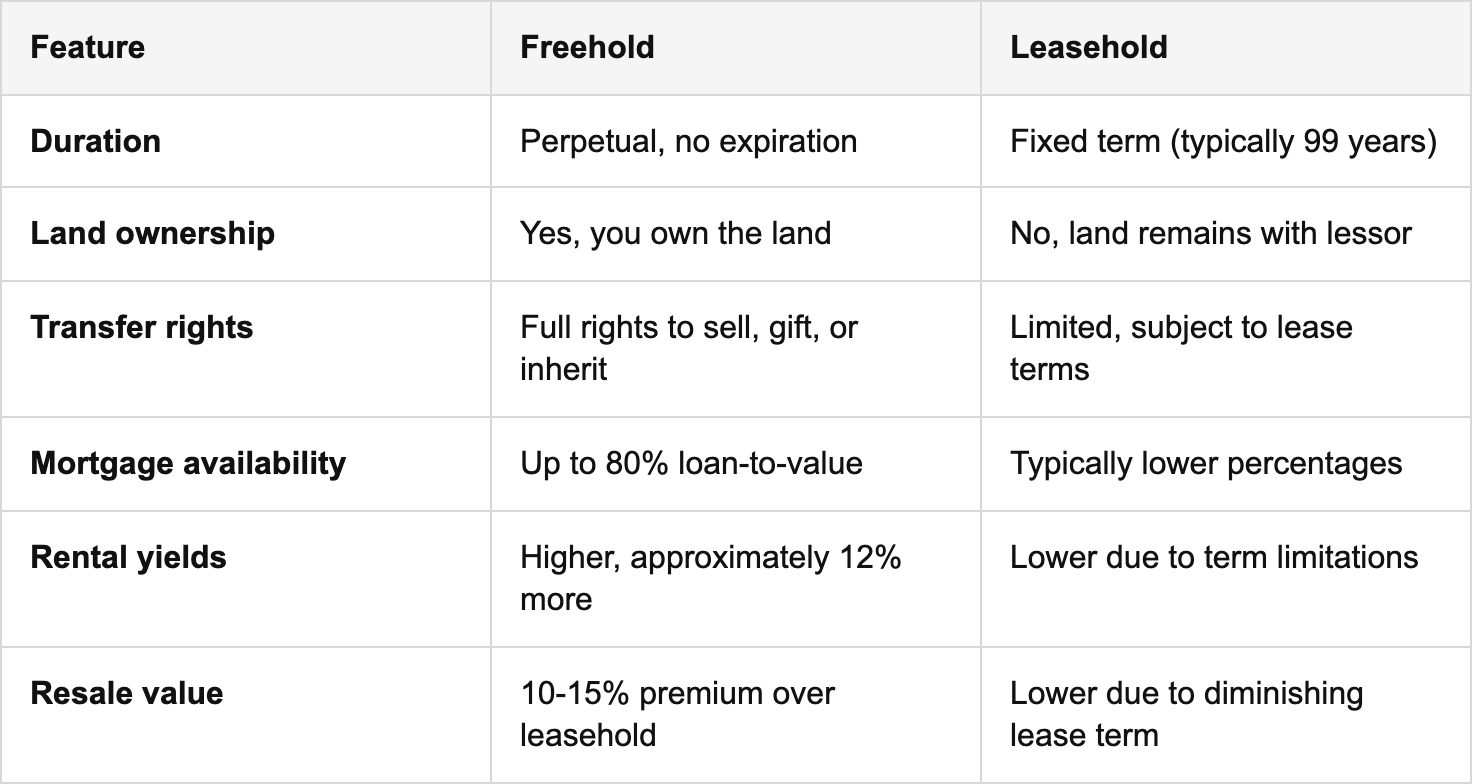
Freehold offers perpetual rights, meaning you own the property and land forever. Leasehold grants usage rights for a fixed period, after which the property reverts to the landowner. This distinction impacts financing. Lenders prefer freehold properties because they offer better collateral, often approving mortgages up to 80% of property value.
Rental yields and resale values are higher for freehold properties. Tenants and buyers pay premiums for perpetual ownership. Leasehold properties lose value as the lease term shortens, making them less attractive long-term investments. For a detailed breakdown, see types of property ownership in Dubai explained.
Investment benefits and risks specific to Dubai’s freehold properties
Freehold properties achieve 10-15% higher resale values and approximately 12% greater rental yields on average compared to leasehold. These financial advantages make freehold ownership attractive for investors seeking long-term appreciation and income.
Mortgage financing is more accessible. Banks offer up to 80% loan-to-value ratios for freehold properties, reducing upfront capital requirements. This leverage amplifies returns when property values rise.
Key benefits include:
- Premium resale value: Perpetual ownership commands higher prices in the secondary market
- Superior rental yields: Tenants prefer freehold properties, enabling higher rents
- Flexible financing: Banks favor freehold properties with better mortgage terms
- Inheritance flexibility: You can pass the property to heirs without lease term complications
Risks exist. Market volatility can impact property values, especially during economic downturns. Legal changes, though rare, could alter ownership regulations. Developer reputation matters. Purchasing from unverified developers can lead to project delays, quality issues, or legal disputes.
Pro Tip: Conduct thorough due diligence on developer track records and legal status before committing. Verify completion timelines, financial stability, and past project performance. Engaging experienced brokers and legal advisors minimizes risk. For strategic insights, explore why invest in Dubai real estate and evaluate Dubai real estate.
Common misconceptions about freehold ownership in Dubai
Several widespread myths mislead international investors. Clarifying these prevents costly mistakes and ensures realistic expectations.
Misconception 1: Freehold ownership grants residency or citizenship. This is false. Property ownership and immigration status are separate under UAE law. You must apply for residency visas through approved channels, regardless of property ownership.
Misconception 2: Freehold, usufruct, and lease rights are the same. They are distinct. Freehold grants perpetual ownership of land and buildings. Usufruct grants usage rights for a fixed period without land ownership. Lease rights provide temporary occupancy only.
Misconception 3: Freehold guarantees indefinite usage rights beyond legal frameworks. False. Usage is subject to zoning laws, community regulations, and government policies. Ownership does not exempt you from these rules.
Key clarifications:
- Residency and visas: Separate from property ownership, governed by immigration laws
- Ownership types: Freehold, usufruct, and lease have different legal definitions and rights
- Usage restrictions: Zoning and community rules apply regardless of ownership type
- Legal compliance: Ownership does not override local regulations or government policies
Pro Tip: Seek professional legal advice before purchasing. Experienced lawyers familiar with Dubai property law can clarify nuances, review contracts, and ensure compliance. This investment in expertise protects your capital and secures your ownership rights.
Process and documentation for acquiring freehold property in Dubai
Purchasing freehold property in Dubai involves specific legal and administrative steps. Following this process ensures secure ownership and compliance.
-
Identify freehold zones: Verify the property is located in a designated freehold zone approved for foreign ownership. This prevents legal issues later.
-
Engage registered broker or legal advisor: Work with licensed professionals familiar with Dubai property laws. They guide you through compliance requirements and negotiations.
-
Conduct due diligence: Verify developer legitimacy, project approvals, and property legal status. Check for outstanding debts, liens, or disputes attached to the property.
-
Sign purchase agreement: Formalize the transaction with a sales and purchase agreement outlining terms, price, and payment schedule. Both parties must sign.
-
Register title deed: Submit the purchase agreement and required documents to Dubai Land Department. Title deed registration is mandatory for securing freehold ownership.
-
Pay transfer fees and costs: The buyer pays a 4% transfer fee to Dubai Land Department. Additional costs include legal fees, agent commissions, and administrative charges.
-
Receive registered title deed: Once registration is complete, you receive the official title deed confirming ownership. Keep this document secure.
For detailed guidance, consult how to buy property in Dubai guide and steps to buying property in Dubai. These resources provide step-by-step instructions and practical tips for navigating the process smoothly.
Summary and strategic takeaways for international investors
Freehold ownership in Dubai offers perpetual property rights with strong legal protections under Law No. 7 of 2006. You own both land and buildings indefinitely, with full rights to transfer, mortgage, inherit, and resell. These advantages deliver superior financial returns compared to leasehold.
Strategic considerations:
- Verify zone eligibility: Ensure the property is in a designated freehold zone before purchasing
- Conduct due diligence: Investigate developer reputation, project approvals, and legal status thoroughly
- Understand residency rules: Property ownership does not grant residency or visa rights, these require separate applications
- Leverage financing: Use mortgage options up to 80% loan-to-value to maximize capital efficiency
- Plan for long-term growth: Freehold properties appreciate better over time and offer higher rental yields
Market timing matters. Dubai’s real estate cycles create opportunities for entry at favorable prices. Consulting experienced brokers and legal experts ensures smooth transactions and compliance. Their expertise helps you avoid common pitfalls and secure the best properties.
Freehold ownership provides asset control, income generation, and capital appreciation. Approach it with knowledge, professional support, and realistic expectations. This combination positions you for successful long-term investment in Dubai’s dynamic property market.
Discover expert guidance for your Dubai freehold investment
Navigating Dubai’s freehold property market requires local expertise and trusted guidance. Anthony Joseph, Dubai’s award-winning real estate broker, specializes in helping international investors locate, evaluate, and purchase freehold properties with confidence.

With years of experience in Dubai’s real estate sector, Anthony provides personalized assistance tailored to your investment goals. From identifying premium freehold zones to negotiating favorable terms and ensuring legal compliance, his services streamline the entire process. Working with a trusted broker reduces risks, saves time, and maximizes returns.
Whether you are seeking high-yield rental properties, luxury residences, or off-plan developments, expert support makes the difference. Contact Anthony Joseph today through his official site to start your journey toward secure, profitable freehold ownership in Dubai.
FAQ
What is freehold ownership in Dubai?
Freehold ownership means you hold exclusive, perpetual rights over a property and the land it sits on in Dubai. This ownership has no expiration date and is protected by Law No. 7 of 2006.
Can foreigners buy freehold properties in Dubai?
Yes, foreigners can buy freehold properties in over 20 designated zones authorized by the Dubai government. Ownership outside these zones is restricted. Always verify zone eligibility before purchasing.
Does freehold ownership grant residency or citizenship?
No, owning freehold property in Dubai does not automatically confer residency or citizenship rights. Property ownership and residency rights are separate, governed by different laws. You must apply for visas through immigration channels.
What are the costs associated with buying freehold property in Dubai?
Buyers pay a 4% transfer fee to Dubai Land Department plus legal and administrative costs. Additional fees may include real estate agent commissions, mortgage arrangement fees, and due diligence expenses.
How can I ensure secure ownership when buying freehold property?
Engage registered real estate brokers and legal advisors familiar with Dubai laws. Ensure title deed registration is completed at Dubai Land Department to secure ownership rights. Conduct thorough due diligence on developers and property legal status.


