
What is the DIBS process: Dubai real estate guide
You’ve heard the term thrown around by agents and investors, but what exactly does DIBS mean in Dubai real estate? Many international buyers mistakenly assume it’s an informal bidding war or a legally binding contract, creating confusion during property purchases. The DIBS process is actually a provisional reservation system that secures your interest in a property while formal contracts are prepared. Understanding how it works, its legal standing, and how it differs from other deposit types is essential for protecting your investment and navigating Dubai’s unique real estate market with confidence.
Table of Contents
- Key takeaways
- Understanding the DIBS process in Dubai real estate
- Legal status and implications of the DIBS process
- Comparing the DIBS process with other reservation methods in Dubai
- Practical steps and tips for investors using the DIBS process
- Explore expert guidance for Dubai property investments
- FAQ
Key Takeaways
Understanding the DIBS process in Dubai real estate
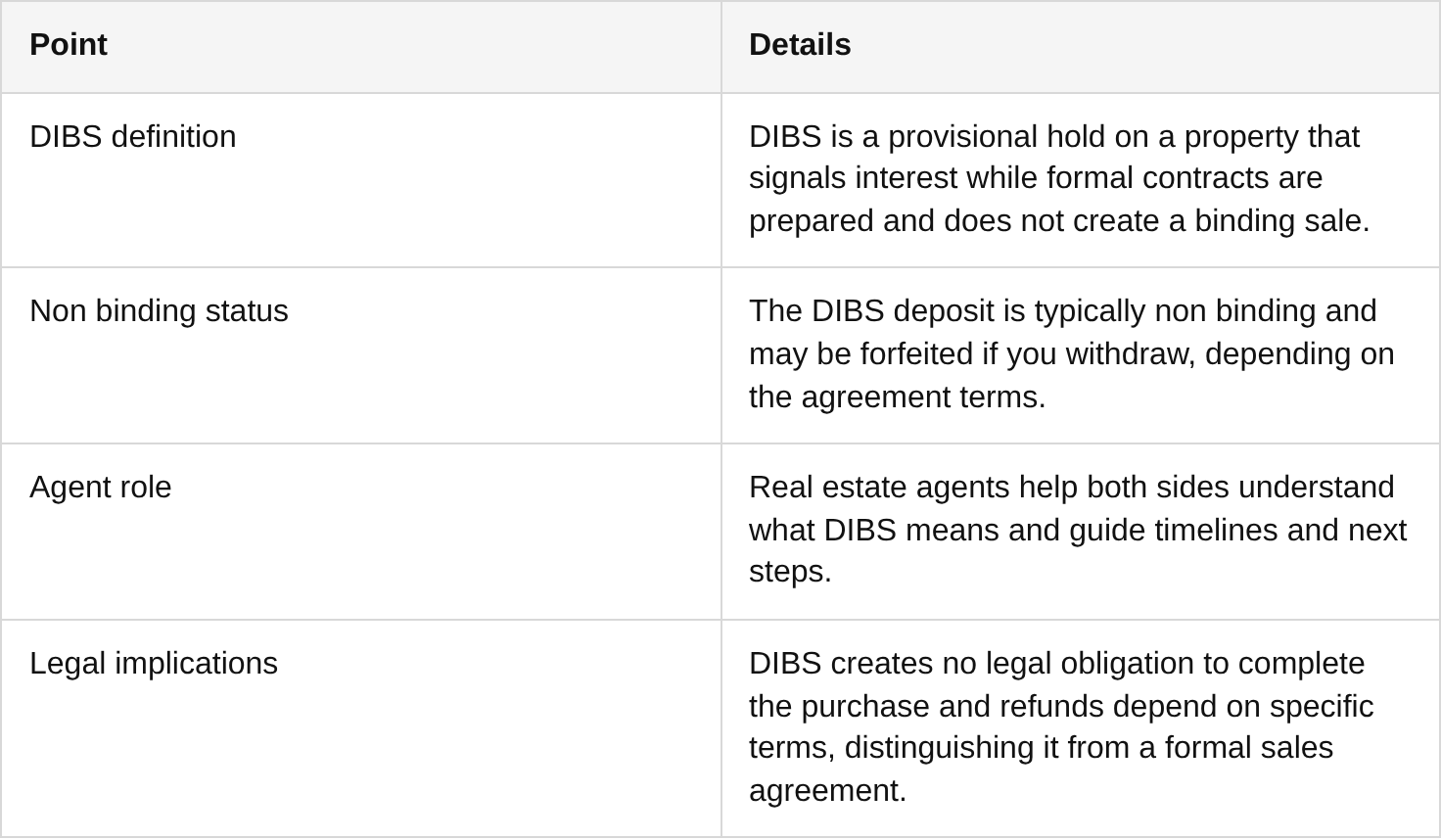
The term DIBS originates from informal market language but has become standard practice in Dubai’s fast-paced property sector. DIBS is a provisional reservation system used in Dubai real estate transactions to signal buyer interest and secure a property before formal contracts. Think of it as calling dibs on the last slice of pizza, you’re expressing intent, but someone could still grab it if you don’t follow through quickly.
This practice emerged from Dubai’s competitive market where desirable properties move rapidly. Developers and sellers needed a mechanism to gauge serious interest without immediately drafting full legal contracts. The DIBS deposit serves this purpose by creating a temporary hold while buyers arrange financing, conduct due diligence, and prepare for the formal purchase agreement.
Key characteristics of the DIBS process include:
- Acts as a provisional hold on property availability
- Typically involves a small deposit amount compared to booking fees
- Creates a timeframe for buyers to finalize formal contracts
- Does not constitute a legally binding sales agreement
- Depends heavily on agent reputation and seller policies
The distinction between DIBS and a formal sales agreement is crucial. A sales agreement includes detailed terms, legal obligations, payment schedules, and penalties for breach. DIBS simply indicates your intention to proceed, giving you priority while paperwork is prepared. The role of real estate agent becomes vital here, as experienced professionals ensure both parties understand what DIBS means and what happens next.
Common terminology you’ll encounter includes “placing DIBS,” “DIBS deposit,” and “DIBS period.” These phrases all refer to the same provisional reservation concept. Some agents may use alternative terms like “expression of interest” or “soft reservation,” but the underlying principle remains consistent.
Legal status and implications of the DIBS process
Understanding the legal weight of your DIBS deposit protects you from unexpected losses and misunderstandings. The DIBS deposit is typically non-binding and can be forfeited if the buyer withdraws, but rules depend on the specific agreement’s terms. This non-binding nature means sellers aren’t legally obligated to hold the property for you, and you aren’t legally compelled to complete the purchase.
Buyer risks center on deposit forfeiture and wasted time. If you place a DIBS deposit and later decide against the purchase, the seller often retains your deposit as compensation for removing the property from active marketing. However, refund conditions vary widely. Some sellers offer full refunds if financing falls through or inspection reveals major issues. Others maintain strict no-refund policies regardless of circumstances.
Seller obligations during the DIBS period are equally important to understand:
- Temporarily removing property from active marketing to other buyers
- Allowing reasonable time for buyer due diligence and contract preparation
- Communicating clearly about timeline expectations and next steps
- Honoring the DIBS arrangement unless buyer violates agreed terms
The key difference between Dubai’s DIBS system and earnest money in markets like the United States lies in legal enforceability. Earnest money typically forms part of a binding contract with clear terms for release or forfeiture. DIBS operates more informally, relying on good faith and professional relationships rather than strict legal frameworks.
Pro Tip: Always request written confirmation of your DIBS terms, including deposit amount, refund conditions, timeline for formal contract, and property details. Verbal agreements leave you vulnerable to disputes and misunderstandings.
Legal experts recommend treating DIBS as a serious commitment even though it lacks formal binding power. Your reputation with agents and developers matters in Dubai’s relationship-driven market. Repeatedly placing and canceling DIBS deposits damages your credibility and may limit future opportunities. Read all Dubai real estate terms explained carefully before committing any funds.
Comparing the DIBS process with other reservation methods in Dubai
Dubai’s property market uses several deposit types, each serving different purposes in the transaction timeline. Clarifying these distinctions prevents costly confusion and helps you navigate each stage appropriately.
Booking deposits represent a more formal commitment than DIBS. When you pay a booking deposit, you’re typically entering a preliminary agreement with specific terms about price, payment schedule, and completion timeline. Booking deposits and earnest money have distinctive roles with varying legal bindings compared to DIBS deposits in Dubai real estate. Booking deposits usually range from 5% to 10% of property value and form part of your total purchase price.
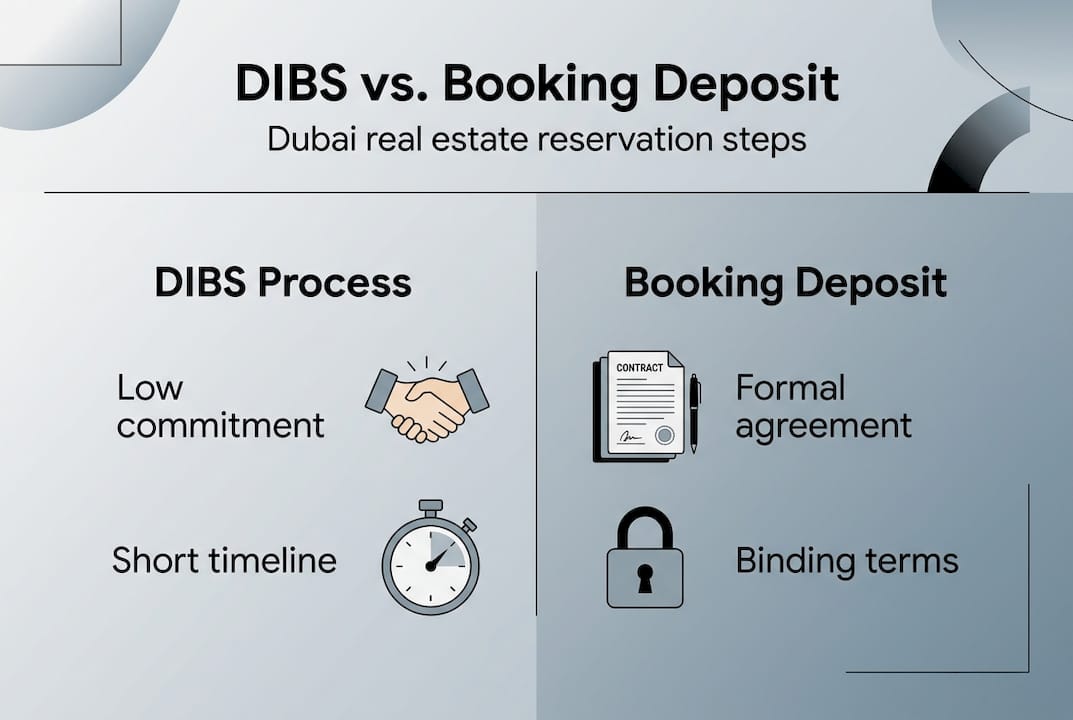
Earnest money functions similarly to booking deposits but often appears in resale transactions rather than new developments. It demonstrates financial capability and serious intent, with clear contractual terms governing its release or forfeiture.
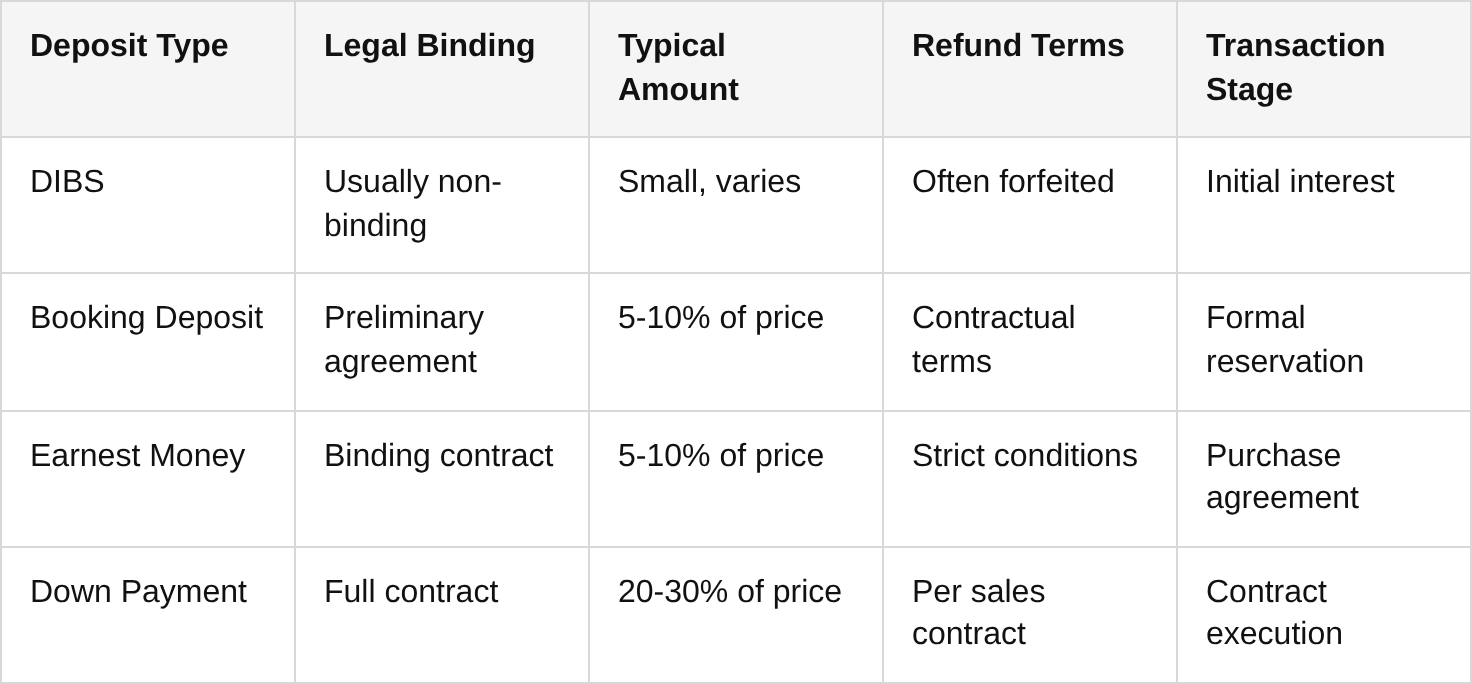
The transaction timeline typically follows this progression:
- Express interest and place DIBS deposit to secure property temporarily
- Conduct initial due diligence, arrange financing, review property details
- Convert DIBS to formal booking deposit with preliminary agreement
- Finalize full sales contract with earnest money or down payment
- Complete remaining payments per contract terms until handover
Common pitfalls emerge when buyers confuse these stages. Some assume DIBS guarantees price and terms, only to discover sellers can adjust offers before formal contracts. Others treat booking deposits as casual as DIBS, not realizing they’ve entered binding preliminary agreements with financial penalties for withdrawal.
The pros of DIBS include flexibility, low initial commitment, and time to verify property details. Cons involve limited legal protection, potential deposit loss, and no guarantee the seller honors the arrangement. Booking deposits offer stronger protections but require larger financial commitment and more serious intent. Understanding where each deposit type fits in your sales category blog posts research helps you make informed decisions.
Practical steps and tips for investors using the DIBS process
Successfully navigating the DIBS process requires attention to detail, clear communication, and realistic expectations about timelines and outcomes. Follow these actionable steps to protect your interests and move smoothly toward formal contracts.

Start by verifying the property’s availability and basic details before placing any deposit. Request recent photos, floor plans, payment schedules for off-plan properties, and seller contact information. This preliminary research prevents wasting deposits on properties that don’t meet your requirements.
When ready to place DIBS:
- Confirm the exact deposit amount and payment method with your agent
- Request written documentation stating property details, deposit amount, DIBS duration, and refund conditions
- Transfer funds through secure, traceable methods with clear payment references
- Obtain receipt confirmation immediately after payment
- Establish timeline expectations for contract preparation and review
Typical DIBS durations range from three days to two weeks, depending on transaction complexity and seller policies. Off-plan properties from major developers often allow longer DIBS periods since contracts require more preparation. Resale properties may demand quicker decisions due to competing buyer interest.
Real estate agents play a critical role in guiding investors through the DIBS process, helping secure desired properties and navigating local rules. Maintain regular communication with your agent throughout the DIBS period. Ask for updates on contract preparation, clarify any confusing terms, and promptly provide requested documentation like passport copies or proof of funds.
Pro Tip: Set calendar reminders for key DIBS milestones, including contract review deadlines and deposit forfeiture dates. Missing these deadlines can cost you both the property and your deposit.
After placing DIBS, immediately begin arranging financing if needed. Contact mortgage brokers, gather required documents, and obtain pre-approval letters. This preparation ensures you’re ready to proceed when formal contracts arrive. Simultaneously, conduct property due diligence including title verification, developer reputation checks for off-plan purchases, and physical inspections for resale properties.
Avoid these common mistakes:
- Relying on verbal promises without written confirmation
- Assuming DIBS guarantees specific prices or terms
- Placing multiple DIBS deposits simultaneously on different properties
- Ignoring contract review deadlines during the DIBS period
- Failing to clarify refund conditions before paying deposits
When formal contracts arrive, review them thoroughly with legal counsel before signing. Verify that all verbal promises and agreed terms appear in writing. Check payment schedules, completion dates, penalty clauses, and handover conditions. Don’t rush this review even if agents pressure you about competing buyers.
If you need to withdraw during the DIBS period, communicate immediately and professionally. Explain your reasons clearly and request refund per the agreed terms. While you may forfeit the deposit, maintaining positive relationships with agents benefits your long-term investment activities in Dubai.
Explore expert guidance for Dubai property investments
Navigating Dubai’s unique real estate processes requires local expertise and market knowledge that only experienced professionals provide. Anthony Joseph offers specialized support for international investors seeking to understand and successfully use the DIBS process while minimizing risk. With deep insights into Dubai’s property market dynamics, legal frameworks, and transaction procedures, professional guidance transforms complex processes into smooth, confident investment decisions. Whether you’re securing your first Dubai property or expanding your portfolio, expert assistance ensures you protect your interests at every stage. Discover comprehensive real estate solutions tailored to your investment goals at Anthony Joseph.

FAQ
What is the difference between DIBS and a booking deposit?
DIBS acts as a provisional interest deposit that is usually non-binding, signaling your intent to purchase while allowing flexibility to withdraw. A booking deposit represents a more formal commitment with preliminary contractual obligations, typically involving 5% to 10% of the property value and creating legal responsibilities for both buyer and seller. The booking deposit usually forms part of your total purchase price, while DIBS may be forfeited entirely if you don’t proceed.
Is the DIBS deposit refundable if I change my mind?
Refundability depends entirely on the specific terms set by the seller and your real estate agent at the time you place the DIBS deposit. Often, DIBS deposits are forfeited if the buyer backs out without valid reason, as compensation to the seller for temporarily removing the property from active marketing. Some sellers offer partial or full refunds if financing falls through or inspections reveal undisclosed property issues. Always clarify and document refund conditions in writing before transferring any funds.
How long does the DIBS process usually last?
Typically, the DIBS period lasts from a few days up to one or two weeks, providing time to finalize formal purchase contracts and complete initial due diligence. The exact duration varies based on property type, with off-plan developments often allowing longer DIBS periods than resale properties due to contract complexity. Sellers in competitive markets may impose shorter DIBS timelines to maintain momentum and avoid losing alternative buyers. Confirm the specific DIBS duration with your agent before placing your deposit.
Can I negotiate the price after placing a DIBS deposit?
Price negotiation after placing DIBS is possible but depends heavily on seller willingness and current market conditions. Since DIBS doesn’t create binding contractual price guarantees, sellers retain the right to adjust their asking price before formal contracts are signed. However, reputable agents and sellers typically honor the price discussed when DIBS was placed, as changing terms damages their market reputation. If significant price changes occur during your DIBS period, you usually have the right to withdraw and request a refund per your agreed terms.


